Africa’s agri-food systems remain central to economic growth and livelihoods, contributing up to 20–30 per cent of GDP in many countries and employing more than 60 per cent of the workforce.
The sector, however, continues to face a financing gap estimated at over $100 billion annually, with agriculture receiving less than five per cent of formal bank lending in most markets.
These gaps disproportionately affect smallholder farmers, women, youth, and agri-SMEs, even as they produce up to 70–80 per cent of the continent’s food supply.
At the same time, climate change, market volatility, and rising food import bills are increasing the urgency for resilient, inclusive and scalable financing solutions.
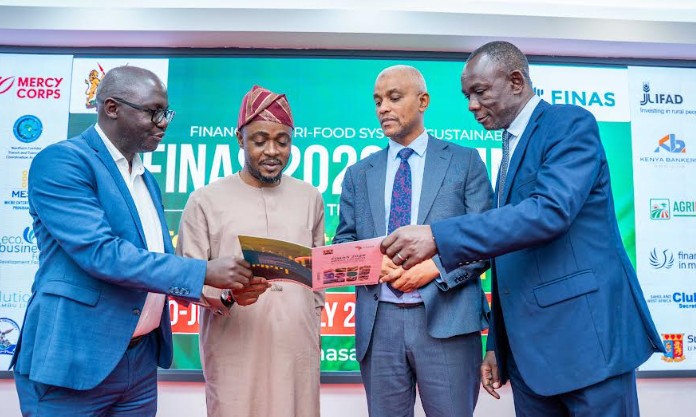
Over one thousand stakeholders from across government, finance, development, and the private sector are set to convene in Nairobi for the Financing Agri-Food Systems Sustainably (FINAS) 2026 Summit, seeking to drive a dialogue to unlock sustainable financing for Africa’s agri-food systems.
Scheduled to take place from June 30 to July 2, 2026, the summit will be held under the theme “Towards Sustainable Financial Architecture for Africa’s Food Systems”.
Building on the outcomes of previous editions, FINAS 2026 will place a strong emphasis on implementation, investment mobilisation and measurable outcomes across Africa’s agri-food systems financing landscape.
Agriculture PS Dr. Paul Ronoh, in his speech read by Secretary of Administration, State Department for Agriculture, Rashid Khator, during the official media launch of the FINAS 2026 Summit, noted that the summit comes at a critical moment for the continent in strengthening the industry.
Dr Ronoh said that building on the strong track record of previous editions, this summit will unlock key opportunities for Africa, noting that financing must be results-oriented, delivering measurable outcomes to enhance agri-food sustainability
“The FINAS summit provides an opportunity to take stock of the funding in the sector and check if our goals have been realised. Let’s move forward to improve efficiency, ensuring that every shilling invested delivers value,” he said.
According to Vice President in charge of Programme Delivery at AGRA and the Chair of the FINAS Secretariat, Prof. Hamadi Boga, the summit represents a turning point for the food systems finance agenda.
“FINAS 2026 is about moving beyond commitments to coordinated delivery. By bringing together policymakers, financiers, and practitioners, the summit provides a platform to unlock capital at scale and translate policy ambitions into bankable investments that reach farmers and agri-enterprises,” he said.
Africa has spent years articulating the challenges facing its food systems. FINAS 2026 is about accelerating action, aligning policy, finance, and partnerships to unlock investment and deliver tangible results for farmers, agribusinesses, and economies.
Project Manager, Sustainable Agricultural Systems and Policies (AgSys) at GIZ Kenya, Sophia Baumert, termed the summit as a crucial platform for advancing collaboration and partnerships towards reliable, secure and timely agri-food systems in Africa.
She said that FINAS began as a national platform in 2024 and has advanced into a continental forum, advancing agri-systems dialogue from a pan-African perspective.
“The platform holds all actors accountable, and as GIZ, we are coming to drive the dialogue as process facilitators and foster stronger collaborations towards our common goal. We look forward to a strong FINAS 2026 summit and rally more partners to join us in this cause,” said Baumert.
FINAS 2026 will be preceded by a series of high-level pre-summit dialogues, targeted engagements focused on structuring an Agricultural Development Fund, unpacking the Kampala Declaration, advancing green finance as a lever for meaningful change and laying ground for the unveiling of a private-sector-led agri-food systems finance working group.
The three-day summit programme will feature a ministerial and CEO roundtable, keynote addresses, side events, and deal-making sessions centred on four core pillars: policy alignment, innovative and inclusive finance, green and climate-resilient economies, and trade, investment, and multilateral cooperation.
The summit will also place strong emphasis on climate-smart finance, recognising the need to align agricultural financing with climate adaptation and mitigation goals.
Agriculture Finance Lead at FSD Kenya, Jared Ochieng’, underscored the importance of collaboration for innovative financial models, noting that food systems in Africa have been hit with challenges such as funding, market challenges, wars and climate change.
“As key stakeholders, we need to join hands, reshape economies and find a greater path toward financing Africa’s agri-food systems effectively,” he said.
The summit comes at a time when there is growing momentum around agri-food systems transformation across Africa.
Governments are increasingly prioritising agriculture through budget allocations and policy reforms, while private sector players and development finance institutions are expanding investments into sustainable agriculture and food systems.
Stakeholders are encouraged to participate in the summit as delegates, partners, or exhibitors and to contribute to shaping a more inclusive, resilient and investment-ready future for Africa’s food systems.
By Anita Omwenga