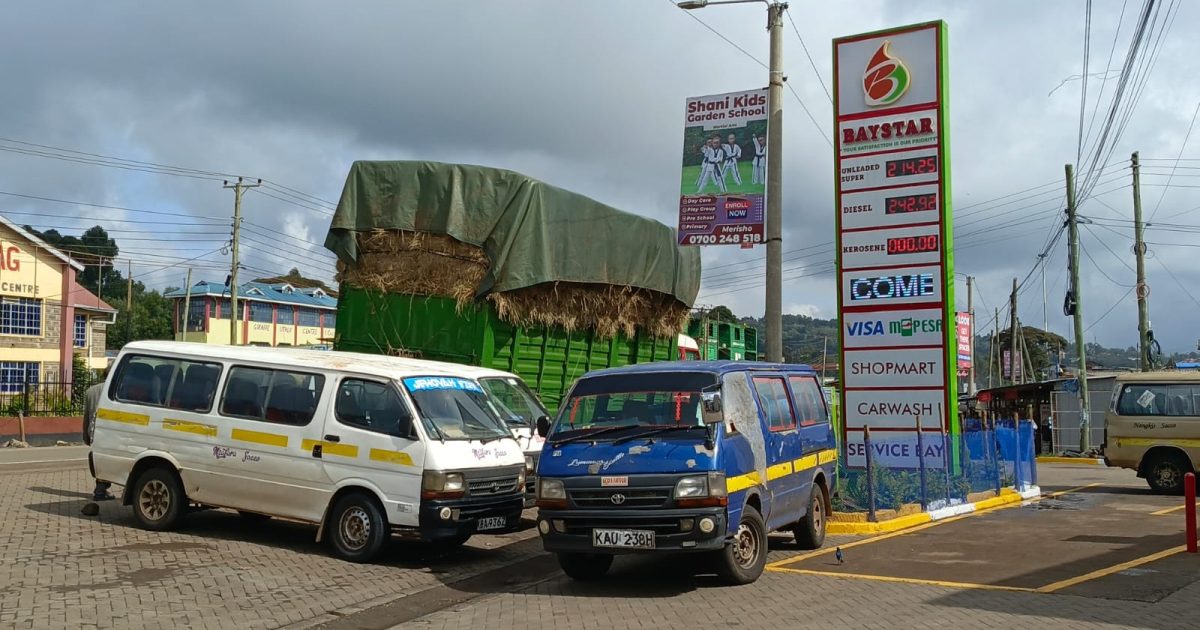
Residents of the Matasia and Kiserian areas in Kajiado North today suffered major transport disruptions following the ongoing nationwide strike by matatu operators protesting the unprecedented increase in fuel prices.
The usually busy Ngong-Kiserian road remained largely deserted, with no public service vehicles operating for the better part of the day.
A few matatus were seen operating during early morning peak hours, but by 7:00 a.m., most had withdrawn from the road, leaving commuters stranded.
Those few matatus that operated doubled fares, charging Sh80 from Matasia to Ngong, up from the usual Sh40 before the recent fuel price increase.
With matatus unavailable, boda bodas became the only reliable means of transport, though at significantly higher costs, with a single ride from Matasia to Ngong now costing Sh250, while a trip from Matasia to Kiserian costs Sh200.
Some of the boda boda operators who spoke to KNA said that, despite the increased demand for their services, business has declined as many residents are unable to afford the high transport costs and have opted to stay at home.
“Even though we as boda boda operators remain the only available means of transport, business is not going well because many people have decided to stay at home rather than overspend to get to their workplaces,” said John Kamau, a boda boda rider in Matasia.
Fuel prices at Baystar Fuel Station in Matasia currently stand at Sh214.25 per litre of petrol and Sh242.92 per litre of diesel.
Some roads leading to Kiserian Town were also barricaded with huge stones by protesting matatu operators and motorcyclists, bringing business activities in the busy town to a standstill.
Speaking to KNA, Cyrus Mwangi, a commuter travelling from Kiserian to Ngong, said transport fares had increased from Sh50 to Sh70 following the fuel price adjustment.
“I arrived at the matatu stage as early as 5 a.m., hoping to catch a vehicle before the strike commenced but was disappointed to find no PSV vehicles operating. This strike has greatly affected me because I will not be able to open my shop in Ngong Town, where I earn my daily income. I hope the government intervenes before the situation worsens,” he said.
Another resident, Catherine Wanjiru, said she had to walk from Nalepo to Kiserian after finding no available means of transport.
“I woke up ready to go to work as usual only to find deserted roads with no vehicles apart from peaceful demonstrations by drivers and motorcyclists. I urge the government to address the fuel crisis quickly so that businesses can resume normal operations,” she said.
Simon Mbugua, another trader at Kiserian Market, expressed concern that the increase in fuel prices would lead to higher food prices due to increased production and distribution costs.
Most matatu operators defended the fare increment, saying the rising fuel costs had made it difficult for them to sustain operations.
The matatu industry, which serves as the primary mode of transport for millions of Kenyans, has repeatedly faced operational challenges whenever fuel prices rise sharply, often resulting in fare hikes and industrial action.
Residents expressed hope that the government will intervene to lower fuel prices and restore normal transport operations.
The Energy and Petroleum Regulatory Authority (EPRA) on Thursday, May 14, 2026 raised prices to a high of Sh242 a litre for diesel and petrol to Sh214.
By Newtone Mbuka and Peter Muteti