The Ministry of Education could soon extend the training duration for Technical and Vocational Education and Training (TVET) programmes from three months to six months in a move aimed at improving the quality of skills imparted to the trainees.
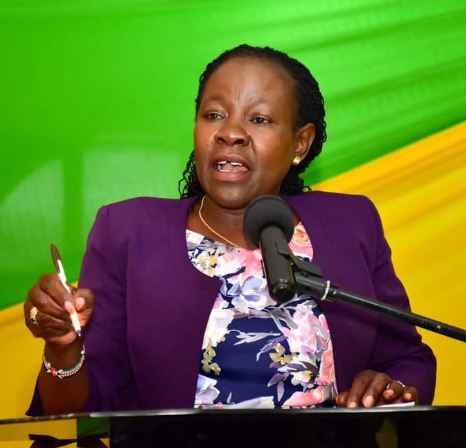
According to the Principal Secretary in the State Department for TVETs, Dr Esther Muoria, the state is considering extending the duration from three months to six months to ensure that the trainees acquire practical and relevant skills.
Dr Muoria said that the review follows concerns from employers that TVET graduates undertaking courses under the three-month modularised programme, are not adequately prepared for the job market.
“We have realized that the three months that we were training may not be absolutely requisite for us to pronounce that we have properly skilled a young person to be out there in the industry. So we are here to re-look at the curriculum, so that we decide that the least length of time that a young person is going to be in training is six months so that by the time we release them into the industry we are confident that the person is ready for the industry,” said Dr Muoria.
Last year, the State Department restructured the TVET curriculum into small specializations known as modules which are currently being assessed and accredited within three months.
So far 316 curricula have been modularized.Under this system, a trainee undertakes their preferred course in modules and gets a certification for every level undertaken. The trainee can opt to proceed with the course or use the acquired skill to seek employment.
At the time of the rollout in May 2025, Dr Muoria noted that adoption of the modularization system would allow trainees to transition to the job market in a shorter period of time and it would also reduce the cost of training.
“We are shifting from a situation where our young people will be in an institution, training for a whole year. We are doing this so that we give them an opportunity to transit to the world of work,” stated Dr Muoria.
The PS spoke on Wednesday during the official opening of the Restructuring and Alignment of the Competency-Based Education and Training (CBET) Modular Curriculum workshop at the Nyeri National Polytechnic. The workshop aims to refine and align modular curricula to enhance its relevance, flexibility to industry demands and quality.
In her remarks, Dr Muoria noted that the workshop is part of the continuous engagements that are some at improving training under the CBET framework.She said that the regular improvements are being undertaken in consultation with industry players and the Ministry Labour to ensure that TVET graduates meet occupational standards.
Additionally, the PS said that integrating institutional learning and industry exposure will better prepare the trainees for employment and entrepreneurship.
“We want to train young people who are good for the industry because as far as the industry is concerned the big issue has been that we are training people who are irrelevant for the industry. So relevance is what we want to concentrate on addressing,” she said.
“This will also ensure that our young people are not only easily getting employment out there but they can also be able to start their own enterprises and even be able to employ others,” she added.
While citing the recent decision by the government to reduce TVET annual fees from Sh 105,000 to Sh 67,000, the PS reiterated the government’s commitment to making technical education affordable.
She however acknowledged the existing strain by the training institutions in accessing training materials that are critical in imparting practical skills.
To address this,Dr Muoria said that the Ministry of Education is engaging the National Treasury and the National Assembly to secure additional funding through the Supplementary Budget to support the TVET institutions.
“Even as we talk about reducing the school fees per year, we have realised that are also going to continue struggling because of the material that we need to train our young people because we train practically.This is a continuous engagement that we are going to have until we are able to have an equilibrium of we are going to be able to make training affordable and at the same time quality because of the materials we must buy,” she said.
By Wangari Mwangi and Samuel Maina