Farmers in Vihiga County have been advised to take early precautionary measures to manage risks associated with the expected elevated rainfall during the El Niño period.
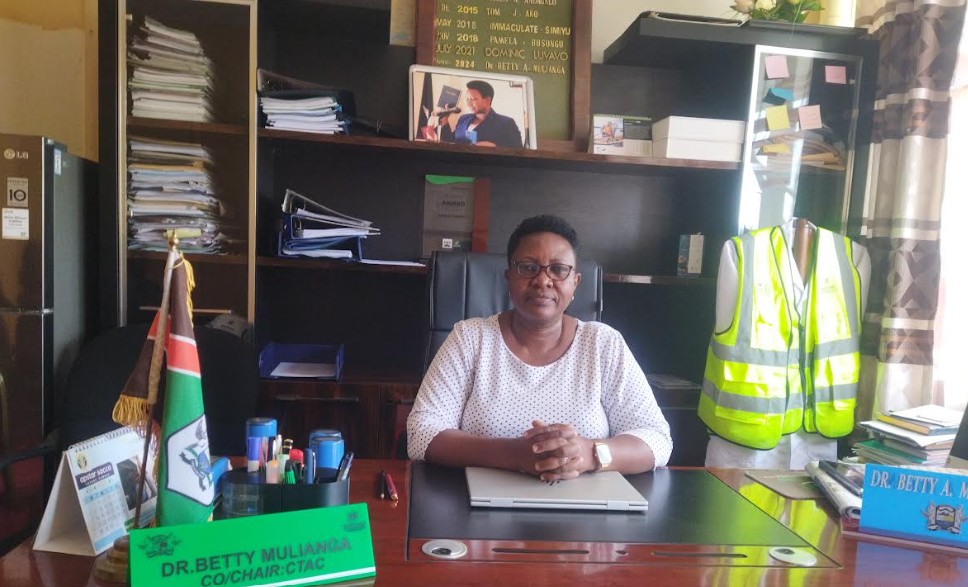
Speaking to KNA in her office, Vihiga Chief Officer for Agriculture, Livestock, Fisheries and Blue Economy, Dr. Betty Mulianga, said rainfall itself was not a problem, but excessive rain at the wrong time could cause significant losses.
She said waterlogging and poor drainage could make harvesting, drying, storage and marketing of farm produce difficult, urging farmers to prepare early to minimise losses.
Mulianga identified flooding, waterlogging, soil erosion, damage to water-harvesting and soil-conservation structures, crop pests and diseases, livestock problems, fisheries and aquaculture challenges, post-harvest spoilage, fodder losses and market disruptions as some of the major risks associated with heavy rainfall.
On flooding, she advised farmers to monitor areas where water accumulates or flows rapidly, particularly low-lying crop fields, vegetable farms, banana plantations, root crops, livestock houses, fish ponds, stores and soil-conservation structures.
She urged farmers to keep drainage channels clear, protect farm stores by raising them above expected water levels and move vulnerable livestock to safer and dry areas.
Mulianga cautioned farmers to watch for prolonged standing water, yellowing, stunted growth, root decay and wilting despite wet soils. She recommended the use of raised beds where appropriate and advised farmers to avoid unnecessary movement of machinery and people on saturated soils during heavy rains.
On soil erosion, she encouraged farmers to protect nursery beds by raising them above the ground and covering them with shade netting. She also urged them to avoid cultivation along riverbanks and plant trees along terrace edges, riverbanks and slopes.
Farmers were further advised to maintain fanya juu terraces, retention ditches and grass strips to slow water movement and protect fertile topsoil.
Mulianga urged farmers to desilt farm ponds and water tanks, repair weak embankments and fix damaged roof gutters to maximise rainwater harvesting.
“Farmers should harvest the abundant rainwater for use during the next dry spell,” she said.
She noted that heavy rainfall could also increase crop pests and diseases, urging farmers to monitor maize for leaf blight and stalk rots, beans for leaf spot, vegetables for damping-off and blights, and bananas for root-zone problems.
She advised farmers to seek proper diagnosis from Ward Agricultural Extension Officers before applying pesticides or other treatments.
Mulianga said livestock, including cattle, goats, sheep, pigs and poultry, were also vulnerable to diseases such as foot rot, mastitis and respiratory infections because of prolonged wet and muddy conditions.
She advised farmers to keep animal housing dry and well ventilated and store animal feed off the floor to protect it from moisture and contamination.
The chief officer also warned fish farmers about pond overflow and fish escaping during heavy rains, urging them to strengthen pond structures and keep fish feed in dry, secure stores.
She said post-harvest losses could increase significantly, particularly for maize, beans and tubers, which are vulnerable to mould and mycotoxin contamination when inadequately dried or stored.
Farmers were advised to dry produce thoroughly and store it in hermetic bags. Mulianga cautioned that mouldy food should neither be consumed nor sold.
By Florence Oteng’o and Maureen Imbayi