Schools in Vihiga County have been urged to embrace technology and use digital devices given by the government for intended purposes in a bid to integrate ICT in education.
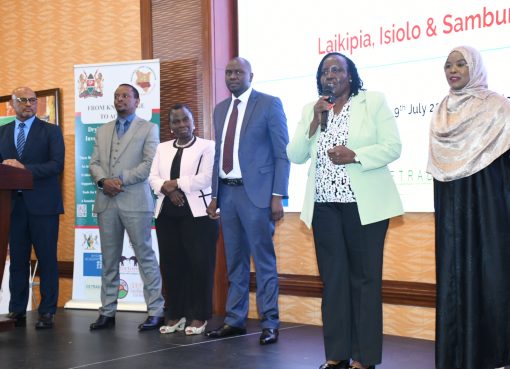
Speaking during the Vihiga County launch of the interactive smart board today at St Francis Hambale Junior School, Vihiga County Director TSC Joyce Chesang called on all heads of institutions, teachers and learners to embrace ICT in all learning areas.
Chesang said the difference between the 844 system of education and CBE is that in CBE most things are digital, calling on all education stakeholders to embrace technology, saying that this eases the burden of learning and brings equity since even children from humble backgrounds can easily access digital devices, which assists them in doing their assignments.
She challenged teachers and heads of institutions to ensure that learners get access to and use the digital learning devices and not to keep them in locked rooms, like most teachers did with the digital learning devices that were issued to grade ones at the start of the CBC.
She asked teachers to look for a way of connecting or integrating the digital learning devices that were issued to primary school learners with the digital smart board so that all learners can embrace technology at an early age.
She asked the government to increase capitation, especially on the maintenance vote, so that in case these digital devices break down, they are repaired and maintained on time so that they are in good working condition throughout the year.
She commended the government for coming up with the smart digital board and other devices, saying they are environmentally healthy, unlike the chalk which was used by teachers in the 1990s, which used to contaminate the air and cause diseases.
Vihiga County Director of Education, Evelyn Chemjor, commended the government for giving digital devices to schools and asking teachers to integrate ICT in all learning areas.
Chemjor asked those schools who have already received the digital devices to share with those schools which have not received, as they wait for theirs, so that learners are at the same level.
An assistant director from ICTA, Joshua Opondo, said the World Bank, through ICTA in the Kenya Digital Economy Acceleration Project (KDEAP), has issued one interactive smart board and one laptop to 195 public junior schools out of the 386 junior schools.
Opondo said that when grade one learners in public schools were given DLP devices, they were learning to use them, but with the current devices issued to 10,382 schools across the country, learners are using them to learn.
He assured the 191 junior schools that have not received the interactive smart boards and laptops that plans are underway to ensure they receive them so that their learners are not left behind.
He further said that six markets have been earmarked for internet connection in Vihiga County so that parents have access to the internet, adding that 11 post-secondary learning institutions will be connected with WiFi so that students can easily access the internet to ease their learning and do assignments.
Also present at the launch was an assistant Director of ICT from the Ministry of ICT and the Digital Economy, Gilbert Muyesu, who said that their mandate is to implement one of the five pillars of the Bottom-up Economic Transformation Agenda, which is the digital superhighway, by ensuring all government services are automated, saying there are over 20,000 government services already automated in the one-stop border through the ecitizen.
The head teacher of Hambale Junior School, Sister Linet Ijai, commended the government for giving them the digital devices but asked the government to consider schools with a high population of learners and add them more devices for ease of learning so that all learners can access the devices.
Beryl Mideva and Abdimamalik Abdikadir, grade eight learners at St Francis Hambale Junior School, commended the government for giving them the digital devices, saying boarders can easily do their assignments in the computer laboratory, unlike before, when they had to request teachers’ phones to do their homework.
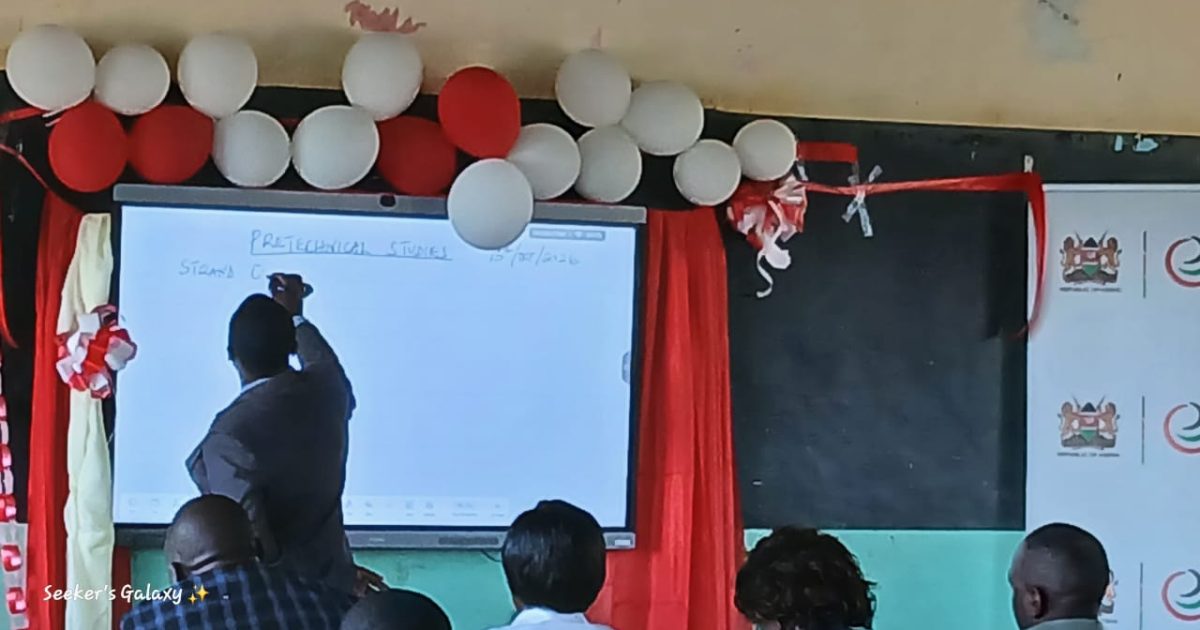
A teacher at St Francis Hambale Junior School, Dennis Ubaga, who took the participants through a computer lesson using the interactive smart board, thanked the government for providing the digital devices, saying it makes the class more interactive.
By Maureen Imbayi