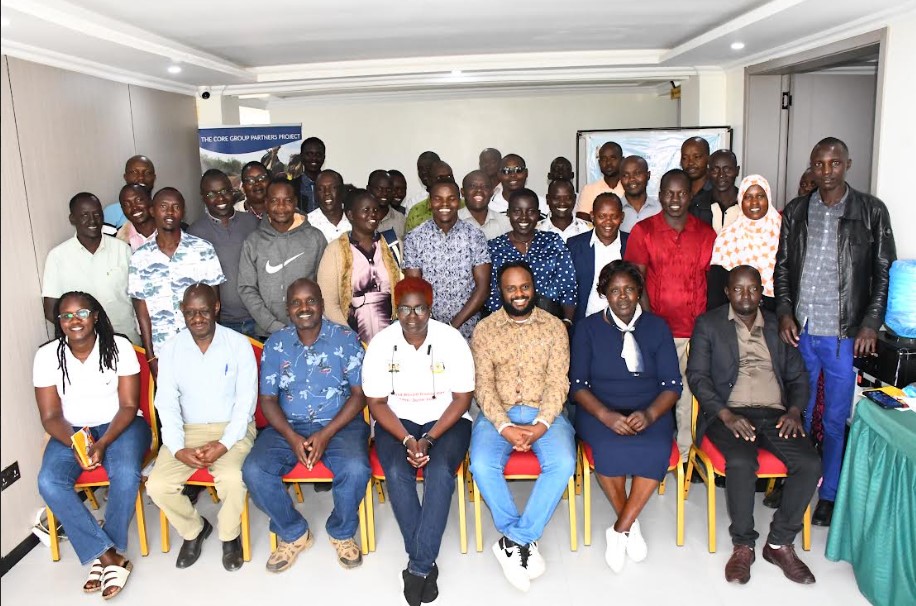
West Pokot County has stepped up preparedness against Ebola Virus Disease (EVD) following the training of 30 frontline healthcare workers drawn from facilities on the county’s border areas.
The five-day training, held from August 31 to September 4, 2026, targeted healthcare workers from Kacheliba and Pokot North sub-counties, which are considered particularly vulnerable because of their proximity to Uganda and the movement of people across the porous border.
The training was organised by the Core Group Partners Project (CGPP) through the International Rescue Committee (IRC), in collaboration with the West Pokot County Department of Health and other health partners.
Participants included nurses, clinicians, public health officers, laboratory technologists and community health assistants who were taken through approved Ebola preparedness modules.
The training focused on key areas including infection prevention and control (IPC), risk communication and community engagement (RCCE), case management and disease surveillance.
According to health officials, the exercise is critical in ensuring that frontline workers are equipped to identify, isolate, manage and promptly report suspected cases.
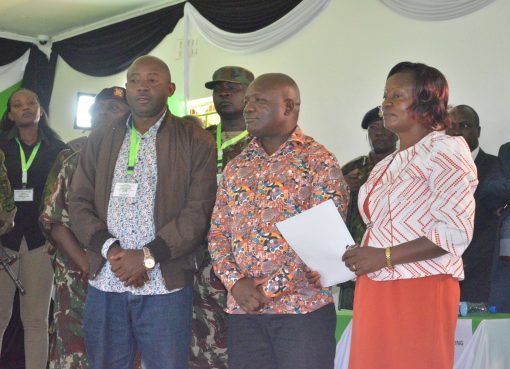
West Pokot County Executive Committee Member for Health and Sanitation Claire Parklea said the county was among areas mapped as being at very high risk because of its proximity to Uganda.
She said the training was therefore necessary to strengthen the county’s ability to respond rapidly to any suspected Ebola case.
“West Pokot is among the counties mapped as very high risk regions due to the porous border in North Pokot. That is why the county government, together with IRC took the initiative to train frontline healthcare workers,” said Parklea.
She noted that although no Ebola case has been reported in West Pokot, preparedness remained important because of the ongoing outbreak in the Democratic Republic of Congo (DRC) and the region’s cross-border population movement.
Parklea said the training had significantly improved the county’s readiness to deal with a suspected case.
“We are now better prepared in case we have a suspected case because our frontline healthcare workers have the knowledge and skills to handle it,” she said.
The county government, she added, would continue working with communities to ensure residents have accurate information about Ebola and understand the appropriate measures to take.
She said the county would use public forums and local radio stations to enhance risk communication and prevent misinformation and panic.
The preparedness measures come against the backdrop of a rapidly evolving Ebola outbreak in the DRC. The World Health Organization (WHO) reported on August 28 that the outbreak had spread to 60 health zones across six provinces, with 5,794 confirmed cases and 2,786 deaths reported as of August 26.
WHO has described the outbreak as the largest Ebola outbreak ever recorded in the DRC and said it remains a public health emergency of international concern. (World Health Organization)
The outbreak is caused by the Bundibugyo virus, a species of Ebola virus. WHO says Uganda recorded cases linked to the outbreak, with the last confirmed case identified on June 21, 2026. (World Health Organization)
IRC coordinator Abdi Jamal, who coordinates the Core Group Partners Project based in Turkana County, said the training was intended to ensure healthcare workers serving communities along the border were adequately prepared.
He said the workers had been taken through all the major pillars of Ebola preparedness to enable them to respond appropriately to suspected cases.
“The frontline healthcare workers have been trained on Ebola preparedness and all the pillars of EVD response so that they can detect, respond and manage suspected cases appropriately,” said Jamal.
West Pokot County Disease Surveillance Coordinator Wilson Tarus said the county surveillance team remained on a 24-hour alert to detect and respond to any suspected Ebola case.
He revealed that suspected cases had previously been reported in the northern parts of Kacheliba, prompting an immediate response by surveillance teams.
“We respond to any suspected case. Samples are taken to KEMRI for confirmation, but so far, none of the suspected cases has turned out positive,” said Tarus.
He said the rapid response demonstrated the importance of maintaining an active surveillance system, particularly in areas bordering Uganda where movement of people and goods is common.
The training also sought to protect healthcare workers, who are among those at increased risk when dealing with suspected Ebola cases without appropriate infection prevention and control measures.
Ebola is transmitted primarily through direct contact with the blood or other body fluids of an infected person, particularly after the person develops symptoms. It does not spread through the air like respiratory infections such as influenza or COVID-19.
Early symptoms can include fever, body aches and fatigue before progressing to symptoms such as vomiting and diarrhoea, with unexplained bleeding occurring in some severe cases.
The trainees welcomed the training, saying the knowledge gained had boosted their confidence in responding to suspected cases within their areas of operation.
For West Pokot, the exercise is therefore more than a routine capacity-building programme. It forms part of a broader strategy to ensure that a suspected case can be detected early, safely managed and rapidly investigated before it has an opportunity to spread.
The Ministry of Health is working with the Kenya National Public Health Institute (KNPHI) and partners including CGPP, IRC, Kenya Red Cross, Amref Health Africa and the SRIDES Project to strengthen preparedness, surveillance, community engagement and response measures.
With no confirmed Ebola case reported in West Pokot, health authorities are urging residents to remain vigilant without causing unnecessary alarm.
Parklea said continued community awareness would remain central to the county’s preparedness strategy.
“We will continue engaging the community through public forums and broadcast media, including radio, so that people know what to do and how to respond if there is a suspected case,” she said.
The training has consequently strengthened the first line of defence against Ebola in West Pokot, particularly in the border areas, by ensuring that healthcare workers are not only informed about the disease but are also equipped with practical skills to protect themselves, their patients and the wider community.
By Parklea Ivor