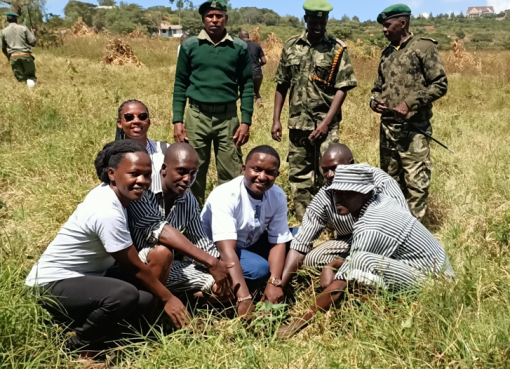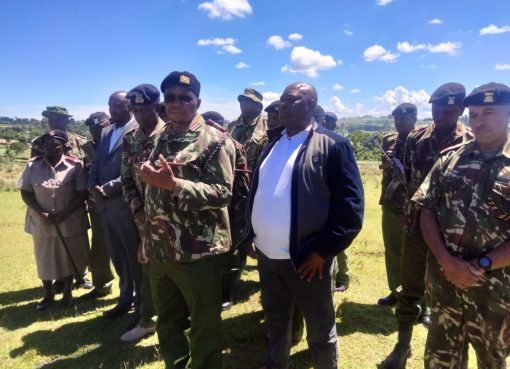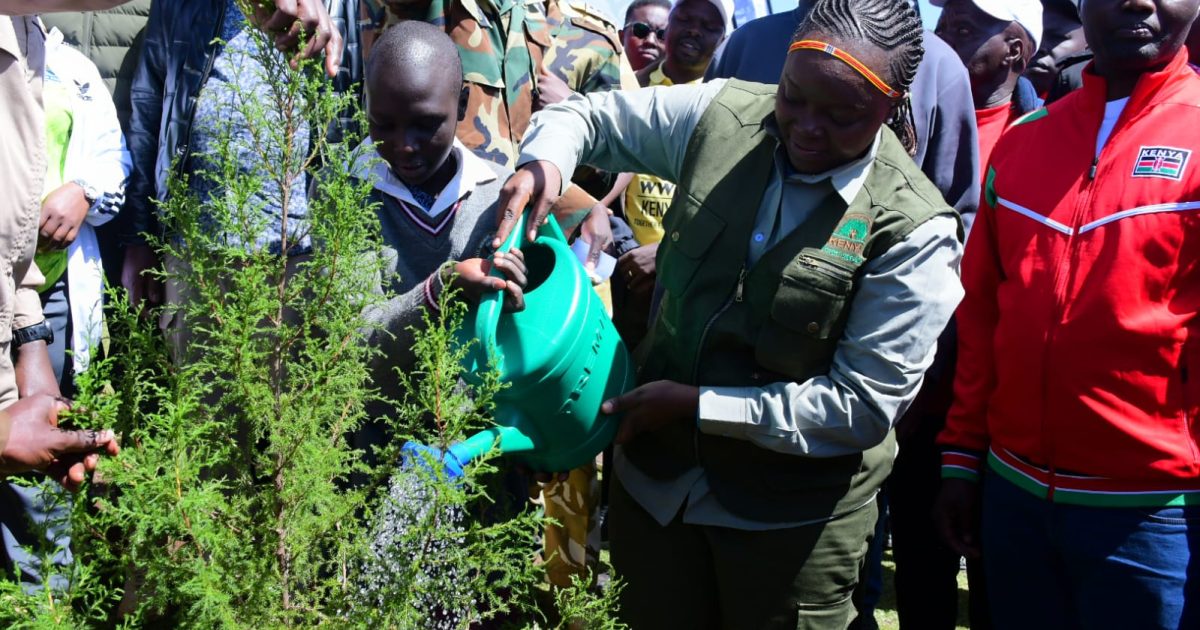
Residents, leaders and environmental stakeholders planted 22,000 tree seedlings during the inaugural Cherangany Hills Peace and Conservation Race held at Tebe grounds, Kapyego ward in Elgeyo Marakwet County as part of efforts to restore the degraded Cherangany Hills ecosystem.
The event, organised under the Cherangany Hills Ecosystem Restoration for Livelihood Improvement, Sustainability and Harmony (CHERISH) initiative, brought together national and county government officials, development partners, athletes and local communities in a campaign aimed at promoting environmental conservation, peace and talent development.
Speaking during the event, Cabinet Secretary for Interior and National Administration, Kipchumba Murkomen said the success of the tree planting exercise would depend on how well the seedlings are protected and nurtured.

“The 22,000 trees planted today need to be conserved. If conserved when young, they will protect us when they are big,” said Murkomen.
The Interior CS noted that local administrators, especially chiefs, will play a key role in ensuring the seedlings survive.
“Chiefs have a huge task in protecting the seedlings that have been planted today,” he added.
Murkomen said the CHERISH initiative seeks to address environmental degradation while empowering communities economically and socially. He explained that the programme is anchored on five key pillars namely ecosystem restoration and climate resilience, community empowerment, education and knowledge management, promotion of sports and talent development and resource mobilisation.
He observed that the four counties forming the Cherangany Hills ecosystem have historically produced world-class athletes and said the race was organised to combine sports, environmental conservation and community cohesion.
“As we gear up for the official launch of the CHERISH programme, we saw it fit to have a race to empower our local athletes, promote talent, foster peace and cohesion and involve the community in environmental conservation,” he said.
Murkomen said the tree-planting exercise was carried out at the edge of Embobut Forest, one of the 22 gazetted forests within the Cherangany Hills ecosystem and a critical water tower serving millions of Kenyans.
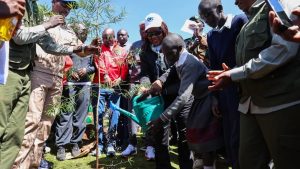
Also speaking during the event, Kenya’s Ambassador and Permanent Representative to the United Nations Environment Programme (UNEP), Amb. Dr Ida Odinga, warned that continued destruction of the Cherangany Hills ecosystem threatens livelihoods, water sources and biodiversity in the region.
“We will not let the ecosystem die as it is of value to the four counties it covers,” she said.
Odinga noted that forest cover in the Cherangany Hills water tower declined by 14 per cent between 1985 and 2020 due to logging, charcoal burning, encroachment and land clearing for agriculture.
“The real answer is change,” she said, urging communities to embrace conservation and sustainable land use practices.
She said the vision of the CHERISH initiative is to restore 20,000 hectares of degraded land while creating employment opportunities for local communities, especially young people.
“Young people are the ones who will either make or destroy the Cherangany ecosystem and they should not view it as a difficult task to become ambassadors of protecting the environment,” she said.
Odinga further challenged development partners and investors to support conservation efforts in the region, saying investment in environmental restoration would yield long-term economic and social benefits.
“Telling development partners to invest in the Cherangany Hills ecosystem is not a loss but a huge thing,” she added.
Environment, Climate Change and Forestry Cabinet Secretary Dr Deborah Barasa said collaboration between government agencies and local communities remains critical in achieving the country’s tree growing targets.
Barasa noted that the Interior Ministry has an extensive administrative network capable of mobilising communities for environmental restoration.
“The CS Interior is at a core place when it comes to tree planting, growing and conserving because he has the machinery for management through the NGAO teams. From there, an order can be given and seedlings will be sent to schools, universities and churches while NGAO teams mobilise people,” she said.
She encouraged Kenyans to plant at least 15 trees every rainy season in support of the national tree-growing campaign championed by President William Ruto’s administration.
“We hope to work with the Nyumba Kumi teams to reach the target which has been put together by the President. Let us grow a culture of restoration,” Barasa said.
She added that community led afforestation, ecological restoration and sustainable livelihood programmes offer the best approach to protecting forests and improving livelihoods.
“Community led afforestation, sustainable livelihood, ecological restoration and self-driven restoration approaches have remained the best strategy. When communities thrive, forests thrive and when forests thrive, Kenya thrives,” she said.
by Rennish Okong’o