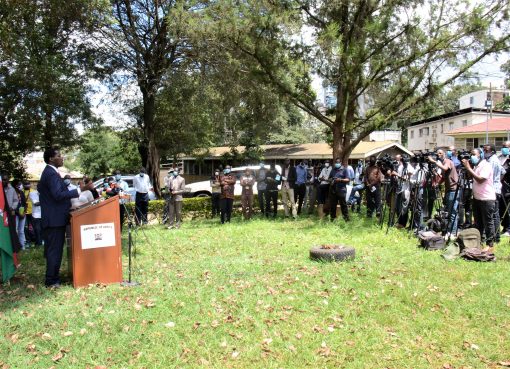
The State Department for Livestock conducted a public participation forum for the Animal Identification and Traceability (ANITRAC) Draft Bill 2026 in Eldoret.
The forum aimed to gather input from farmers and other stakeholders in the livestock sector from across Uasin Gishu, Nandi and Bungoma Counties in order to enrich the final draft bill before it is passed into law.
The Bill provides for Identification and traceability of animals and animal products; facilitates surveillance, control and eradication of animal diseases; improves the quality and Safety of animals and animal products to safeguard public health; and increases the productivity and market access of animals and animal products.
It also seeks to increase producer access to credit and animal insurance facilities using animals as collateral and support breeding programmes in animals and the exchange of animal genetics.
Speaking during the event, The Deputy Director Livestock Policy Research and Regulations in the State department for Livestock Development Dr. William Akwimbi said the new Bill is vital for enhancing animal health and disease control, improving trade and market access, ensuring public safety and food security, and supporting livestock productivity and economic growth.
He mentioned that the exercise is taking place across all the 47 counties.
“This will have several advantages, as it will serve several purposes which will help the farmers. One of them is that it will ensure that the animals are identified uniquely; they can also be traced. It will also help in terms of disease surveillance, vaccinations, and eradication of diseases. which is a major problem we have in the country,” he said.
He underscored the importance of effective disease control measures in addressing issues to do with public health in regard to livestock and livestock products’ quality.
In regard to the monitoring of the livestock and livestock products which is captured under the bill, Dr. Akwimbi emphasised the importance of livestock identification, saying it will help in ensuring access of animal products like meat, milk and others to external markets like the Middle East and European markets, since their quality and standards are monitored and traced.
“Once enacted and implemented in the country, this bill will earn us access to very important markets where the farmers will benefit because of the good prices of their products.
We also expect that this bill will help in the issues of animal theft. Because of the chips and traceability mechanism, we expect issues of animal theft to go down,” alluded Dr. Akwimbi.
He encouraged farmers that once it is signed into law, they should take initiative and embrace it by registering their animals in order to enjoy the key benefits that come with it especially disease control, traceability and access to international markets.
Additionally, he said the bill will help the government know the location of the livestock and be able to incorporate data and utilise it for purposes of planning.
Uasin Gishu CECM for Agriculture Dr. Sam Kottut said the bill is important to farmers and all stakeholders from all sub-counties and all cooperatives, as it will help to anchor all issues of livestock traceability and identification.
“The animals used to be identified with the animal ear tags. And so when animals were stolen, the ear tags were cut off and the animal would not have identification anymore. But this system is implanting the identification chip in the animal; hence, the issues related to that have been thrashed out. So it will be easy for each farmer to know the kind of animal they are owning because each animal will be unique and it will be identifiable to that farmer, to that particular region,” noted CECM Kotut.
The stakeholders expressed interest in the bill, noting it is a welcome development to help them on matters of identification and traceability of livestock. They suggested user-friendly and integrated systems to enable farmers to register their livestock at home while the same data is relayed to the central registry at the county animal inspectorate system.
This, they said, will help save time and ensure efficiency as compared to when extension officers move from place to place to enrol the animals in the system.
Kuinet Farmers’ Cooperative Chairman Isaac Langat noted they have been taken through the bill and encouraged farmers to embrace it because of the numerous advantages that come with it, especially the traceability of implants in their cows and genetic exchange, which will improve breeding quality.
“We will be able to get good breeds and our cows will be creditworthy, as you are able to take a loan using that cow as collateral. The productivity will increase since we are able to access the international market and sell animals at good prices,” he said.
By Ekuwam Sylvester