The fight against tuberculosis (TB) at Narok County Referral Hospital has received a significant boost with the acquisition of advanced diagnostic tools to help in easier and faster diagnosis.
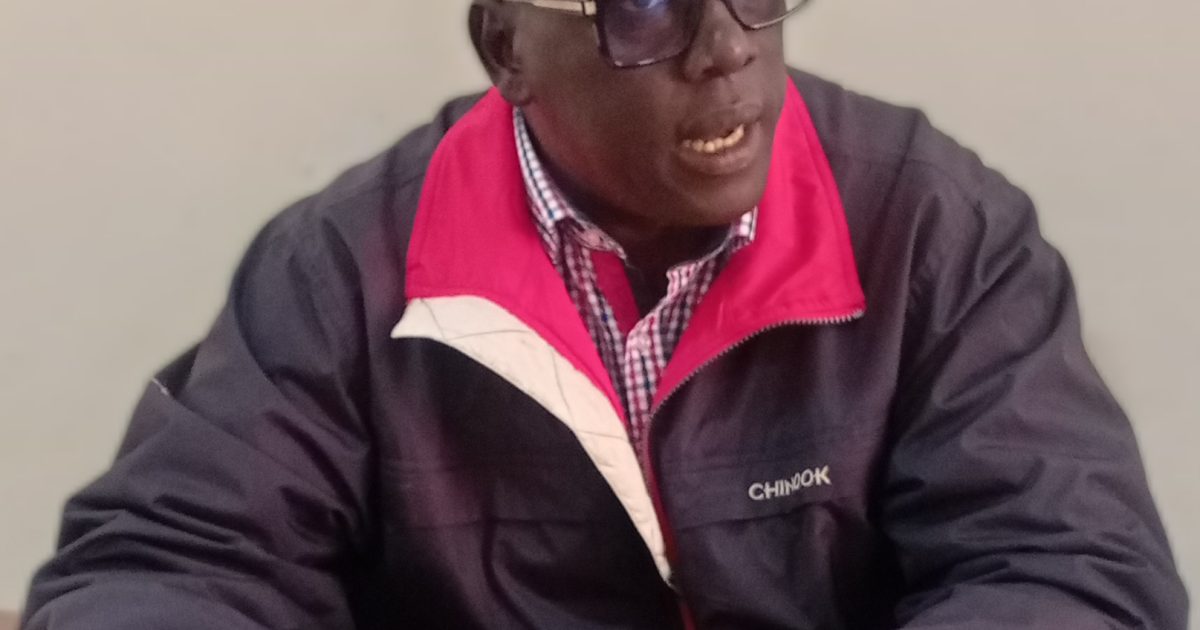
According to the County TB and Leprosy Coordinator (CTLC) for Narok County, Mr. Micah Cheburet, though the burden for TB, TB/HIV and Drug-Resistant TB (DR TB) still remains high, it is not all doom and gloom.
He stated that the health personnel in the devolved unit now have an edge in the hard-to-treat form of tuberculosis following the adoption of advanced lung disease diagnostic equipment obtained through support from the national government and development partners.
According to the World Health Organization, Kenya is one of the 30 countries globally with the majority (at least 80 per cent) of TB cases.
Mr. Cheburet explained that due to the deployment of advanced diagnostic equipment, 1,556 cases of drug-susceptible tuberculosis and 11 cases of drug-resistant tuberculosis had been diagnosed in Narok last year and patients were put on treatment.
Currently, in Narok, for every 100,000 people, we have a 146 prevalence of tuberculosis cases. Factors that are fuelling the rising prevalence in this region range from poor and crowded housing conditions in manyattas, the migratory nature of pastoralists and misdiagnosis of the condition,” states the coordinator.
In an interview with Kenya News Agency at the Narok County Referral Hospital, Mr. Cheburet singled out misconceptions about the disease, over-reliance on traditional herbalists, failure to seek early treatment and growing HIV/Aids burden as drivers of new tuberculosis cases in the devolved unit.
The TB and Leprosy Coordinator indicated that the use of ultra-portable digital chest X-ray machines with Artificial Intelligence (AI) had enhanced efficiency and accuracy in TB screening, besides enabling a larger number of people to be screened.
“The use of X-ray with a Computer Aided Detection (CAD) is a game changer in the fight against TB and is of great help in finding missing cases,” stated the coordinator.
The advanced diagnostic equipment are stationed at public health facilities in Narok Town, Kilgoris, Ololunga and Nairegia Enkare.
“We expect the new equipment to support active case finding strategies and strengthen surveillance efforts aligned with national TB control priorities within the regions. The new equipment builds on earlier county investments in portable digital X-ray technology that have significantly improved TB case finding, reduced diagnostic delays and eased congestion at referral hospitals. By enabling same-day screening and results, the AI-supported system enhances timely linkage to care and improves treatment outcomes,” explained the coordinator.
He said the machines can trace people who have no symptoms of TB but have been infected.
The X-ray machines display wounds on the chest and lungs.
Mr. Cheburet observed “Since they are digital machines, it means the results are instant. The new X-ray machines are better than the older versions of screening for TB such as sputum test microscopy which would miss out on some cases.
“These compact, battery-operated machines—small enough to be carried in backpacks—emit lower radiation doses and are especially suited for hard-to-reach communities. When paired with AI-powered Computer-Aided Detection (CAD) software, the devices provide instant image analysis, improving diagnostic accuracy and significantly shortening the time between screening and potential diagnosis,” he added.
The coordinator pointed out that deployment of the new technology had led to the detection of multiple conditions, including chronic obstructive pulmonary diseases (COPD), lung nodules, asthma, bronchitis, pleural effusion, and pneumothorax, with patients promptly referred to link facilities for management.
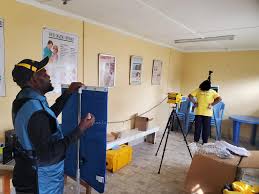
He, however, stated that health care facilities run by the devolved unit use multiple modern diagnostic tools, such as a combination of chest x-ray and the GeneXpert which can detect if a patient has drug-resistant TB or not.
The advanced technology adopted by the County Government at its health care facilities also includes spirometry for lung function testing, molecular TB tests and TrueNat point-of-care nucleic acid amplification test equipment to enhance the precision and efficiency of TB diagnosis, facilitating appropriate treatment.
While explaining that up to 50 percent of people with TB do not have the classical symptoms of the disease, Mr. Cheburet noted that the only way they will be diagnosed early and before they have symptoms is through new advanced technologies.
The coordinator expressed optimism that with the new tools they are edging towards finding the 40 per cent of missing cases thereby reducing further community transmission of TB.
Five years ago, the World Health Organization (WHO) endorsed the rapid molecular test TrueNat.
TrueNat, which is more advanced in testing, is a chip-based molecular test for TB that is battery-powered to operate in peripheral laboratories and can generate results in one hour.
The coordinator indicated that in addition to fast detection of tuberculosis, it can detect resistance to Rifampicin in an additional one hour, meaning that if a patient is detected to have this strain that is resistant to Rifampicin, they will be put on the right medication.
“TrueNat point-of-care nucleic acid amplification test, which is a portable digital Chest X-ray equipment, has improved access to TB testing for patients with signs and symptoms of TB, especially in hard-to-reach areas where sample referral systems are unavailable or not properly constituted. It has a short test turnaround time, reducing overall test turnaround time and time to TB treatment,” he pointed out.
GeneXpert diagnostics have become the gold standard for TB testing, particularly for drug-resistant TB (DR TB), which is difficult to diagnose through the traditional sputum smear technologies or chest X-rays.
GeneXpert can also rapidly detect rifampicin-resistant TB (a proxy for DR-TB diagnosis) along with drug-susceptible TB. But the diagnostic machines need electricity and are expensive to operate.
Mr. Cheburet pointed out that back in the day, when health care facilities used to rely on the old X-ray machines and other methods, so many TB cases would be missed, and it would also take many days before getting the results.
The digital Artificial Intelligence-enabled X-ray machine provides automated interpretation of radiology exams like X-rays, CTs and ultrasound scans, enabling faster diagnosis and speedier treatment of the disease.
Eradication of TB in Africa has been challenging due to various social, economic, healthcare, and biological factors.
The co-infection of HIV/Aids and TB is a major challenge as it weakens the immune system, making individuals more susceptible to TB and complicating the management of both diseases.
Limited access to healthcare due to poverty, the high cost of treatment, and the inability to maintain proper nutrition, which is crucial for TB recovery, have exacerbated the situation.
Tuberculosis remains a major cause of morbidity and mortality in Kenya. It affects all age groups. The major factor responsible for the large TB disease burden in Kenya is the concurrent HIV epidemic.
According to Kenya Demographic Survey 2022, 12,000 people are infected with TB every year, while 32,000 die annually. Deaths reported were 21,000, a reduction from 31,000 in 2019.
Mr. Cheburet said the County Government has stepped up efforts to prevent and manage Tuberculosis (TB) through various interventions including training over 100 Community Health Promoters (CHPs) to enhance early TB prevention, detection and treatment at the grassroots level.
He said the devolved unit was also continuously carrying out surveillance among county residents who did not exhibit symptoms of the disease as a significant proportion of Kenyans are carriers of Latent TB.
“We need to catch the condition early and treat it before it makes people sick. This will bring down the cases of Active TB in the country. We are widening the scope of latent TB screening and treatment,” noted the official.
“Some sections of the population, due to their low immunity that may be as a result of various factors, are likely to develop Active TB if they are carriers of Latent TB. So, to prevent that from happening, we need to screen them and treat the condition. Generally, if your immunity is likely to be low for one reason or another, then it’s important you present yourself to be screened for Latent TB,” advised Mr. Cheburet.
Other high-risk groups that are targeted for Latent TB screening and treatment include people receiving dialysis, those preparing for organ transplants as well as people with non-communicable diseases like cancer and diabetes as their immunity is usually low.
By Emily Kadzo