The government will scale up funding and infrastructure to support learners with special needs participating in co-curricular activities, the Ministry of Education has said.
Speaking during the closing ceremony of the Term One National Special Needs Education (SNE) Games at Lions Secondary School in Kisumu, Special Needs Education Director Fredrick Haga said the State is committed to making the games fully inclusive while expanding opportunities for learners across the country.
Haga said participation in the games has grown significantly over the years, rising from fewer than 200 learners to more than 700 currently, a move he described as a major milestone in promoting equity in education.
“It is the intention of the Ministry to ensure that these games are fully inclusive. As we push for increased budgetary allocation, we want to bring more learners on board and expand both the numbers and the range of activities,” he said.
He noted that the integration of learners with special needs into mainstream co-curricular activities marks a shift towards an Olympic-style model that promotes interaction, competition and shared learning experiences among all students.
The director emphasised that co-curricular activities, including sports, drama, music and science clubs are an essential part of the learning process, helping learners nurture talents and build life skills beyond the classroom.
“To us as a Ministry, the most important thing is participation. These platforms give learners a chance to compete with their peers, enjoy themselves and explore their potential,” he said.
Haga added that the government is investing in specialised equipment and infrastructure to cater for the unique needs of special needs learners, particularly those pursuing sports and arts pathways.
“When we talk about games for learners with special needs, we are dealing with specialised equipment. More schools, with support from government and partners, are now acquiring these resources to enable effective participation,” he said.
He assured stakeholders that the Ministry is also working to improve infrastructure in SNE schools to support talent development, noting that learners with abilities in sports and the arts should be able to pursue those pathways even after completing school.
At the same time, Haga said the Ministry is working round the clock to ensure capitation funds are released to the schools ahead of the reopening for the second term.
He acknowledged concerns over delays in disbursement, attributing them to resource constraints, but maintained that the government remains committed to timely facilitation.
“The Ministry can never intend to delay capitation. Once resources are available, the funds are released immediately. We are working to ensure schools receive the capitation ahead of term two reopening,” he said.
The director further revealed that ministry is keenly monitoring the progress of the games and has pledged continued government support to expand the programme.
He lauded teachers, organisers and stakeholders for their role in mentoring learners and ensuring the success of the national event, singling out participants as the driving force behind the programme.
“Learners are the reason we are here. Their effort, resilience and talent continue to make these games a success,” he said.
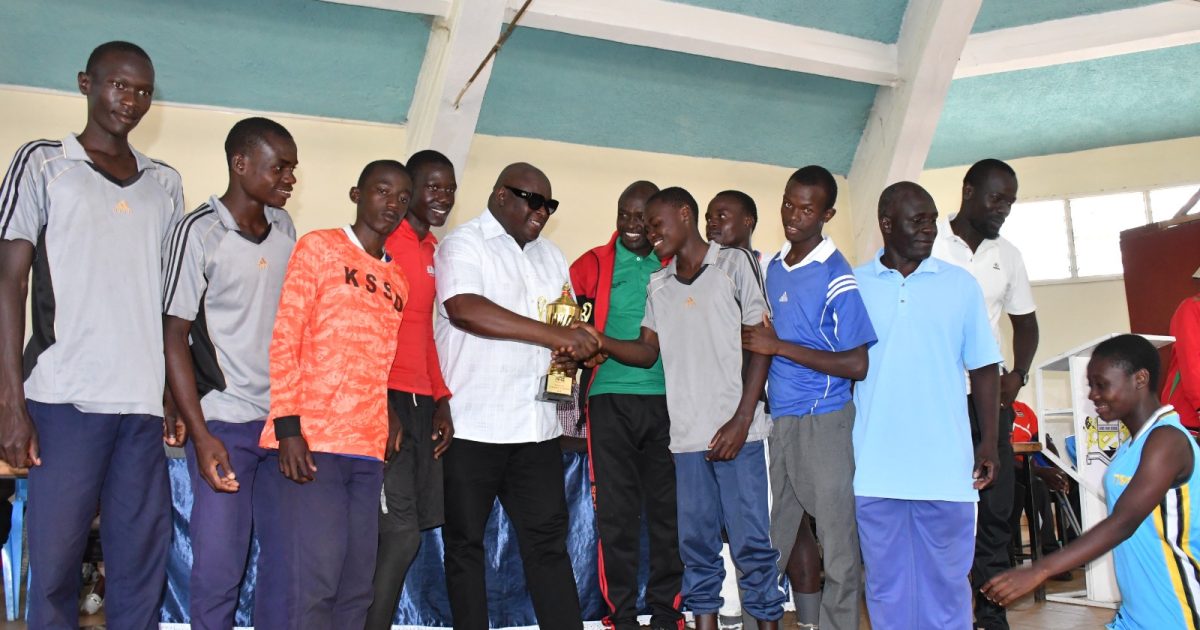
The games, organized by the Kenya Secondary School Sports Association (KSSSA) brought together talented students to showcase their skills, resilience, and sportsmanship.
They actively participated in table tennis, athletics, football, and netball, among other sporting activities.
Despite facing visual, hearing, mental, and physical challenges, they competed with determination and confidence.
By Chris Mahandara