Kwale County is facing a growing public health concern as hundreds of men continue to suffer from untreated hydrocele and hernia conditions linked to lymphatic filariasis, a mosquito-borne disease that causes severe swelling and disability.
According to Dr Paul Gathuma, Chief Medical Officer at Kwale Hospital, ongoing medical outreach efforts have brought relief to some patients but many more remain in urgent need of care.
“We have been treating men whose scrotums had enlarged to the point that they could no longer work or carry out their daily activities. This condition has become a heavy burden, especially for older men,” he said.
Through a countywide screening exercise conducted in partnership with Amref Health Africa, medical teams assessed 848 men across Kwale. Of these, only about 100 have undergone corrective surgery so far.
“We still have around 700 patients who have not yet received operations, and from what we are seeing, the actual number of affected individuals could be double, possibly up to 1,400 men,” said Gathuma.
The screening covered all sub-counties, including Kinango, Lunga Lunga, Msambweni, and Kwale, with some areas reporting especially high case numbers. In certain villages such as Tunza, Lutsangani, and Vanga, clusters of up to 20 affected men were identified within a single community.
Lymphatic filariasis, commonly known as elephantiasis, is caused by parasites transmitted through mosquito bites. The parasites block the lymphatic system over time, leading to fluid buildup and extreme swelling in limbs or the scrotum.
“This process can take 10 to 15 years. When the lymphatic vessels are blocked, fluid accumulates in the tissues, causing swelling. In men, this results in hydrocele,” added the doctor.
Beyond physical discomfort, the condition often leads to social stigma and economic hardship.
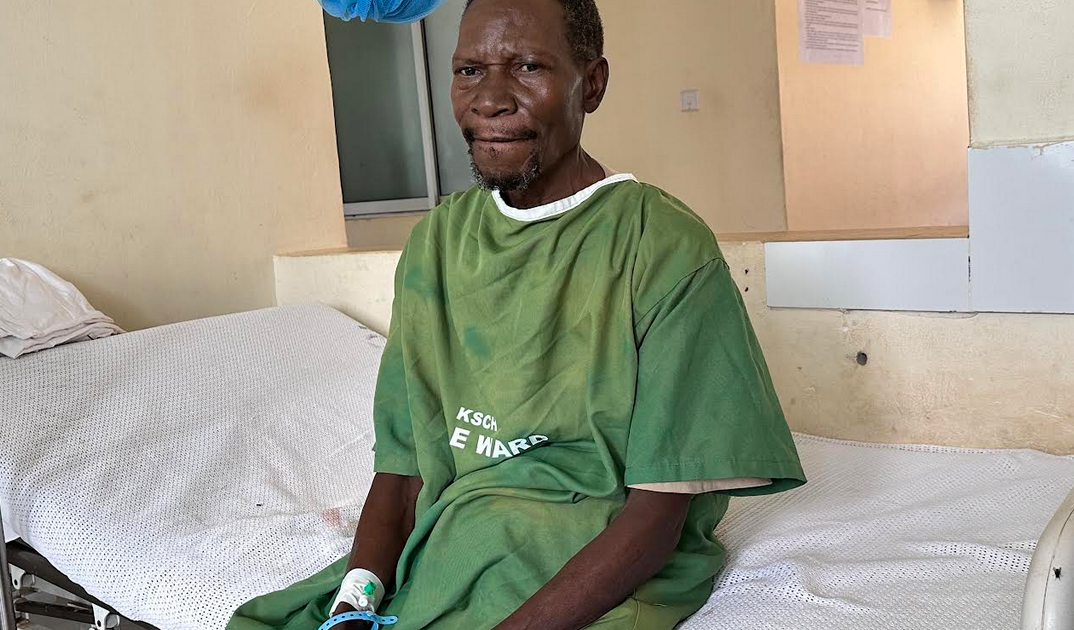
For those who receive treatment, the results can be transformative. One beneficiary, 51-year-old Abdallah Juma Mwamtsami, lived with the condition for over a decade before undergoing surgery.
“My life has completely changed. I can now support myself again,” he said.
Ramadhan Gasambi, a 51-year-old road construction worker from Shimba Hills, lived with the condition for over two decades before seeking treatment.
He believes he contracted the disease in 1997 while working on a road project that required standing in river water for long hours. What began as mild discomfort gradually developed into painful swelling that interfered with his ability to work, forcing him to seek medical intervention years later.
“I stayed with the condition for many years thinking it was normal, but the pain kept getting worse. By 2020, I knew I had to look for treatment,” said Gasambi.
Dr Gathuma recounted a recent case of a patient whose condition had become extreme.
“Just last week, we treated a man whose scrotum had swollen down to his knees. We drained seven and a half litres of fluid. He had lived like that for 10 years without seeking treatment,” he said.
The programme, supported by The End Fund, has been instrumental in covering hospital bills and facilitating outreach. However, uncertainty over continued donor funding now threatens its future.
“If funding is withdrawn, many patients will continue to suffer. We have already screened individuals who are still waiting for surgery. Without support, the situation may return to what it was before,” warned Gathuma.
Over the past two years, significant progress has been made in strengthening local healthcare capacity. With support from partners including the Ministry of Health, the World Health Organisation (WHO), and the University of Nairobi, 47 healthcare workers in Kwale have been trained to perform specialised surgeries.
“Our doctors now have the skills to carry out these procedures using modern techniques that prevent recurrence. This is a major step forward,” Dr Gathuma noted.
Despite these gains, financial barriers remain a major challenge. Many patients cannot afford treatment, and while some are enrolled in the Social Health Authority (SHA), others have not completed their contributions.
Dr Gathuma is now appealing to donors and partners to sustain the programme.
“We urge Amref and all supporting partners to continue assisting these patients so we can complete the surgeries. There are many more who are suffering silently and I am sure they will come forward once they see others being treated,” he said.
He emphasised that without sustained funding and outreach, vulnerable populations, especially in remote and low-income areas, risk being left behind in the fight against neglected tropical diseases.
As the need grows and resources remain uncertain, the future of hundreds of patients in Kwale hangs in balance.
By Chari Suche