Kenya has successfully completed National Performance Trials (NPTs) for genetically modified (GM) cassava.
The trials were conducted in Kandara, Murang’a, as well as in Mtwapa and Alupe, and according to the National Biosafety Authority (NBA), the crop is now ready to move towards commercialisation.
Virus-resistant cassava will now join genetically modified Bacillus thuringiensis (BT) maize, which has already been approved and is ready for farmers.
However, ongoing court cases have hindered the progress, especially for the two products, and while the government is pushing to reopen the door to GM crops, the court-ordered suspension remains in place.

The NBA says it is working through the legal system to ensure that approved technologies can be made available, but it also has the mandate to create public awareness and educate Kenyans on GMO foods, including regulatory safeguards and the importance of informed consumer choice.
Speaking at KALRO Kandara during a media engagement forum followed by a field visit, NBA acting CEO, Dr. Ann Karimi, said the Authority remains neutral on GMOs and is focused solely on ensuring safety.
“We are not for or against GMOs. Our work is to ensure GMOs in the country are safe for use in Kenya,” she said, adding that these efforts are aimed at mitigating food insecurity, especially in the face of climate change.
Karimi noted that Bt cotton is already approved and in use in several counties. Virus-resistant cassava has completed both field and national performance trials at seven sites, including Kandara, Mtwapa, Alupe, and Kiboko, and its varieties are approved. Bt maize and GM potatoes are also in the pipeline.
She emphasised that the Authority’s role is to provide accurate information to counter widespread misinformation and disinformation, which often leads to negative public perception.
“The biggest hurdle is the court system. Once cleared, cassava should be available to farmers within a short time,” she said.
Karimi further revealed that Kenya spends nearly half a trillion shillings annually on food imports, noting that GMOs are “one of the solutions” to food insecurity, alongside irrigation and mechanisation.
She stressed that the adoption of GM foods is voluntary and not intended to force GMOs on Kenyans, but rather to provide an alternative.
To strengthen surveillance of genetically modified organisms at border points, Karimi said the NBA currently operates eight border offices and plans to expand to 24 within the next two to three years. Proposed locations include Isebania and Moyale, aimed at improving monitoring of imports.
Julia Njagi, Deputy Director-In-Charge of biosafety licensing, monitoring, and surveillance, said that cassava is one of the mainstays in most homes. However, he added, its supply has been declining, particularly due to diseases that GM technology is aiming to address.
“We are hoping that this technology sees the light of day because it is something that any farmer would be able to adopt due to its direct impact on yields and as a source of income,” she said.
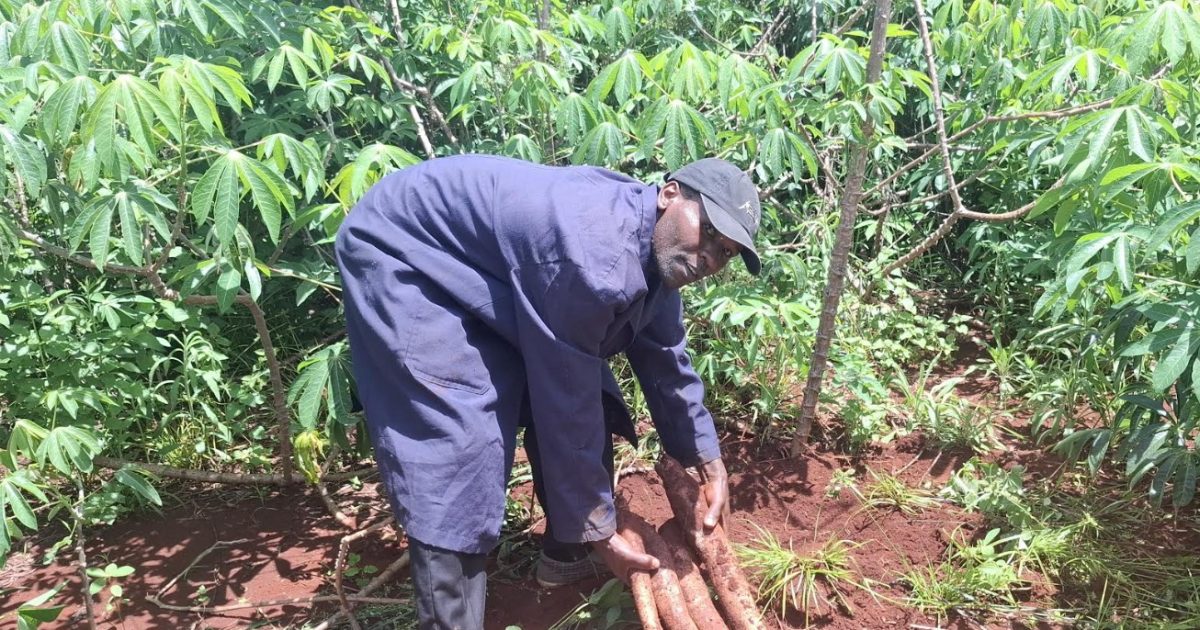
Njagi explained that, in simple terms, the technology works by “immunising” cassava to fight off viruses that cause tuber rot. It is effective against Cassava Brown Streak Disease (CBSD) and Cassava Mosaic Disease (CMD), which can lead to up to 100 percent yield losses.
She further clarified that the technology does not reduce cyanide levels in cassava. “Different varieties of cassava have different levels of cyanide, but this technology has nothing to do with reducing cyanide. It is specifically designed to protect cassava from cassava brown streak disease, not to affect cyanide levels. This cassava has undergone field trials,” she said.
The Deputy Director added that the National Biosafety Authority (NBA) operates within a robust regulatory framework, ensuring that all trials are thoroughly assessed. These assessments cover food safety, environmental safety, and socioeconomic considerations, all within the law.
Njagi also emphasised the importance of public awareness, noting that while it is mandated by law, it is also a priority for the authority. “We must educate the public and ensure they understand what we are doing. Public participation is a key component in evaluating the safety of GMOs,” she said.
The application for cassava was approved by the National Biosafety Authority in 2013 for research under confined field trials by the Kenya Agricultural and Livestock Research Organization (KALRO). The trials were conducted over a period of more than 10 years before data was submitted for consideration for environmental release.
Once the application was reviewed by the NBA, approval was granted for the next stage, leading to National Performance Trials. These trials have been conducted over two seasons, and the process is now complete. The varieties targeting CMD and CBSD are now awaiting official release.
In Kenya, the NBA conducts GMO surveillance in collaboration with agencies such as KEBS, KRA, and KEPHIS. These agencies inspect, sample, and test imported goods to ensure compliance with the Biosafety Act, 2009. This process verifies that all imported, exported, or transiting GMO materials are authorised, properly labelled, and pose no risk to human health or the environment.
By Wangari Ndirangu