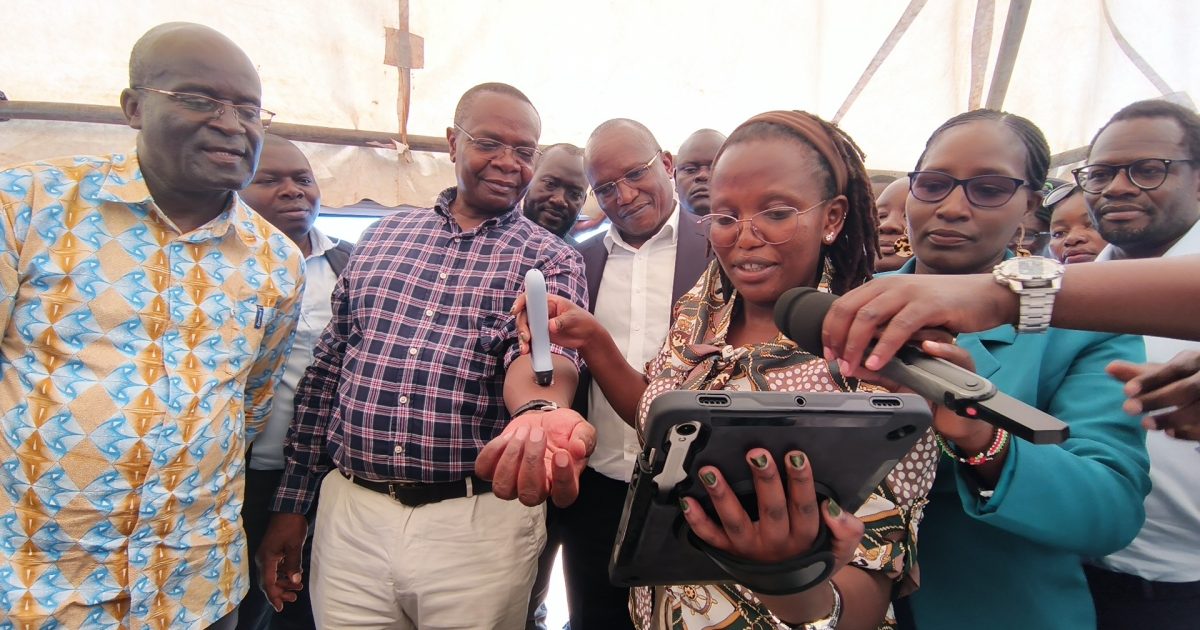
The County Government of Busia, in partnership with AMPATH, Moi University and Global consortium of institutions, has unveiled portable ultrasound devices, about the size of a tablet, to enhance rapid diagnosis and timely treatment of medical conditions.
The devices, known as Point of Care Ultrasound (POCUS), are designed to shorten the time between clinical suspicion and diagnosis, enabling faster medical response and improved patient outcomes.
POCUS technology will play a critical role in detecting intra-abdominal conditions, particularly in high-risk pregnancies, thereby helping to reduce maternal and neonatal mortality rates, which have remained a concern in Busia County.
In pregnancy care, the devices will assist in identifying complications such as abnormal fetal position (malpresentation); placenta-related complications including placental rupture, and other underlying conditions that, if undetected, could lead to severe health risks.
Beyond maternal health, the devices will also aid in detecting internal injuries in accident victims, diagnose breast conditions, and assess lung and cardiac complications.
Due to their portability, the devices can be used at the patient’s bedside by trained healthcare workers, even those who are not specialised radiographers, thereby improving access to diagnostic services, thus enhancing patient safety and accelerating treatment.
Following diagnosis, patients with severe conditions will be promptly referred to higher-level facilities using newly launched structured referral guidelines.
While unveiling the POCUS devices and launching referral guidelines at Malaba Health Centre on Tuesday, Governor Dr Paul Otuoma urged residents to prioritize routine medical check-ups.
“Some people delay seeking medical attention until their condition worsens, making treatment more difficult and costly. This delay often leads to advanced complications that could otherwise be prevented through early diagnosis and timely intervention, which is why we are working with partners to improve health outcomes across the county,” said the governor.
He also commended Community Health Promoters (CHPs) for their role in community sensitisation and referrals, noting their contribution to reducing health-related challenges at the grassroots level.
Moi University Deputy Vice Chancellor in charge of Academics, Research and Extension Prof. Khaemba Ongeti emphasized that the introduction of POCUS directly addresses the challenge of limited access to timely and accurate diagnostic services at the primary healthcare level.
“Delays in diagnosis and late presentation of advanced diseases are not just system inefficiencies; they represent human stories of preventable suffering,” he noted.
He clarified that the POCUS devices are not intended to replace formal radiology services but rather to complement them by strengthening the entire continuum of care.
“The introduction of POCUS is a transformative step that equips frontline healthcare workers with the ability to perform bedside ultrasound, enabling faster and more accurate clinical decision-making,” he added.
He further noted that the referral guidelines will ensure patients receive appropriate care at the right time and place.
To support the initiative, a POCUS Centre of Excellence has been established at Moi University and Moi Teaching and Referral Hospital (MTRH).
“The Centre of Excellence will support training and research while ensuring Kenya continues to lead in developing best practices and evidence-based approaches in healthcare,” he said.
Deputy Governor Arthur Odera noted that the partnership between Busia County Government, Moi University and AMPATH has previously yielded positive results in tackling HIV/AIDS, Tuberculosis and other public health challenges.
by Moses Wekesa