The Intersectoral Forum on Agrobiodiversity and Agroecology (ISFAA) has engaged the Kilifi County Government in a move aimed at promoting agroecology through the development of an agroecology policy, farmer sensitization and plans to host the 5th Indigenous Seeds and Food Harvest Fair 2026.
ISFAA is a multi-stakeholder platform (MSP) that focuses on the conservation of agrobiodiversity and promotes agroecology as a pathway to transform food systems and achieve sustainable food and nutrition security. It is also the secretariat for the National Technical Committee on Agroecology (NTCA).
Kilifi County continues to face significant agri-food system challenges, including erratic rainfall, declining soil fertility and the growing effects of climate change.
In response, stakeholders are increasingly turning to sustainable and locally adapted solutions, with agroecology emerging as a key approach.
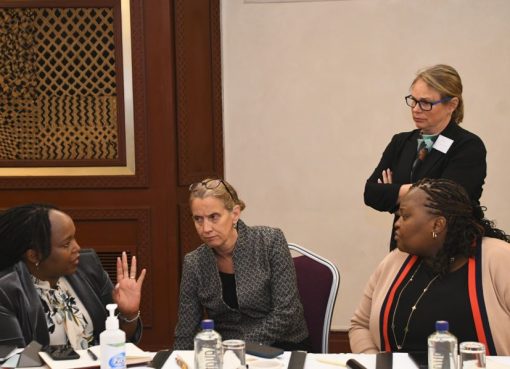
Speaking during a courtesy call at the Kilifi County government offices, ISFAA Coordinator, Dr. Martin Oulu, said the platform plans to host the 2026 Indigenous Seeds and Food Fair in the County.
Oulu noted that the annual event, typically held in October to coincide with World Food Day, brings together farmers, researchers, policymakers, and communities, to celebrate the rich indigenous seed and Food culture.
The Fair will showcase indigenous seeds and foods, while providing a platform for knowledge exchange, seed sharing, and the promotion of indigenous crops that are well adapted to local conditions.
“We hold these indigenous seeds and food Fairs so that communities can showcase and share their traditional seeds and foods, and so that younger generations can understand their importance and continue conserving them,” he said.
The Coordinator added that indigenous crops are not only resilient to climate change, but are also highly nutritious, playing a critical role in improving health, especially among vulnerable populations.
“In many cases, up to 80 to 100 percent of seeds used by small-scale farmers are indigenous. These seeds are resilient, nutritious and well suited to our local environment,” he said.
Oulu revealed that previous editions of the seed fair were held in Laikipia (2025), Kisumu (2024) and Nairobi (2023 and 2022).
He said Kilifi County has been identified as one of three priority counties, to pilot the implementation of Kenya’s National Agroecology Strategy for Food Systems Transformation (2024-2033), alongside Murang’a and Vihiga counties.
Oulu explained that while Murang’a and Vihiga counties have already agroecology policies and legislative frameworks in place, Kilifi is yet to develop such, but was selected to represent coastal regions and address unique challenges such as climate change.
“Kilifi presents a strong case study of how agroecology can help address climate and livelihood challenges in coastal regions,” he said.
The coordinator noted that the national government had already adopted the National Agroecology for Food System Transformation Strategy (NAS – FST) and counties are expected to domesticate and implement it in line with their devolved agricultural mandates.
The implementation of NAS-FST is being coordinated by the NTCA, where Dr. Oulu serves as vice chair, with ISFAA also playing a key role as the secretariat.
He said ISFAA is working closely with counties and the Ministry of Agriculture to support the domestication of the NAS-FST. This includes guiding counties in developing agroecology policies, laws, strategies and action plans.
Beyond showcasing seeds, the Seed Fair will also serve as a platform for advocacy on seed policies and farmers’ rights.
Oulu highlighted ongoing efforts to review Kenya’s seed laws, noting that a recent court ruling declared some restrictions on the sharing and sale of indigenous seeds unconstitutional.
“Communities should be able to conserve, share, and sell their seeds. These are God-given resources that they have utilized and preserved over generations,” he said.
He added that ISFAA is part of a Multi-stakeholder Committee working on seed legal reforms, including provisions for access and benefit sharing to ensure communities benefit, when their indigenous resources are commercialized.
Oulu said the initiative will also focus on sensitizing farmers and agricultural extension officers on agroecological practices, including the use of indigenous seeds, organic fertilizers and sustainable farming methods.
“Farmers will be trained in seed saving, storage, soil health management and climate-resilient farming techniques, aimed at improving productivity, while conserving biodiversity,” he said.
At the same time, community sensitization efforts will promote the adoption of traditional crops such as indigenous vegetables and crops, which are better suited to local conditions.
Kilifi County officials led by County Executive Committee Member (CECM) of Agriculture, Livestock Development & Blue economy Dr. Chula Mwagona welcomed the initiative and partnership, noting its potential to strengthen food security and position the devolved unit for sustainable agriculture, while empowering farmers.
Mwagona emphasized the importance of such collaborative platforms in driving meaningful change, while underscoring the county’s commitment in hosting the Seed Fair.
“A committee has already been formed to oversee preparations for the seed fair, with more details expected to be communicated in due course,” he said.
The County Executive noted that some agroecological practices are already being implemented in the area , providing a strong foundation for the success of the initiative.
He added that community sensitization on agroecology will carried out to encourage the adoption of high value traditional crops like indigenous vegetables and crops, which are better adapted to local conditions.
Mwagona noted that ISFAA’s engagement reflects a growing national movement to promote agroecology and protect indigenous knowledge, as key pillars of Kenya’s agricultural future.
by Anita Omwenga