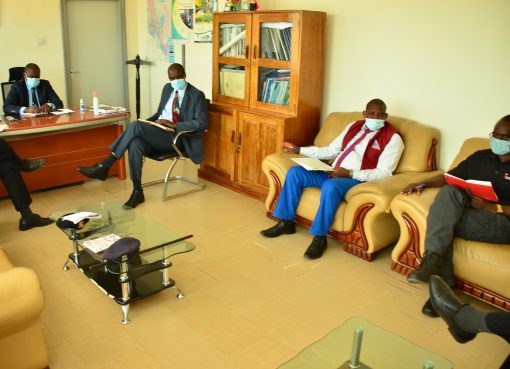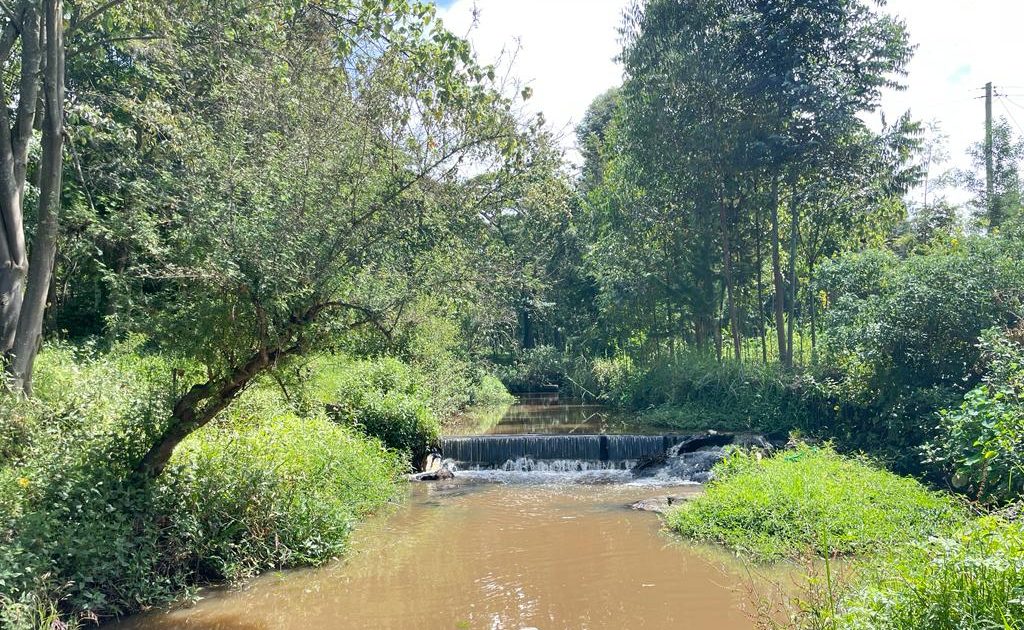
Nakuru County Government has announced plans to beacon the River Njoro to protect it from encroachment and harmful human activities.
The initiative, according to Chief Officer for Housing and Urban Development Engineer Kuria Kamau, is part of a broader commitment by the devolved unit’s administration to protecting water catchment areas and ensuring environmental sustainability as Njoro Sub-County moves toward achieving municipality status.
He stated that in its town planning initiatives, Governor Susan Kihika’s government was prioritising proper governance and sustainable development to protect the environment.
Engineer Kamau who spoke in Njoro also announced plans to complete and fully equip the Sh150 million Njoro Level 4 Hospital by the end of the year.
The Chief Officer emphasised the critical importance of River Njoro, noting the need to safeguard it from encroachment and other harmful activities.
He said they were restoring the degraded riparian land around River Njoro and River Ndarugo in collaboration with State agencies, research and educational institutions and environmental conservation lobby groups.
The devolved unit is further harnessing natural wetlands to buffer citizens against climate change impacts and boost resilience.
According to the Chief Officer, the county is currently spearheading the planting of indigenous trees, which have been cut down in recent years by illegal loggers and small-scale farmers.
Engineer Kamau said they were prioritising protection and conservation of the Njoro River riparian land that stretches for 3.5 kilometre from Sigaon Village to Neissuit Center within Neissuit Ward in Njoro-Sub-County) and the 5-kilometre River Ndarugo riparian land that runs from Kenyatta Bridge to Piave in Njoro Ward, Njoro Sub- County.
The Chief Officer indicated that the devolved unit’s administration was concerned about the willful destruction of riparian land by individuals and businesses.
He noted that River Njoro was critical as it supported the livelihoods of thousands of people, recharges groundwater aquifers and supports biodiversity.
He urged the community to protect the source of River Njoro for the sake of Lake Nakuru.
“Without protecting this source, it will mean the slow death of Lake Nakuru and this will be disastrous to the country as Lake Nakuru National Park is one of the biggest foreign earners for Kenya,” said the official.
Engineer Kamau indicated that several steps must be taken for sustainable wetlands management adding that better data and knowledge need to be readily available to inform policies, plans and practices.
“We must invest in not only generating scientific knowledge but also linking it to indigenous knowledge. This would help both in understanding the value of wetlands and decision-making on policymaking and their management,” he explained.
The Chief Officer noted that when restoring wetlands, no one should be left behind, particularly resident communities as they have been the custodians for centuries. This, he said, would mean promoting sustainable livelihood activities that reduce negative impacts on wetlands.
Engineer Kamau emphasised Governor Kihika’s administration commitment to environmental restoration, highlighting the significance of protecting river ecosystems to mitigate climate change and improve water quality.
He urged farmers to stop encroaching on riparian land and to leave a 30-metre distance between their farms and rivers.
The Chief Officer said the protection of water catchment areas and riparian land is crucial for the livelihoods of all Kenyan households.
He stated that the diminishing levels of water on the planet are due to human activities along the riparian land and the planting of a high number of trees that have a high affinity for water.
“Our aim as a county government and its partners is to educate farmers on the need to conserve the environment and protect our riparian land. Water levels in our rivers are going down due to farming activities along the rivers,” the Chief Officer indicated.
He observed that Water Service Providers (WSPs) draw the commodities for human consumption from the rivers and dams.
“Due to human encroachment on rivers, the water levels have gone down. We are urging farmers to keep off rivers so that they do not dry up,” Engineer Kamau added.
He stated that buffer zones are necessary since the environment has continued to be contaminated and destroyed and there is a need for concerted effort to protect the rivers.
Engineer Kamau pointed out that riparian areas are crucial to Kenya’s development.
He added that the tourism and energy sectors were heavily dependent on them.
The Chief Officer observed that prolonged droughts, flash floods, and famine experienced in some parts of the country highlighted the need to protect the environment.
He regretted that crucial catchment areas are disappearing due to unsustainable human activities.
Kenya has adequate policies to protect the environment.
Some of these policies include the Water Act of 2016, which prohibits the occupation, development and encroachment of riparian land.
There is also the Forest Conservation and Management Act of 2016, which prohibits development within 30 metres of a forest reserve.
Thirdly, there is the Physical Planning Act of 2019, which outlaws’ development within 30 metres of a water body.
He added that the wetlands restoration programme feeds into the 15 billion tree-growing presidential directive which is also in tandem with the ongoing global climate change discussions and greenhouse emissions cut strategies.
Wetlands have been hailed globally as carbon sinks, storing a vast amount of carbon and thus helping to mitigate climate change.
Wetlands include any land that is saturated with water like marshes and mangroves along the coasts, floodplains and wet meadows along rivers and streams, vernal pools and prairie potholes. They play a vital role in retaining water on the landscape, maintaining water cycles and reducing temperature extremes. They also store water from precipitation and slowly release it to the surrounding environment, which can recharge groundwater aquifers and maintain atmospheric water cycles.
Experts have warned that the continued tremendous wetland losses globally over the last 100–200 years have badly exposed the world to extreme weather events.
Encroachment for agricultural activities, pollution, urbanisation and climate change among others were the main threats to Kenya’s wetlands. This he added has consequently led to loss of key wetlands and associated products and services.
According to hydrologists wetlands act as natural sponges, absorbing and filtering excess nutrients, pollutants and sediments from water bodies, which help to purify water and prevent flooding. Furthermore, wetlands are essential for biodiversity conservation. They provide critical habitat for migratory birds, fish and other wildlife.
Wetlands are also important carbon sinks, with the ability to store large amounts of carbon in their soils and vegetation.
According to the United Nations Environment Programme, wetlands are among the world’s most productive ecosystems, providing a wide range of ecosystem services. These include flood control, water purification, biodiversity conservation, and climate regulation.
Viewed as empty spaces for grabbing to put up structures or expand farmlands, wetlands are on the contrary useful in balancing our ecology.
According to environmental experts wetlands slow the speed of flood waters and distribute them more slowly over the floodplain, and thus provide a key ecosystem service to mankind, particularly those who live in Africa, a continent bedeviled by the worsening impacts of climate change.
They have described wetlands as the “nature’s kidneys” of the earth because of how critical they are for the overall health of the planet.
According to the UN, we are using the equivalent of 1.6 earths to maintain our current lifestyles, and the ecosystems cannot sustain our demands.
For example, less than 1 per cent of the water on our planet is usable fresh water and is mainly stored in wetlands.
Yet according to the Global Wetland Outlook report 2021, the world has lost 35 percent of wetlands since 1970. Changes in land use and the climate are severely affecting wetlands, leading to degradation and loss.
This is placing biodiversity and human lives at risk.
By Jane Ngugi