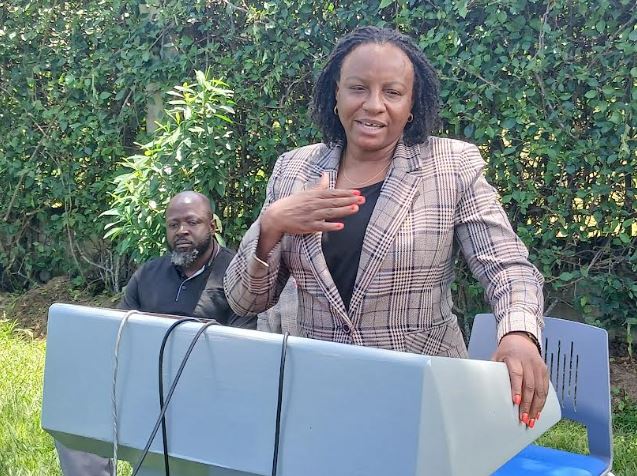
Nyanza Regional Commissioner Flora Mworoa has raised alarm over low voter registration in the region, revealing that more than 1.4 million residents with national identity cards have not enlisted.
Mworoa said the situation was compounded by a huge number of uncollected identification cards, with over 80,000 cards lying at various registration offices and Hiduma Centres in the region’s six counties.
“We have over 1.4 million residents of Nyanza Region with identity cards and without voter’s cards. We are calling them to come out and register. This is purely apolitical. We are encouraging them to comemout so that they can exercise their civic duty come 2027,” she said.
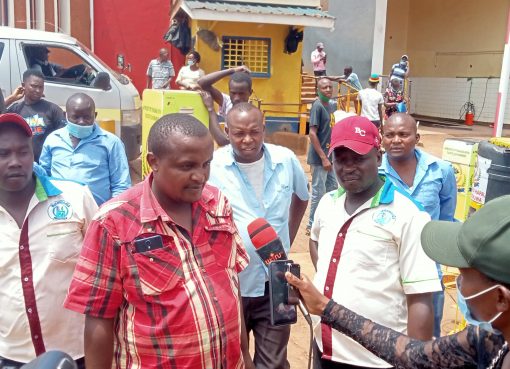
Speaking during a meeting with a team of engineers who have joined the drive to sensitize the community to register as voters, Mworoa said even though her office has enlisted the support of chiefs and assistant chiefs to ensure that all the uncollected ID’s are issued to the owners, the numbers continue to pile up.
“This number is significant and continues to rise as more IDs are processed. We are working with chiefs and assistant chiefs to deliver them to the village level,” Mworoa said.
With barely six days to the closure of the enhanced voter registration drive, the RC linked the poor turnout to voter apathy following the death of former Prime Minister Raila Odinga, whose political influence had long driven civic participation in the region.
“It is unfortunate that we lost him, but life has to continue. That is why we are calling on our people to take advantage of this window and register. Even when the enhanced voter registration ends next week, the exercise will continue at all the constituency IEBC offices,” she said.
In a bid to scale up the numbers, a team of engineers and professionals has stepped in with a technology-backed mobilisation campaign, deploying data systems, analytics and direct voter engagement targeting the 1.4 million.
Led by Eng Fredrick Owino and Benard Adhiambo, the group has set up a call centre to monitor, track and influence voter behaviour in real time.
“The narrative that you people don’t have numbers must be demystified by our people coming out to register and vote,” Adhiambo said.
He said the initiative is anchored on data-driven decision-making, borrowing from global campaign models where analytics and targeted messaging have been used to drive turnout.
“Data is the new gold. You can only maximize technology and even artificial intelligence (AI) if you have the right data. That is what we are using to change the game plan,” he said.
According to Adhiambo, the team has built systems that map out eligible voters, distinguishing those without IDs and those with IDs but not registered, allowing for targeted interventions down to the village level through government structures such as Nyumba Kumi.
“We know these individuals. We can identify them and reach them directly,” he said.
At the centre of the operation is a call centre launched to directly contact unregistered voters, with young professionals calling, persuading and recording feedback from targeted individuals.
“We have established a call centre where young men and women are reaching out to these people, persuading them irrespective of political affiliation. We are also capturing feedback so that we analyse and take the right action,” Adhiambo said.
The system, he said, is complemented by daily data tracking, enabling the team to monitor registration trends across constituencies and respond swiftly to gaps.
“Every day before 8pm, we know how many people have registered and where. That allows us to deploy resources strategically,” he added.
Engineer Fred ZB Owino said the data has already exposed stark disparities within the region, with some areas lagging significantly.
He said the intervention also includes door-to-door mobilisation through chiefs and assistant chiefs, who have been furnished with lists of individuals in their localities who have IDs but are yet to register.
“The Nyumba Kumi structure is key. Chiefs know exactly who in their villages has an ID and no voter’s card. So they are following up physically,” he said.
Owino described voter registration as a behavioural challenge requiring deliberate and innovative solutions.
“This calls for extraordinary initiatives. Voting is not just a process—it is behaviour, and we must influence it,” he said.
By Chris Mahandara