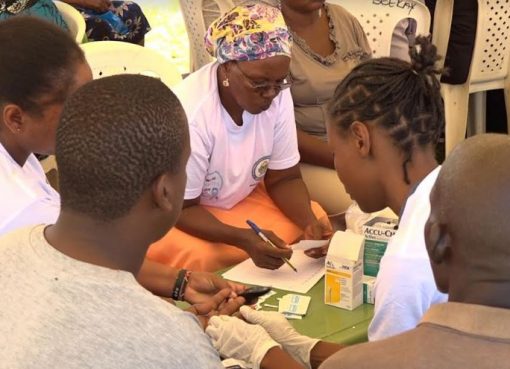
The Ministry of Health has announced plans to equip all healthcare facilities contracted under the Social Health Authority (SHA) with biometric verification devices in a bid to curb fraud concerns.
Under the new system, all SHA insurance claim approvals require fingerprint authentication, making it significantly harder to process claims without a patient’s physical presence.
Health Cabinet Secretary (CS), Aden Duale, said that more than 5,000 facilities had already been supplied with the machines, with a further 3,000 set to be equipped by next week.
Duale said the roll-out was prompted by numerous documented cases of fraud, including unusual multiple visits by the same individuals, questionable dependent registrations, and suspected collusion between individuals and health facilities to exploit the scheme.
Duale said every facility contracted under SHA will have biometric gadgets in the next two months that will help address misuse and fraud attempts by a section of individuals.
The CS said the ministry was rolling out capacity-building trainings for healthcare workers to support the effective deployment of the devices in the healthcare facilities.
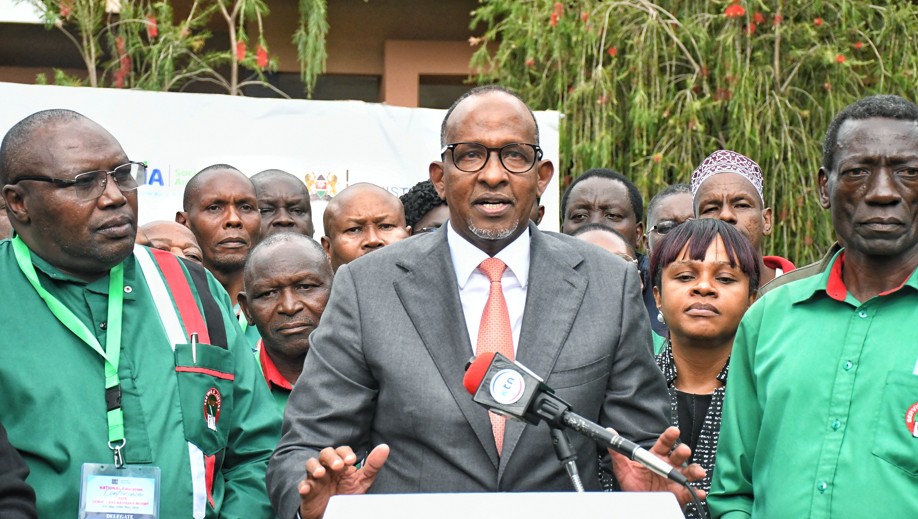
Speaking on the sidelines of an engagement with the Kenya National Union of Teachers (KNUT) in Naivasha, Duale committed to streamlining all teachers’ cover when accessing services under the new health system.
He said any facility found demanding out-of-pocket payments from teachers would be suspended from the SHA network after teachers raised concerns over the move to charge them cash.
The CS noted that 43,000 teachers had already accessed services at SHA-approved facilities in the past five months.
KNUT Secretary General, Collins Oyuu said the union was satisfied with commitments made by SHA officials to resolve teething problems teachers were facing when accessing services.
Oyuu said a more responsive healthcare system that guaranteed better coverage of teachers was a critical driver of quality education in the country.
KNUT deals with SHA to address its members’ concerns on their healthcare coverage, following Kenya Union of Post Primary Education Teachers (KUPPET)’s deal with the health authority, ensuring that all teachers are assured better care.
The new system replaced the defunct National Health Insurance Fund (NHIF) on October 2024, following the enactment of the Social Health Insurance Act, 2023, as part of government Universal Health Coverage agenda.
SHA has three components, including the Primary Healthcare Fund for preventive and community-based services, the Social Health Insurance Fund (SHIF) for inpatient and outpatient care, and the Emergency, Chronic, and Critical Illness Fund.
Recent data from the Health Ministry indicate that more than 30 million Kenyans had registered with SHA, ensuring that more Kenyans were able to access healthcare across the country.
According to the 2026 Economic Survey, SHIF paid out Sh91.5 billion in claims, including Sh33.4 billion in outstanding obligations against member contributions of Sh57.7 billion collected during the 2024/25 Financial Year.
A forensic audit by SHA’s digital health system uncovered multiple fraudulent practices, including claiming for more expensive procedures than those performed, falsification of records to inflate claims, and conversion of outpatient visits to inpatient billing for services patients denied receiving.
The ministry has so far suspended tens of facilities, which have been flagged for being involved in fraud activities, while former SHA officials have been fired from the authority pending criminal investigation by the Director of Criminal Investigations (DCI).
By Erastus Gichohi