National Assembly Deputy Speaker, Gladys Boss Shollei, has called on Parliament and public institutions to modernise record-keeping systems, warning that poor documentation continues to weaken transparency, accountability and institutional memory in the country.
Speaking during the opening of the 8th Annual Conference of the Hansard Association of Kenya (HAK) in Kisumu, Shollei said credible records remain the backbone of democratic governance and public trust.
She said despite major advances in technology, many institutions still struggle to maintain accessible and reliable records, with some deliberately resisting transparency.
“I have seen how many institutions and agencies of government have difficulty in trying to keep records or store records in an easy and accessible manner,” she said.
“Some of it is because they do not like transparency,” she added.
The Deputy Speaker said Parliament had distinguished itself by preserving legislative records even during periods when democratic space was restricted, describing Hansard Officers as silent custodians of the country’s political and legislative history.
Tracing Kenya’s parliamentary journey from Independence in 1963 to the 2010 Constitution, Shollei said the return of multi-party democracy and the advent of devolution significantly expanded the role of Hansard reporting.
She noted that the creation of the Senate and 47 County Assemblies transformed legislative reporting from a national function into a devolved democratic tool essential for oversight and public participation.
According to Shollei, at least 37 County Assemblies now have operational Hansard departments, a development she described as a major gain for accountability at the grassroots.
“The Hansard is no longer confined to the national Parliament. It now operates across County Assemblies, capturing legislative discourse at multiple levels of governance,” she said.
She challenged legislative institutions to invest in digital archiving, real-time transcription technologies and harmonised reporting standards to improve efficiency without compromising accuracy and neutrality.
She further pushed for the establishment of a formal professional curriculum for Hansard officers through the Centre for Parliamentary Studies and Training, saying the profession had become increasingly specialised in the digital age.
Drawing from her experience at Kenya Law Reports, she recalled how poor documentation once crippled access to legal information, forcing lawyers and students to rely on photocopied judgments and handwritten records.
She said later the digitisation of legal archives transformed access to justice and positioned Kenya among the first African countries to make legal information freely accessible online.
Clerk of the Senate Jeremiah Nyegenye said while AI-powered transcription tools were revolutionising legislative reporting, human expertise remained indispensable in interpreting context, tone and parliamentary nuance.
“The Hansard reporter of the future must evolve into a hybrid professional — technically proficient and digitally literate,” he said.
Nyegenye noted that parliamentary debates had become increasingly complex due to multilingual contributions, informal expressions and the demand for near real-time publication of proceedings.
Deputy Clerk of the National Assembly Serah Kioko said Hansard had evolved from handwritten notes and analogue recordings into sophisticated digital reporting systems, but its core responsibility remained unchanged.
“The Hansard becomes far more than a transcript. It becomes the institutional memory of Parliament and part of the democratic memory of the nation itself,” she said.
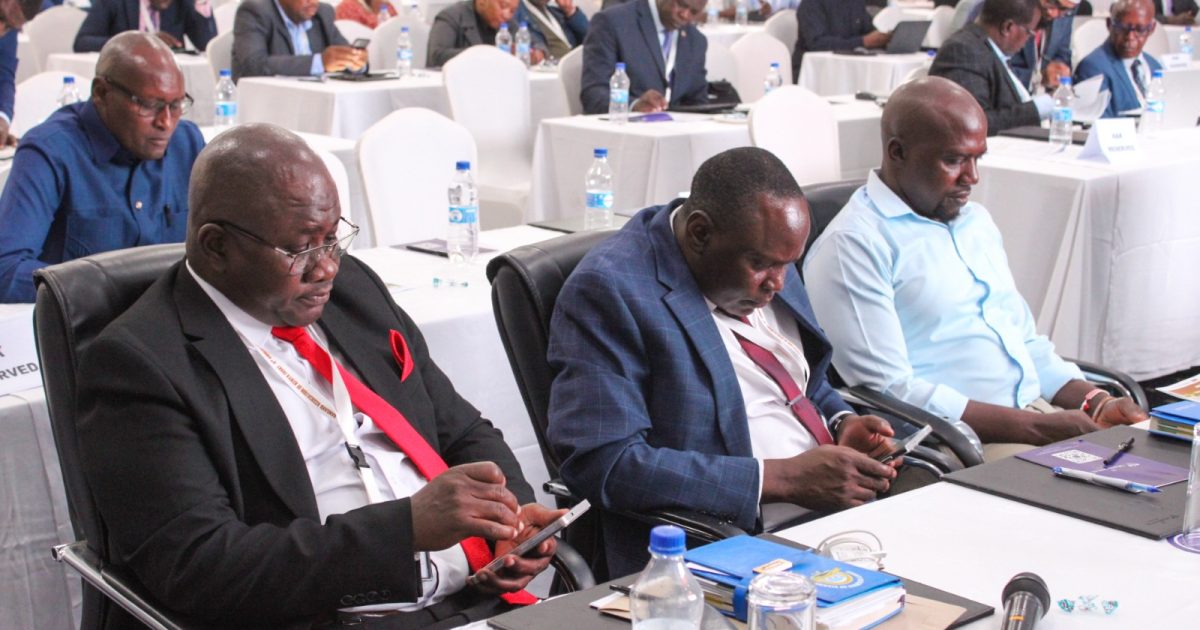
The week-long conference has brought together Hansard professionals from Parliament, County Assemblies and regional legislatures to deliberate on technology, accessibility, multilingualism and the future of legislative reporting in Africa.
By Chris Mahandara