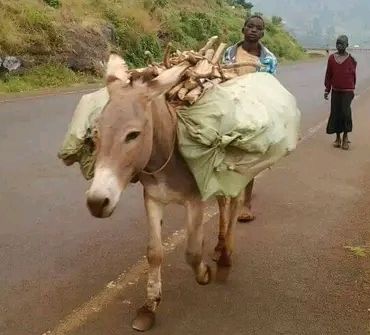
Tinderet Sub County have increasingly turned to donkeys as a reliable means of transport for foodstuffs and farm produce as heavy rains continue to pound the area, rendering many feeder roads muddy and risky for motor vehicles.
Across several parts of the agriculturally rich sub county, farmers say the persistent rainfall experienced over the past weeks has disrupted movement of vehicles and motorcycles, forcing them to depend on donkeys to ferry maize, beans, vegetables, milk and other farm products to nearby markets and shopping centres.
In villages spread across Songhor/Soba, Kaplamai and Kapsimotwo wards, donkey carts have become a common sight along the slippery village paths where vehicles cannot move.
At Kabirer village, farmer Joseph Kiprotich said the animals have become indispensable during the rainy season because they are able to navigate through muddy terrain.
“For now, the donkey is the most dependable means of transport here. Vehicles get stuck and even motorcycles cannot pass through some roads because of the deep mud. But the donkeys continue moving and help us take our produce to the market,” said Kiprotich.
He noted that many farmers are currently harvesting vegetables and delivering milk daily, making transport a critical challenge during the ongoing rains.
Kiprotich explained that before the rains intensified, farmers used motorcycles and pick-up vehicles to transport produce to markets in places such as Chemase, Maraba and Kapsabet, but the deteriorating road conditions have pushed many transporters away.
“Some roads have become almost impassable. We now use donkey carts to carry sacks of maize, bananas and even fertilizer to farms. Without them, many farmers would count losses,” he added.
At Kapsimotwo trading centre, trader and donkey owner Miriam Jelagat said demand for donkey transport services has sharply increased over the last month.
She said the animals are helping residents transport farm produce from interior villages to roadside collection points where buyers and larger transport vehicles can access them.
“Every morning we transport vegetables, potatoes and milk from the farms. People are now preferring donkeys because they are affordable and can reach places where vehicles cannot,” said Jelagat.
According to her, a single donkey cart can make several trips a day depending on the distance and condition of the roads.
She added that some youths in the area have also embraced donkey transport as a source of income by offering carriage services to farmers and traders.
“The rains have created job opportunities for young people who own donkeys and carts. They help farmers transport produce and earn a living at the same time,” she said.
Area residents observed that despite advancements in modern transport, donkeys remain highly valuable in rural economies, especially during adverse weather conditions.
Farmer Esther Chebet from Songhor/Soba ward said donkeys have enabled women to continue supplying food to local markets despite the transportation challenges.
“Women who sell vegetables and bananas depend heavily on these animals. They carry produce over long distances and help us avoid post-harvest losses,” she said.
Chebet noted that some households without donkeys hire the services at affordable rates compared to tractors or motorcycles.
“In some areas, the roads are too slippery even for boda bodas. The donkey has become the only practical option,” she added.
The continued heavy rains have left many feeder roads in poor condition, with deep gullies, flooding and sticky mud hampering movement.
Residents are now calling on both the county and national governments to speed up road maintenance works to improve accessibility in the rural areas.
Village elder Daniel Kibet said poor road infrastructure continues to affect agricultural productivity and market access whenever there is heavy rains.
“Our farmers work very hard but transporting produce becomes a nightmare during rainy seasons. We need urgent gravelling and drainage improvement on feeder roads,” he said.
Kibet, however, praised residents who continue using locally available solutions such as donkey transport to sustain economic activities.
“The donkey has rescued many families during this period. Without these animals, many products would remain in farms and rot,” he observed.
Agricultural officers in the area have also encouraged farmers to adopt proper post-harvest handling and seek reliable transport options to minimize losses during the wet season.
At Maraba market, traders said the steady arrival of vegetables and milk through donkey transport has helped stabilize supplies and prevent shortages.
Trader Samuel Sang noted that while transport costs have risen because of poor roads, donkey transport remains relatively affordable for small-scale farmers.
“If the donkeys were not available, food prices would probably rise more sharply because produce would not reach the market in time,” he said.
Local leaders and residents have appealed for more investment in all-weather roads to support agricultural activities in the predominantly farming oriented region.
by Sammy Mwibanda