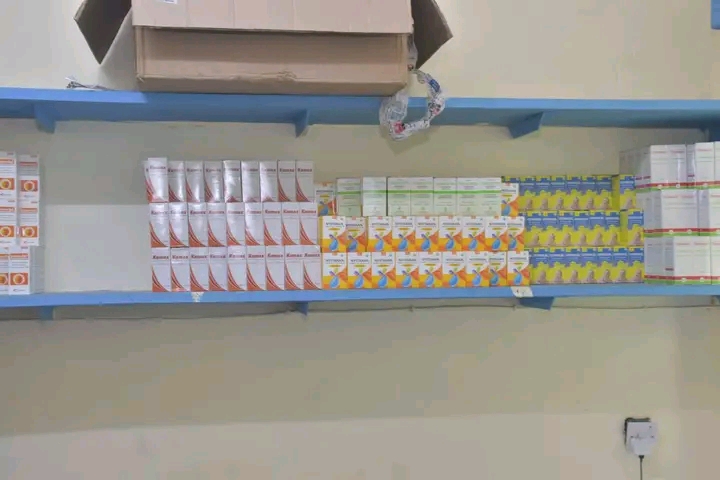
Residents of Tinderet Sub-county have demanded answers from health authorities over persistent drug shortages in public hospitals despite repeated announcements that millions of shillings’ worth of medicines have been supplied to the facilities.
Across dispensaries, health centres and sub-county hospitals in the area, patients say they are routinely issued prescriptions and directed to private chemists to purchase medicines that are expected to be available free or at subsidized rates in government facilities.
The situation has sparked concern among residents, healthcare workers and leaders, who argue that the disconnect between supplied drugs and actual availability to patients points to deeper systemic failures involving procurement inefficiencies, delayed payments, weak accountability, theft, poor stock management and corruption within the healthcare supply chain.
Residents from Chemase, Songhor, Kabiyet and surrounding areas narrated frustrations of spending hours in queues only to leave hospitals without medicine.
Peter Kiprono, a resident of Songhor/Soba Ward, said the persistent shortages were undermining public confidence in government healthcare institutions.
“You visit a public hospital expecting treatment only to be told to buy all the medicines from outside chemists. Many poor families cannot afford that burden,” he said.
Rose Chebet from Tinderet ward said mothers and children are the most affected, especially during malaria outbreaks and seasonal respiratory infections.
“Some parents are forced to walk long distances to hospitals but end up returning home empty-handed because there are no drugs,” she said.
At most Health Centres, patients expressed concern that basic medicines such as painkillers, antibiotics and antimalarial drugs are frequently unavailable despite repeated reports of drug deliveries to county facilities.
James Keter, a boda boda operator from Chemelil area, questioned how private pharmacies surrounding public hospitals always remain fully stocked.
“It becomes suspicious when a hospital pharmacy has nothing, yet chemists just outside the gate have all the medicines patients need,” he said.
Healthcare workers who spoke anonymously admitted that stock-outs of essential medicines have become increasingly common.
One clinician at a public facility in the sub county blamed weak planning and delayed deliveries for the crisis.
“Sometimes medicines arrive late and in quantities that cannot sustain the patient population for long. In other cases, supplies diminish too quickly, raising questions about accountability,” the medic said.
Another pharmaceutical officer said poor inventory systems continue to expose hospitals to losses and mismanagement.
“In some facilities, stock records are still handled manually, making it difficult to monitor the movement of medicines from stores to dispensing points,” he said.
The officer added that understaffing has worsened the problem because some facilities lack qualified pharmaceutical technologists and pharmacists to properly manage medicine inventories.
Health rights campaigner Judith Tuwei said the issue goes beyond ordinary shortages and points to possible diversion of drugs.
“When medicines disappear shortly after delivery, there must be proper investigations to establish whether some supplies are being diverted into private businesses,” she said.
She called for stricter monitoring systems and prosecution of individuals found culpable in theft or illegal sale of public medicines.
Community elder Samuel Sang argued that public hospitals risk losing the trust of wananchi if the situation persists.
“Government hospitals are supposed to cushion ordinary citizens from high treatment costs, but now patients are spending even more money at private chemists,” he said.
The concerns come amid mounting pressure on county governments to improve healthcare delivery and ensure funds allocated for medicine procurement are properly utilized.
Nandi County health officials have on several occasions announced the receipt of pharmaceutical consignments intended to serve hospitals across the county for months.
However, residents in Tinderet say shortages continue only weeks after the supplies are distributed.
Former health committee member Daniel Kirwa said weak supervision at facility level may be contributing to the disappearance of drugs.
“There is need for routine audits and physical verification of medicine stocks in all public hospitals,” he said.
He argued that without proper accountability mechanisms, leakages within the supply chain will continue.
Some healthcare workers also blamed delayed remittances to suppliers for disrupting consistent availability of medicines.
According to officials within the health sector, huge pending bills owed to medical suppliers have affected the smooth delivery of commodities to counties and health facilities.
Public health expert Dr Eliud Tanui said the problem reflects broader weaknesses within the country’s devolved healthcare system.
“Devolution improved infrastructure expansion, but many counties have struggled to strengthen systems for medicine procurement, storage and accountability,” he said.
He noted that some counties prioritize visible infrastructure projects while underfunding recurrent expenditures such as drugs and laboratory supplies.
Dr Tanui said digitization of medicine management systems would significantly reduce theft and wastage.
“If every drug consignment is digitally tracked from the supplier to the patient, it becomes easier to identify leakages and suspicious transactions,” he said.
He further called for integration of hospital pharmacies into digital insurance reimbursement systems to ensure facilities only claim payments for medicines actually dispensed to patients.
Religious leaders in the area also weighed in on the matter, urging integrity and transparency among public officers handling healthcare resources.
Pastor Stephen Kipkemoi from Songhor location said corruption in the health sector directly endangers lives.
“When medicines meant for poor patients are diverted or stolen, the consequences can be fatal,” he said.
He urged the government to take stern action against those involved in malpractice.
Youth leader Brian Langat called for greater public participation in monitoring health services.
“Communities should be involved through local oversight committees so that wananchi can regularly know whether medicines delivered to hospitals are reaching patients,” he said.
Women groups in the area further appealed to both county and national governments to ensure continuous availability of maternal and child health medicines.
Mercy Jelagat, a community health promoter, said expectant mothers are increasingly being referred to private pharmacies for supplements and essential drugs.
“This raises risks because some women cannot afford the medicines prescribed to them,” she said.
Health stakeholders are now proposing a raft of reforms aimed at addressing the crisis.
Among the recommendations are strengthening procurement systems, conducting regular audits, employing more pharmaceutical personnel and ensuring timely payment of suppliers.
Others include digitizing inventory systems, improving transparency in distribution and establishing community monitoring structures.
Analysts also want stronger anti-corruption enforcement within the health sector, saying prosecution of culprits implicated in theft or diversion of medicines would deter malpractice.
For the residents, what matters is that the medicines bought using taxpayers’ money should be available whenever patients visit public hospitals.
by Sammy Mwibanda