The County Government of Nakuru has entered into public-private partnerships geared towards increasing uptake of climate-smart innovations and technologies by small holder farmers to help them reduce production costs and boost their incomes.
The devolved unit has reiterated its commitment to encouraging sustainable farming practices in its policies and budget to ensure food and nutrition security and build resilience against climate change shocks.
County Executive Committee Member (CECM) for Agriculture, Livestock, Fisheries, and Cooperatives Leonard Bor indicated that the county government was keen on empowering farmers through climate-smart agriculture and diversification and promotion of fruit farming towards improving nutrition and creating sustainable sources of income in the region.
Bor stated that they were partnering with various state agencies, local and international firms and research institutions to strengthen the capacity of both small holder and large-scale farmers in practicing sustainable agriculture towards improving crop yields, stimulating the economy and helping mitigate climate change.
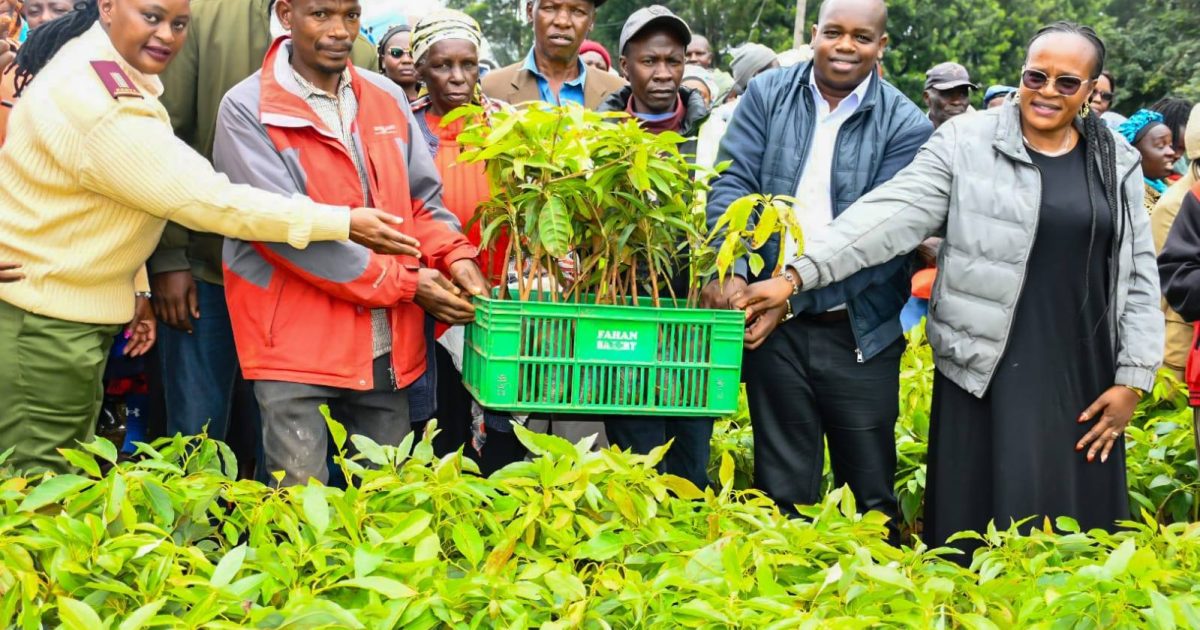
Speaking at Subukia Trading center after distributing 10,000 avocado seedlings and 9,990 mango seedlings, the CECM indicated that the practices entail incorporating agriculture-smart technologies like minimum tillage, to not only improve soil fertility but also enhance food security and productivity.
He underscored the need to train small holder farmers on new climate smart farming technologies, use of certified pest control drugs and certified seeds.
Bor said the campaign to adopt fruit crops was part of Governor Susan Kihika’s administration’s agenda to promote crop diversification and encourage farmers to embrace high-value crops for improved economic returns.
The CECM noted that agriculture is hugely vulnerable to climate change, particularly in Kenya, where farmers bear the brunt of irregular, insufficient and unpredictable rainfall patterns.
Climate change, he stated, is not only threatening food security but is also contributing to the loss of biodiversity, insecurity and nutrition.
Bor added,“The situation on climate change is worsening daily as natural hazards from extreme weather events such as drought and flooding are increasing. This has created greater loss and immense damage.”
He indicated that Climate Smart Agriculture (CSA) was the solution to erratic weather patterns adding that it involves actions that sustainably increase productivity, enhance adaptation, reduce greenhouse emissions to a possible zero and enhance achievement of national food security and development goals.
More than 1,500 farmers from Magomano, Momoi, Munanda, Morro, Edgewood and Subukia Valley benefited from the initiative.
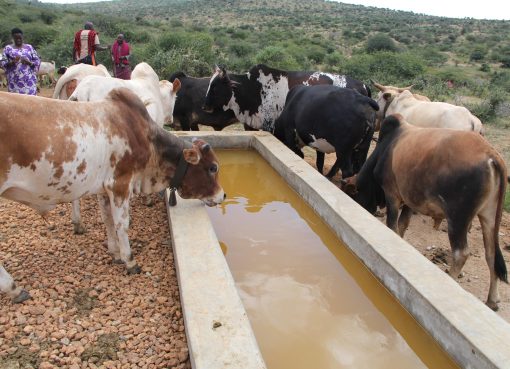
Bor indicated that Governor Kihika’s administration is also committed to increase acreage under irrigation to move the devolved unit away from rain-fed farming.
“Only 17 per cent (0.986 million hectares) of agricultural land in Kenya can be sustained by rain annually. To produce optimally in the other remaining 83 per cent (4.81 million hectares), irrigation must be carried out. In Nakuru our target is to increase the acreage under irrigation from the current 1000 hectares to 2500 hectares across the county,” he explained.
He noted that a lot of productive land in arid and semi-arid areas remained unproductive during the dry season, adding that were the land put under irrigation, food production could increase and food shortage reduced.
Bor revealed that the County administration was using various forums, including farmers’ field days, to disseminate information to farmers to address climate change challenges.
“Our ultimate goal is to translate the information, knowledge and new technologies into increased incomes for smallholder farmers and alleviate poverty. The investment in irrigation, climate-smart innovations and technologies is designed to promote food security, bring resilience in the economy, create jobs and reduce poverty,” he said.
Subukia Ward Member of County Assembly Ms Isabella Makori lauded the initiative, saying the distribution will not only strengthen food production in the area but also improve the livelihoods of local farmers through increased access to high-value fruit farming.
She observed that climate change has different effects on different geographical regions and crop performance and stated that vulnerable populations are likely to be the most negatively affected.
She added “The growing urban populations in Africa drive up the demand for food and this could be achieved if smallholder farmers embrace climate-smart agriculture practices which will cushion them against climate change challenges like drought, floods, pests and diseases.”
The MCA indicated that the 2022-2026 Climate Smart Agriculture Multi Stakeholder Platform strategic plan (CSA-MSP) being spearheaded by the national government, aims to equip farmers with adaptation practices on climate action, geared to increase food production hence, reducing the food prices.
She assured residents that the County government will continue collaborating with other public and private sector partners to ensure farmers access crop varieties that are resilient to drought.
She noted that agriculture is hugely vulnerable to climate change, particularly in Kenya, where crops rely on regular, sufficient and predictable rainfall.
“Changes in temperature and precipitation patterns have created extreme weather conditions such as flash flooding, drought and locust invasions that have not only slashed crop yields but fueled regional conflict over diminishing access to essential resources,” she said.
As one way of coping with climate change, she urged Kenyans to adopt urban farming through establishment of kitchen gardens, while diversifying from maize into coffee, passion fruit, pyrethrum, macadamia, avocado, potato and vegetable farming for rural larger farms.
by Jane Ngugi