Women in rural Kisumu will now access free and safer transport to health facilities following a Sh7 million motorcycle donation aimed at improving maternal healthcare services and reducing delays in accessing treatment.
The donation of 32 motorcycles to Boda Girls Kenya by Car and General will support trained female riders to ferry expectant mothers, children and vulnerable women to hospitals across parts of Kisumu County.
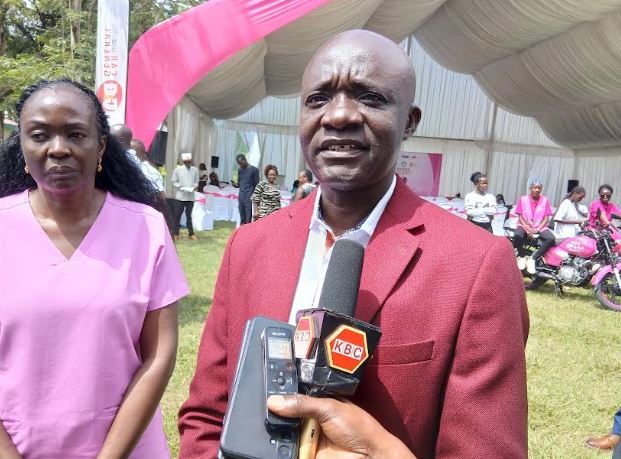
The motorcycles were unveiled on Wednesday during the launch of two new Boda Girls operational sites at Ahero Medical Centre in Nyando Sub-County and Chiga Hospital in Kisumu East Sub-county.
Speaking at Ahero Multipurpose Training Centre in Nyando Sub-County during the launch of the initiative, Car and General General Manager George Rubiri said the partnership seeks to address transport barriers that continue to hinder women from accessing maternal healthcare services on time.
Rubiri said the programme goes beyond economic empowerment for women riders and directly targets maternal health outcomes within rural communities.
“The ladies are being empowered not only economically through Boda Girls but also to support the community in transporting mothers who require maternal support and access to hospitals,” he said.
He noted that besides donating the motorcycles, the company would also train the women on road safety, motorcycle handling and technical maintenance skills to ensure safe and professional operations.
“We are not just here to donate bikes. We are also here to train them in safe riding because safety is a major concern on our roads. We are supporting them with technical knowledge so they understand the motorcycles and can use them efficiently to earn an income that enables them to live dignified lives,” said Rubiri.
Rubiri described the Kisumu launch as the beginning of a wider partnership that could eventually be rolled out nationally.
“This is just the start. We want to pilot, monitor and support the programme because the impact we have already seen is huge,” he said.
He revealed that the motorcycles donated under the programme are valued at more than Sh7 million, excluding additional operational and training support costs.
“The biggest thing for us is not just the cost of the motorcycles but the impact this programme is already having in communities,” he added.
According to Boda Girls Kenya Chief Executive Officer (CEO) Nancy Otieno, the programme was created to tackle unsafe transport experiences for women while also improving access to healthcare services.
Otieno said the organisation trains women to become motorcycle riders, health advocates and entrepreneurs within their communities.
“Boda Girls Kenya is a women-led organisation that trains women to become motorcycle riders and also health advocates within their communities and businesswomen,” she said.
She explained that the programme was first piloted in Siaya County following concerns over sexual harassment and insecurity faced by women using conventional boda boda transport services dominated by male riders.
“As we know, about 98 per cent of boda boda riders are male and many women do not feel safe. Border Girls was created to offer women safe mobility while also improving access to healthcare,” she said.
Otieno said the riders work closely with health facilities, community health volunteers, churches and local leaders to identify pregnant women and vulnerable patients in need of medical attention.
“These Boda Girls are health advocates within the community. Once trained, they work closely with community health volunteers to identify mothers from their first antenatal clinic visits and support them throughout their healthcare journey,” she explained.
Besides transporting expectant mothers for antenatal and delivery services, the riders also support women seeking cancer screening, family planning services and survivors of gender-based violence.
Otieno said the pilot phase of the programme had already demonstrated major improvements in maternal healthcare uptake.
“Within two years and with only 20 Border Girls riders, we were able to increase facility deliveries by 67 per cent. Maternal and child health visits doubled and cancer screening uptake also increased significantly,” she said.
She cited UNICEF data indicating that about 5,000 women die annually in Kenya due to delays in reaching healthcare facilities while another 3,000 infants die because mothers fail to access hospitals in time.
“Boda Girls is directly contributing to reducing maternal deaths by ensuring women can access hospitals quickly and free of charge,” she said.
The organisation, she said, currently operates in Kisumu, Siaya and Homa Bay counties and plans to have 160 active riders by the end of the year across Kisumu, Siaya, Migori and Homa Bay.
In the next five years, the programme targets expansion to 43 hospitals in 14 counties while supporting at least 800 women riders and reaching more than one million beneficiaries annually.
Otieno said the initiative was also transforming livelihoods for women entering the male-dominated boda boda industry.
“Besides reimbursements from health facilities, the Boda Girls are also free to take private clients, which allows them to earn additional income to support their families and educate their children,” she said.
Ahero Medical Centre Director Ojowi Morris welcomed the initiative, saying it would improve reproductive healthcare uptake and immunisation coverage within Nyando Sub-county.
“This partnership will increase our coverage within the community because women of reproductive age will now get free rides to the facility for medical services,” said Morris.
He said poor transport systems and fear of rough treatment by male boda boda riders had contributed to low uptake of maternal healthcare services in remote villages.
“Some of the areas where these women come from have poor access roads and transport has been a major challenge. Many women also feared rough treatment from male boda boda riders,” he said.
Ojowi expressed optimism that the female riders would encourage more women to seek timely healthcare services.
“With Border Girls, women will feel safer and more comfortable accessing services in our facility,” he added.
He further disclosed that the facility would offer incentives to the riders for every successful referral made to the hospital.
“We will pay Sh500 for every successful delivery referral and Sh100 for every general patient referral. This will improve their livelihoods while strengthening healthcare services within the community,” he said.
By Chris Mahandara