Cancer continues to claim thousands of lives in Kenya each year, exposing not only gaps in treatment but also the silent emotional toll carried by patients and their families.
According to national health data, Kenya records between 44,000 and 48,000 new cancer cases annually, with more than 32,000 deaths linked to the disease every year.
Breast, cervical, prostate, esophageal and colorectal cancers remain among the most common.
Yet beyond delayed diagnosis and expensive treatment lies another crisis that rarely receives attention — the lack of structured psychosocial support for patients and caregivers navigating the disease.
For many families, a cancer diagnosis marks the beginning of an emotionally draining journey often undertaken with little guidance.
In most public hospitals, relatives are forced to quickly assume multiple roles: caregivers, counsellors, financiers and decision-makers.
They must process complex medical information, organize treatment schedules, raise money for care and remain emotionally present for loved ones, all while dealing with their own fears, trauma and exhaustion.
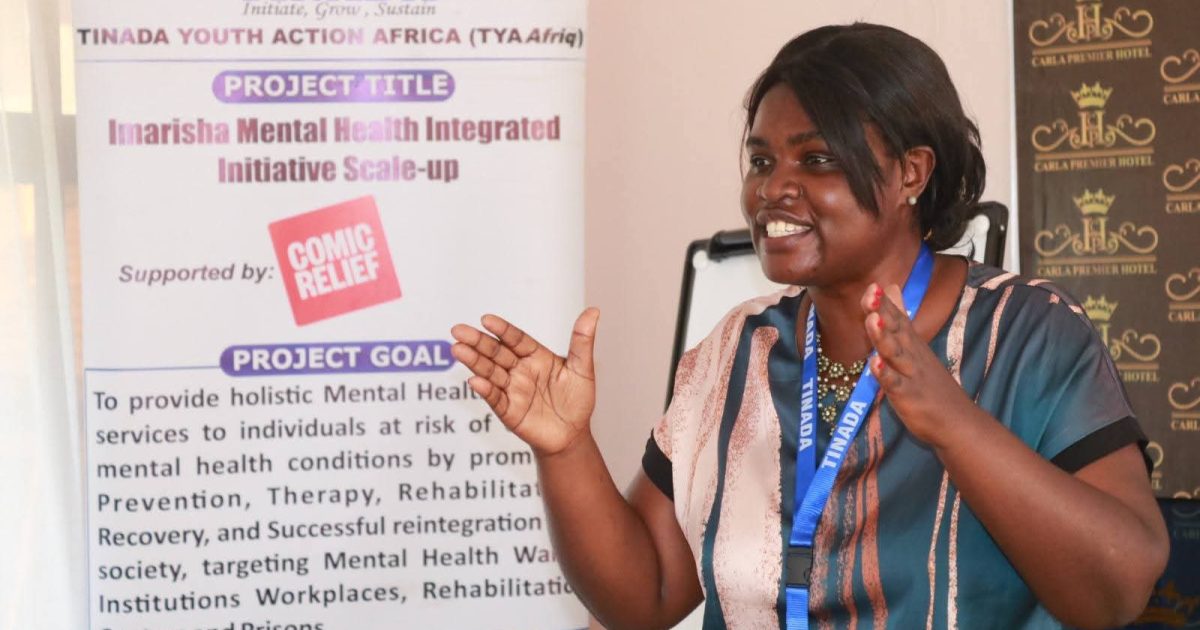
It is within this difficult space that palliative care specialist Carolyne Oreng has dedicated her work.
Oreng, a psychologist and palliative counsellor with 15 years of experience, says her journey into psychosocial care began while working as a nurse aide, where she noticed that some patients failed to improve despite receiving proper medical treatment.
One case in particular changed her perspective.
She recalls attending to a terminally ill patient whose condition continued deteriorating even though doctors considered her clinically stable.
Through conversation, Oreng discovered the woman was overwhelmed not by physical pain, but by fear of dying and anxiety over the future of her children.
“In medicine, we say doctors, medication and nursing care contribute part of the healing process, but the patient’s mindset also plays a huge role. If someone loses hope completely, even the body struggles to respond,” says Oreng.
After several counselling sessions, the patient gradually began eating again, interacting with relatives and responding positively to treatment.
The experience convinced Oreng that emotional support was not optional, but a critical part of care.
Today, she is often called in before doctors disclose a diagnosis or immediately after prognosis discussions to help patients emotionally process the information.
“Most people hear the word cancer and immediately think of death. But once we explain the prognosis properly and help them understand the treatment journey, many begin to regain hope,” she adds.
For patients whose conditions become terminal, her focus shifts toward palliative and end-of-life counselling aimed at helping families manage the final stages of illness with dignity.
But Oreng says some of the most overlooked people in the cancer journey are caregivers.
“Caregivers rarely rest,” she explains. “Even when the patient is asleep, they remain under constant emotional and financial pressure.”
She says many families operate under extreme strain, especially where one person shoulders the responsibility of hospital visits, feeding, medication and fundraising.
The burden is often worsened by financial hardship, lack of information and disagreements among relatives over treatment decisions and end-of-life care.
To address this, Oreng regularly organizes family counselling sessions to encourage honest conversations around care responsibilities, finances and the wishes of the patient.
“When everyone sits together, the reality becomes clearer,” she says. “Families begin to understand that the patient is still aware, still present and should remain part of decisions concerning their care.”
Most of the patients she handles suffer from pancreatic, cervical and colon cancers, illnesses that are frequently diagnosed at advanced stages when treatment becomes more difficult and costly.
Despite the growing need, psychosocial care remains limited in many public hospitals, leaving patients and families to navigate fear, grief and uncertainty largely on their own.
Oreng says her understanding of the gaps in care deepened when her own father was diagnosed with pancreatic cancer.
“The diagnosis was delivered directly to the family without any emotional preparation. It was devastating,” she recalls.
She believes the problem reflects broader systemic challenges within Kenya’s healthcare sector, where overwhelmed medical personnel often lack the time and specialized training needed to provide emotional support alongside treatment.
Oreng is now calling for structured psychosocial support systems within hospitals, including caregiver guidance frameworks that can help families better understand the cancer journey from diagnosis to treatment and end-of-life care.
“A proper support framework would help families prepare emotionally and practically. Right now, many people are forced to improvise during one of the hardest moments of their lives,” she says.
She also urges families to speak openly about cancer, warning that silence and secrecy often deepen fear and misinformation.
“Cancer should not be treated as a hidden illness. When families communicate openly, they cope better and support one another more effectively,” she adds.
At the same time, she cautions families against excluding patients from decisions concerning their own treatment.
“Being sick does not take away a person’s voice,” she says. “Unless a doctor has declared otherwise, patients should continue participating in decisions about their care.”
She also emphasizes the importance of caregivers taking breaks to avoid emotional burnout.
“Rest is not neglect. Caregivers also need support in order to continue showing up for their loved ones,” she says.
For Oreng, cancer care extends beyond medicine and hospital visits.
Behind every diagnosis, she says, are families struggling to hold themselves together under emotional, financial and psychological strain.
“We are not just treating cancer, we are trying to keep families from breaking under it,” she observes.
By Pamella Dorothy