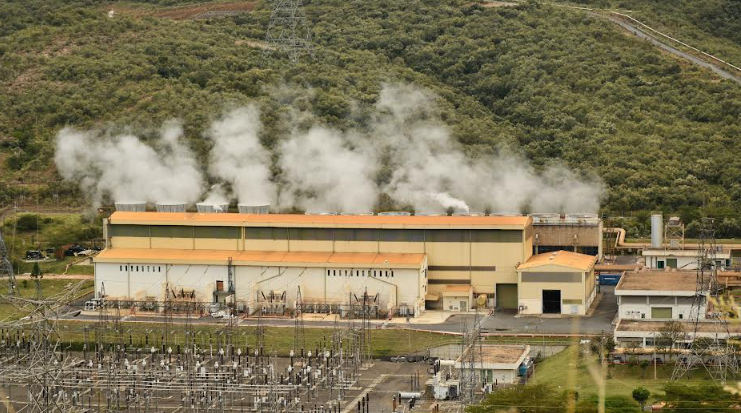
Kenya Electricity Generating Company (KenGen) has secured a regulatory milestone for its Green Energy Park in Olkaria, Naivasha, after the facility was officially gazetted as a Customs Controlled Area.
The gazettement activates tax and customs incentives available under the Special Economic Zone (SEZ) framework and cements the park’s position as the epicenter of green industrialisation.
The designation was granted to KenGen Energy Services (SEZ) Limited through gazettement by the Commissioner of Customs and Border Control anchored under the East African Community Customs Management Act, 2004.
According to KenGen CEO Eng. Peter Njenga, the initiative is part of the company’s broader effort to meet rising energy demand while reducing Kenya’s carbon footprint, aligning with the government’s goal of transitioning to 100 per cent green energy by 2030.
In a statement, Eng. Njenga said the green energy park as a customs-controlled area unlocks the full SEZ investment in Olkaria, cementing the park’s position as Africa’s geothermal-powered industrial hub.
The Olkaria SEZ is expected to attract industries ranging from agro-processing and textile manufacturing to electric mobility production and data centers.
The move activates the tax incentives available to investors under the Special Economic Zones Act, 2015, and transforms the park into a fully operational industrial and investment space.
The Customs Controlled Area designation will see the park enjoy defined customs procedures, monitored entry and exit points, and regulated compliance systems for all goods entering, moving within, or exiting the zone.
This will ensure that the customs stations, designated gates, bonded handling systems, and compliance mechanisms are legally enforceable components of the park’s operations.
The status unlocks tangible SEZ benefits that include streamlined import and export processes, duty and tax efficiencies, faster cargo clearance, and simplified regulatory oversight, removing the regulatory uncertainty that often exists before full SEZ operationalisation.
KenGen has also disclosed plans to apply for a license to transmit and distribute electricity directly to industries setting base at the Green Energy Park, banking on recently gazetted Energy (Electricity Market, Bulk Supply, and Open Access) Regulations of 2026 that have opened the door for generating firms to sell power directly to large consumers.
The initiative could offer industrial tenants tariffs lower than the standard retail rate, sharpening the park’s competitive edge.
The green park is positioned inside the Olkaria fields in Naivasha, the home to one of the world’s largest geothermal reservoirs, offering investors uninterrupted 100 per cent renewable energy, full SEZ benefits, and direct access to geothermal steam.
The SEZ spans over 8,000 acres and is designed to serve as a key driver for industrial investment, clean energy manufacturing, and export-oriented production, with its strategic location along key transport corridors, including the Standard Gauge Railway (SGR), providing investors with seamless access to both local and regional markets.
KenGen is developing the park in four phases to be completed by 2045, transforming Olkaria from a purely energy-producing zone into a fully fledged green industrial city.
The park has already onboarded five investors across strategically significant sectors, including data centers, green fertilizer production, electric mobility, steel fabrication, logistics, and manufacturing.
Among those already committed, Synergetic Development Group signed on to develop an integrated logistics center for steel products and a steel fabrication plant at the park, utilizing 18 MW of geothermal power, 10 acres of land, and 360 cubic meters of water annually.
Others include Konza Technopolis and Eco-Cloud’s 100 billion yen data center project, Aquilistar electric cars investment, and Kaishan investment in green fertilizer production.
The government has set a target of generating 100 percent of its electricity from clean energy sources by 2030, with the current share of renewable energy powering the national grid surpassing 90 per cent.
KenGen has committed to adding an additional 1,500 MW of green energy to the national grid by 2034 by marshalling more than sh. 400B through public-private investments in order to address the rising electricity needs for both households and industrial needs.
KenGen has an installed generation capacity of 1,786 MW, of which over 90 per cent is drawn from renewable sources: hydro (826 MW), geothermal (754 MW), and wind (25.5 MW).
By Erastus Gichohi