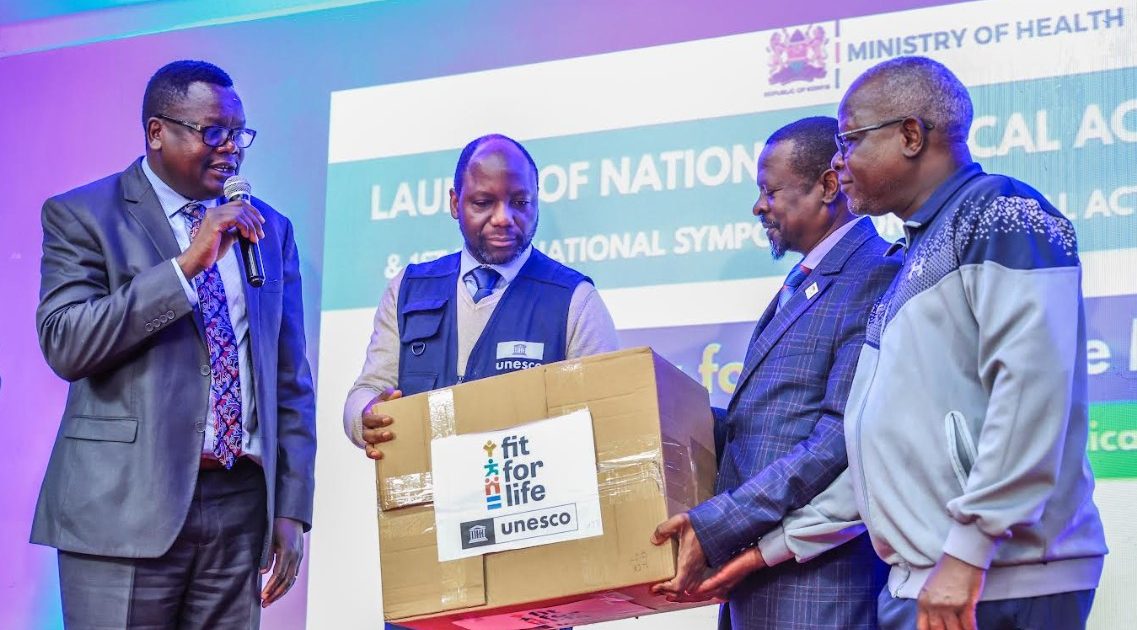
The Ministry of Health has launched Kenya’s first National Physical Activity Guidelines aimed at promoting healthy lifestyles and reducing the growing burden of noncommunicable diseases (NCDs) in the country.
The guidelines were unveiled Thursday during the launch of the National Physical Activity Guidelines and the First International Symposium on Physical Activity and Public Health held at KCA University in Nairobi.
Director of Primary Health Care, Dr. Joel Gondi, said the guidelines provide evidence-based recommendations on physical activity for all population groups, including children, adults, pregnant women and persons with disabilities.
“The guidelines provide information that will enable every Kenyan to engage in physical activity according to their age, physical condition and health status,” said Dr. Gondi.
He noted that the framework adopts a whole-of-government and whole-of-society approach, emphasizing that promoting healthy lifestyles requires collective action.
“Health promotion is not the responsibility of the health sector alone. Individuals must take responsibility for their health by understanding the level of physical activity required to remain healthy,” he added.
Dr. Gondi expressed concern over the increasing prevalence of non-communicable diseases linked to sedentary lifestyles and inadequate physical activity, noting that such illnesses continue to place a heavy burden on families and the healthcare system.
World Health Organization (WHO) representative Dr. Christine Kisia described the launch as a major milestone in Kenya’s public health agenda, noting that the guidelines are aligned with WHO global recommendations on physical activity and sedentary behaviour.
She said regular physical activity reduces the risk of heart disease, hypertension, certain cancers and mental health conditions such as anxiety and depression.
Dr. Kisia further noted that physical inactivity remains a major global challenge, with about 80 per cent of adolescents worldwide failing to meet recommended activity levels.
KCA University Vice Chancellor Prof. Isaiah Wakindiki welcomed the initiative, noting that the institution has promoted physical activity through its annual cycling event for the past four years to encourage healthy living, road safety awareness and community engagement.
Prof. Wakindiki also announced plans to introduce programmes in sports science and human movement studies to equip young people with skills and opportunities in the growing sports industry.
“Physical activity is essential in creating healthy minds and productive citizens. As universities prepare learners for the job market, we must also invest in their physical wellbeing,” he said.
UNESCO representative Mr. Hugue Ngatta Ngandeu said sport and physical activity are critical tools for improving public health, promoting inclusion and empowering vulnerable groups, including women and persons with disabilities.
The guidelines were developed through collaboration between the Ministry of Health, WHO, UNESCO, KCA University and other partners as part of efforts to strengthen preventive healthcare and encourage active lifestyles among Kenyans.
By Sharon Njeru and Nancy Omondi