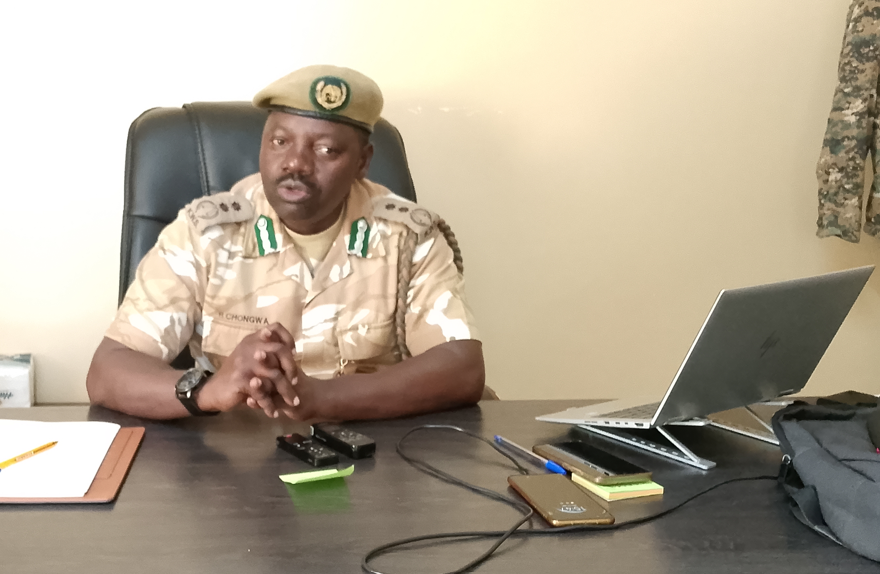
Assistant Director for the Northern Conservation Area, Bakari Chongwa, has commended security agencies for their cooperation after the recovery of elephants’ tusks weighing 45 kilograms in Marsabit County.
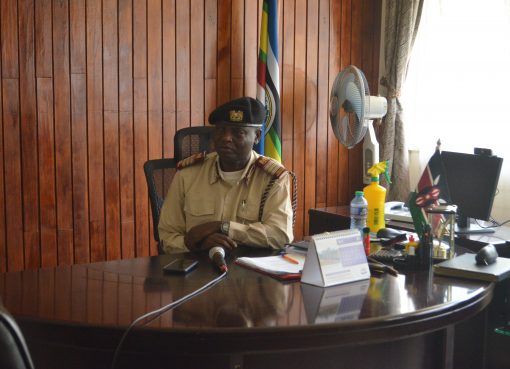
Speaking in Marsabit town at the Kenya Wildlife Services offices, where he oversees conservation operations across Marsabit, Wajir, and Mandera counties, Chongwa said Marsabit police station officers acted on intelligence reports indicating that elephant tusks had been hidden in a house within one of the villages. Upon reaching the location, officers recovered the tusks and immediately informed wildlife authorities.
The recovered tusks weighed 45 kilograms. Chongwa said the current estimated street value is approximately Sh70,000 per kilogram, bringing the total value to about Sh3.1 million.
He praised the police for their efforts, noting that the successful operation demonstrated the effectiveness of the multi-agency approach in combating crime. According to Chongwa, cooperation between different security agencies allows officers to respond quickly whenever they encounter crimes that fall under another agency’s mandate.
The three suspects arrested in connection with the tusks remain in police custody as investigations continue. Chongwa said all three suspects are from Marsabit County, with one from the Hagadhe area, another from Hurii Hills, and the third from Marsabit Town. One of the suspects is reportedly linked to renting the house where the tusks were concealed.
He said investigations have not yet established whether the suspects are poachers or ivory traders but noted preliminary information from the suspects indicates that the tusks originated from the area around Maralal in Samburu County and Laisamis in Marsabit County.
He noted that the Maralal and Laisamis areas form part of an important elephant migration corridor, with elephants moving between Marsabit and Samburu counties.
Chongwa further explained that the appearance of the tusks suggests they may not have been removed through fresh poaching, pointing to the possibility that they were recovered from elephants that had died naturally or during human-wildlife conflicts.
According to information gathered so far, the suspects intended to transport the tusks to Isiolo County in search of buyers. However, authorities suspect the ivory may ultimately have been destined for markets outside Kenya, including neighbouring Ethiopia, which borders Marsabit County.
Chongwa applauded the government’s efforts to strengthen elephant conservation through improved surveillance and monitoring.
He said officers from the Kenya Wildlife Services (KWS), the National Police Service, and the Directorate of Investigations (DCI) continue to work closely together to combat wildlife crimes.
Chongwa called upon residents of Marsabit County to support conservation efforts and work together with authorities to protect elephants, describing wildlife as an important resource for both the county and the nation.
By Anthony Melly and Sebastian Miriti