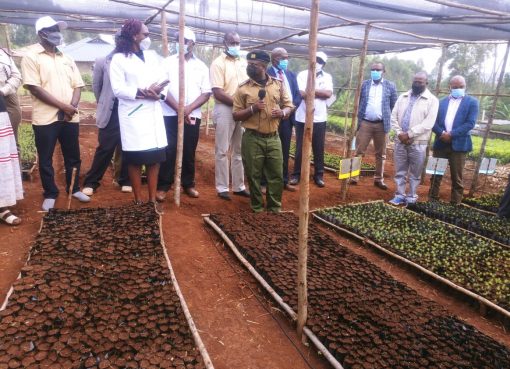
The Centre for Mathematics, Science and Technology Education in Africa (CEMASTEA) is promoting the use of artificial intelligence (AI) in schools to help teachers improve lesson preparation, enhance classroom instruction and strengthen learning outcomes.
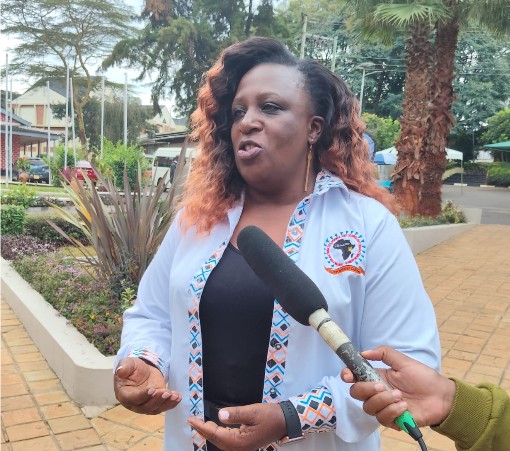
Speaking during the closing ceremony of the three-day capacity-building programme for Quality Assurance and Standards Officers (QASOs) at the CEMASTEA, Karen, Nairobi, Deputy Head of Research and Innovation at CEMASTEA Clotilda Nyongesa said the CEMASTEA has trained teachers with the skills needed to integrate AI into teaching under the Competency-Based Education (CBE) framework.
She said the institution continues to build the capacity of teachers to deliver quality education, noting that artificial intelligence (AI) has become an important classroom tool that helps teachers prepare lessons more efficiently and enhance instruction, particularly in Science, Technology, Engineering and Mathematics (STEM).
“We realised from our previous research that another area with a gap is professional documents. When a teacher doesn’t prepare, they actually do not deliver. When they spend too much time preparing, they eat into the time meant for teaching,” she said.
“CEMASTEA tailored a course on how a teacher can prepare professional documents, such as schemes of work and lesson plans, while using less time to prepare lessons and source resources. So we have trained the teachers on effective use of AI,” she said.
According to Ms Nyongesa, teachers were encouraged to embrace and use AI to develop lesson plans, prepare schemes of work and identify teaching resources, therefore allowing them to spend less time on paperwork and more time engaging learners in classrooms.
To address the gap, the training of Quality Assurance and Standards Officers is key to familiarizing them with AI and learner-centred teaching approaches in schools so they can provide informed support to teachers within their respective regions.
“We wanted to bridge that gap so that when a quality assurance officer finds a teacher using AI, the focus is on whether the prompts produced what is required and whether the lesson plan reflects the CBE tenets and expected learning outcomes,” Nyongesa explained.
“The officers are excited about embracing the technology to better support teachers,” she said adding beyond technology, the Quality Assurance and Standards Officers (QASOs) training also emphasised constructive feedback as a key ingredient to improve education quality.
Officers were encouraged to work alongside teachers as mentors, providing support before, during and after class rather than focusing solely on inspection.
The programme also addressed the challenge of supporting STEM in schools where some quality assurance officers come from non-science backgrounds. Through practical activities and exposure to AI-assisted teaching tools, participants were equipped to better guide teachers regardless of their own areas of specialization.
The three-day workshop, held from June 10 to 12, 2026, was themed “Enhancing the Capacity of Quality Assurance and Standards Officers (QASOs) to Monitor and Support Teachers of STEM Subjects for Effective Implementation of Competency-Based Education“.
The training aimed to strengthen QASOs’ ability to observe classroom lessons, provide constructive feedback and support teachers in improving the delivery of Science, Technology, Engineering and Mathematics (STEM) subjects.
Participants were also equipped with skills to promote learner-centred teaching approaches, mentor teachers toward better classroom practice and support the effective implementation of the Competency-Based Education (CBE) curriculum, particularly at the junior secondary level.
Nyongesa said embracing AI responsibly can reduce teachers’ administrative burden, improve lesson preparation and create more time for meaningful teaching and learning in classrooms.
By Ian Chepkuto