Uzima University has demanded a full retraction and public apology from several media houses over reports alleging that its School of Medicine failed to meet required training standards, saying the publications relied on outdated inspection findings and have unfairly damaged the institution’s reputation.
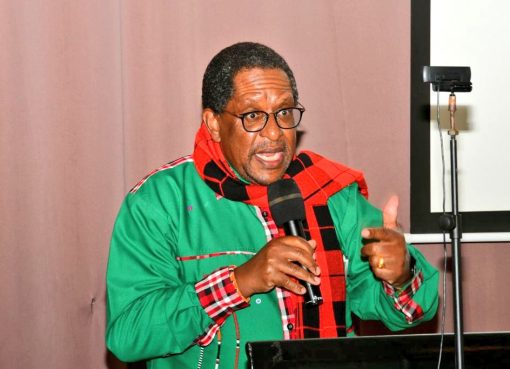
Speaking at the university main campus in Kisumu on Tuesday, Vice Chancellor Rev. Prof. Cosmas Rhagot K’Otienoh said the reports, published under the headline “Alarm as most medical schools fail standards,” misrepresented the university’s current status by relying on findings dating back to 2019/2020 academic year when the institution was still operating as Uzima University College.
Prof. K’Otienoh said the university had since undergone major reforms, including receiving a Letter of Interim Authority in March 2020 and later securing a full charter following evaluations by regulatory bodies.
“The publication is based on findings from over seven years ago and does not reflect the reality of today’s Uzima University standing as per the regulators,” he said.
The vice chancellor maintained that the institution remains accredited and recognised by relevant authorities, including the Commission for University Education (CUE), the Kenya Medical Practitioners and Dentists Council (KMPDC) and East African Community regulatory agencies.
He said the university’s charter was awarded by President Dr. William Ruto on May 8, 2025 after what he described as a thorough review by CUE and other regulatory bodies.
Prof. K’Otienoh further cited the findings of a joint East African Community (EAC) reinspection conducted on November 25, 2024, which he said awarded the university a score of 80.9 out of 100 and confirmed that it meets the required standards for training medical students.
According to the university, the inspection also affirmed that its graduates are eligible for recognition across East African Community partner states.
The institution argued that medical schools are assessed on a broad range of indicators including physical infrastructure, laboratory facilities and access to teaching hospitals, faculty qualifications, governance structures and curriculum compliance.
Prof. K’Otienoh said Uzima University currently offers clinical training through partnerships with several referral and county hospitals, among them Jaramogi Oginga Odinga Teaching and Referral Hospital (JOOTRH), Kisumu County Referral Hospital, Vihiga County Teaching and Referral Hospital, Kisii County Teaching and Referral Hospital and Siaya County Hospital.
He warned that the publications had caused significant reputational damage by undermining confidence among academic partners, clinical collaborators and international research institutions.
“The failure to present this current position has caused serious harm,” he said, adding that the circulation of what he termed outdated information had jeopardized strategic collaborations built over recent years.
The university has now demanded a retraction published with the same prominence as the original reports, a public apology, publication of a corrective statement reflecting the institution’s current status and what it termed appropriate legal remedies for damages caused.
Prof. K’Otienoh also sought to reassure students, parents and partners that qualifications awarded by the institution remain fully accredited and recognized.
He said the university remains committed to training competent and ethical medical professionals and urged media houses to uphold accuracy, fairness and professionalism in reporting.
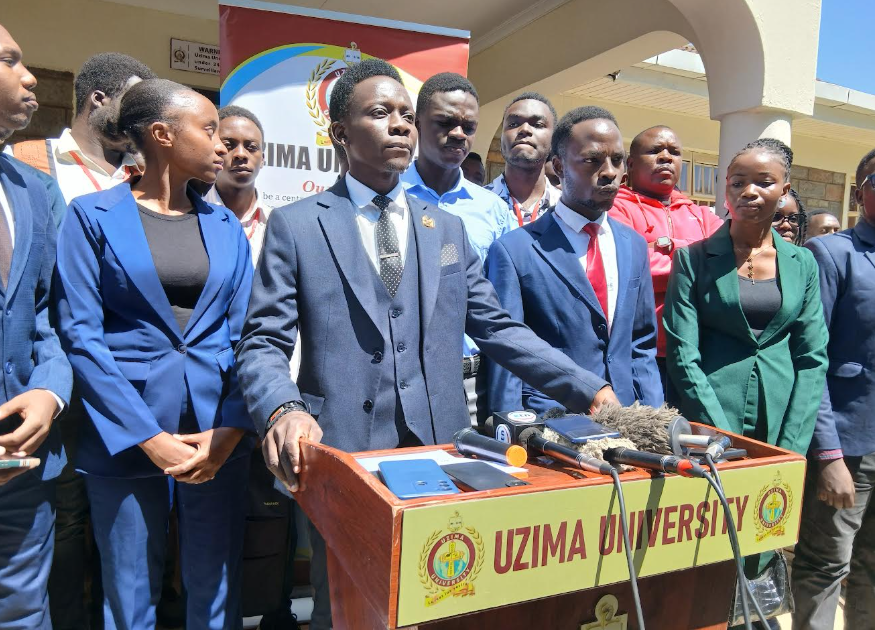
Students Council President Allan Kato said the reports had dented the image of the university despite its strong performance in the latest East African Community assessment.
Kato said the future of current learners and alumni was at stake and called on all media outlets that carried the story to retract the reports and apologize.
“The students are saddened by the turn of events which has affected the image of the institution,” he said.
By Chris Mahandara