Child literacy in Kenya faces major gaps, with recent studies showing that 43 percent of adolescents aged 13 to 17 cannot read a Grade 4-level text.
Three out of 10 Grade 6 pupils cannot read a Grade 3-level text, and general illiteracy for ages 15–17 sits at 6.8 percent.
Globally, studies show major challenges, with international organisations noting that up to 70 percent of 10-year-olds in low- and middle-income regions struggle to read a simple story.
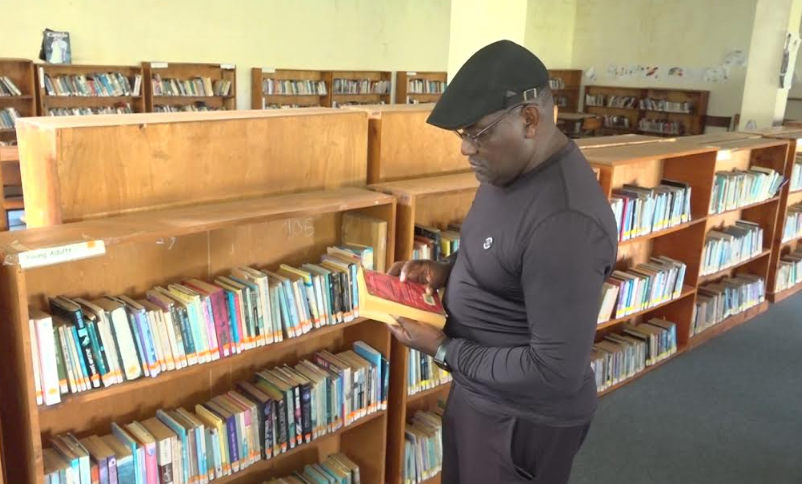
It is against this backdrop that one man on the slopes of the Aberdares driven by his passion for education and commitment to inspire the society through generations of learners in rural Murang’a, established the Gacharageini Community Library in Gacharageini, Mathioya constituency.
“Literacy; the ability to read, write and understand basic text forms the core foundation for life learning, school success and future job opportunities,” says Zack Gichane, the founder Gacharageini community library
“We wanted pupils in schools in rural areas that do not have access to libraries to be able to develop a reading culture that is why with the help of our friends and guests, Book aid and the Kids Library Trust we were able to build and equip this library as part of CSR for the Aberdare Cottages and lodges.
Established in 2010, the library boasts of more than 20,000 books ranging from story books and children’s literature, early learning and pre-primary materials, science and technology books, biographies, novels and fiction, poetry and drama, dictionaries, encyclopedias, geography books as well as environmental and inspirational literature.
According to Gichane, children as young as 18 months should be given an opportunity to interact with books to develop a love for reading from an early age.
“We have an initiative known as Little hands, Big steps which is a 10-week program where parents with toddlers as young as 18 months come to the library, as a group of 10 carry five books home and after a month can exchange the books amongst themselves in a merry-go-round sort of arrangement before returning them here for a new batch of the learning materials” he says
The aim is to ensure that a parent reads a book to the child every day. Basically, children as young as 18 months should be given an opportunity to interact with books to develop a love for reading from an early age.
The facility is open to all as even older people flock to it to improve on their knowledge.
“We have over 3000 registered members of this library and for the last 15 years, doctors, lawyers, agriculturalists and many more cadres have gone through this facility, so clearly lives have been transformed and generations inspired,” he notes.
The Gacharageini community library also promotes inclusivity by providing wheelchairs, crutches, and other mobility aids to support learners with physical disabilities.
Moreover the library also has plenty of braille materials for learners with visual impairments and tablets to provide access to digital learning resources.
“We have crutches, wheelchairs, and other walking aids to ensure no learner is locked out, their physical limitations notwithstanding,” he adds
Gichane appeals to people across the country to replicate the same in their villages, to encourage a reading culture across the country.
“I also urge parents to encourage their children to come to the library because reading forms the foundation of a successful life ”
However, behind the impressive collection of books lies the challenge of its daily running which is fully funded and maintained by the Aberdare cottages and lodges.
“Well wishers and people of good will who believe in education are welcome to continue supporting this initiative for a brighter, reading generation. ”
Gacharageini community library serves people and learners from Kiriani,Kangema ,Nyagatugu and its environs. The closest community library is in Muranga town which is about 50 kilometres from Gacharageini.
More research shows that 43 percent of youth aged 13–17 cannot read a fourth-grade text, and about 15 percent cannot read any English text whereas 30 percent of grade 6 learners fail to read a simple English text.
By Florence Kinyua