Kenya and the Common Market for Eastern and Southern Africa (COMESA) have committed to working together in developing a harmonised regional framework for artificial intelligence (AI) and digital inclusion to drive economic growth, enhance digital transformation, and address emerging cyber risks across the region.
The commitment was made in Nairobi during a stakeholder consultative meeting under the Inclusive Digitalization in Eastern and Southern Africa (IDEA) Programme, supported by the World Bank.
The forum brought together government officials, regional policymakers, and stakeholders to discuss the development of a regional artificial intelligence strategy, a regulatory framework, and a regional digital inclusion action plan.
Speaking during the meeting, State Department for Trade Director of ICT Timothy Were said artificial intelligence has become a critical driver of economic transformation, trade facilitation, industrial competitiveness, and innovation.
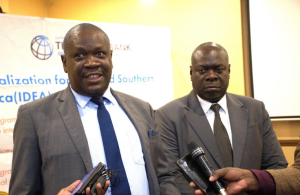
“We recognise that digital technologies and artificial intelligence are transforming economies and creating new opportunities for inclusive growth,” said Were. “Kenya has made significant progress by developing the National Artificial Intelligence Strategy to guide the responsible development and adoption of AI across key sectors.”
He noted that the government continues to invest in digital infrastructure, research, innovation, and data governance to create an enabling environment for digital transformation.
However, Were cautioned that the rapid growth of AI also presents new challenges, particularly in cybercrime and cross-border digital governance.
“Cyberspace has no borders. Without a proper regulatory framework, there are people taking advantage of others through emerging technologies. That is why we need harmonised regional policies so that citizens and businesses enjoy the same protections across member states,” he said.
He added that a common regulatory framework would enable businesses operating across borders to work within predictable and consistent AI regulations, promoting regional trade and digital services.
Were identified banking and financial services as Kenya’s leading adopters of artificial intelligence, followed by education, transport and logistics, healthcare, and agriculture.
He said AI is increasingly filling the gap created by the declining number of agricultural extension officers by providing farmers with digital advisory services.
“Farmers can now access information remotely on climate conditions, suitable seed varieties, livestock breeds, and best farming practices through AI-powered digital platforms,” he explained. “AI is playing an important role in revitalising agriculture, which remains the backbone of Kenya’s economy.”
COMESA Secretariat Telecommunications Officer Leonard Chitundu said the consultations mark the beginning of an inclusive process to develop regional AI policies and digital inclusion frameworks informed by member states’ experiences and priorities.
He noted that Kenya’s leadership in mobile money, digital financial services, and digital entrepreneurship provides valuable lessons for regional digital transformation.
“Artificial intelligence is shaping the way we live and work. Our goal at COMESA is to harmonise policies, standards, and regulations so that all member states can benefit equally from AI and other emerging technologies,” Chitundu said.
He observed that while AI offers enormous opportunities to improve productivity, healthcare, education, agriculture, and industrial efficiency, it also raises governance, ethical, and regulatory concerns that require coordinated regional action.
Chitundu clarified that the broader IDEA Programme is backed by approximately US$2.5 billion from the World Bank over an eight-year period that began in 2024.
According to Chitundu, COMESA has been allocated about US$10 million to develop regional policies, standards, regulatory frameworks, and capacity-building programmes.
“The larger portion of the funding will go directly to participating member states to improve digital infrastructure, internet connectivity, hosting services, and digital public infrastructure,” he said.
The programme aims to expand internet access to more than 100 million people across Eastern and Southern Africa while strengthening digital public services and regional integration.
Both Kenya and COMESA emphasised that digital transformation must remain inclusive, ensuring women, youth, persons with disabilities, and rural communities benefit from AI and emerging technologies.
Delegates called for evidence-based regional policies that promote fairness, transparency, accessibility, and responsible use of artificial intelligence while addressing barriers such as internet affordability, device access, and digital literacy.
The four-day consultation will focus on AI and emerging technologies during the first two days before shifting to discussions on digital inclusion, stakeholder engagement, and the development of regional policy and regulatory frameworks.
Officials expressed confidence that strengthened regional cooperation and harmonized AI governance will accelerate trade, investment, industrialisation and sustainable socio-economic development across Eastern and Southern Africa.
By Joseph Ng’ang’a