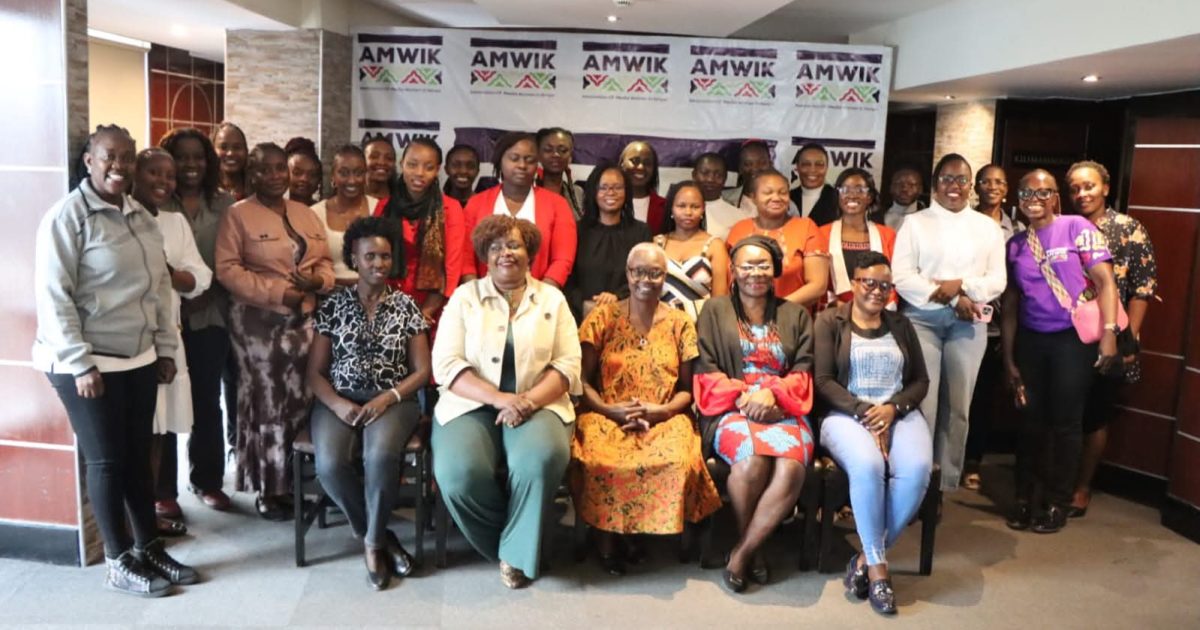
The Association of Media Women in Kenya (AMWIK), through the support of UNESCO’s International Programme for the Development of Communication (IPDC), will launch the “Empowering Journalists for Safety and Equity in Kenya” project on July 3, 2026.
The project is a comprehensive initiative designed to address the safety, mental health and professional advancement of journalists operating across Nairobi, Mombasa, Busia and Kakamega counties.
Journalists in Kenya, particularly women, face increasing safety risks that threaten their ability to work freely and effectively.
These challenges include online harassment, sexual harassment in newsrooms, physical threats while on assignment, and psychological stress resulting from exposure to violence and crisis reporting.
Many media institutions lack adequate policies and support systems to address these risks, contributing to unsafe working environments, self-censorship and limited career progression for women in media.
Speaking about the initiative, AMWIK Executive Director Queenter Mbori said that the project’s overall goal is to contribute to a safer, more inclusive and gender-responsive media environment in Kenya where women journalists can work without fear of violence, harassment or discrimination.
“AMWIK will continue to push for a Kenya where every woman journalist can report, lead, and exist safely, both offline and online.” She said adding that the project responds to systemic gender inequalities, weak enforcement of protections and limited awareness of safety mechanisms.
It targets 60 female journalists as its primary beneficiaries, drawing participants from early-career, mid-career and senior levels, as well as journalists with disabilities.
The initiative will be formally introduced through a national hybrid launch event bringing together journalists, media stakeholders, policymakers and partners.
This will be followed by two intensive online training sessions equipping the beneficiary journalists with practical digital safety skills including tools to prevent and respond to online harassment and cyber threats, strengthen digital security practices, and navigate risks in online spaces.
Training content will be shaped by a pre-training needs assessment and will integrate global best practices. Alongside the technical training, a series of virtual psychosocial support workshops will create space for journalists to address stress, burnout, trauma from sensitive assignments and workplace psychological pressure.
The project will also engage media houses directly on the adoption of sexual harassment policies and gender-responsive newsroom practices, with in-house support for policy adoption in selected organisations. A dedicated collaboration platform will allow participants to share experiences, exchange best practices and build peer networks.
By the end of the project, AMWIK and UNESCO IPDC expect to have trained the women journalists on digital safety, conducted psychosocial support sessions, and trained media managers on gender-sensitive policies.
By Anita Omwenga