Mombasa County has launched an ambitious vocational skills programme dubbed “Skills Mitaani” targeting more than 10,000 young people for training and certification in blue economy and technical courses as part of efforts to tackle youth unemployment and bridge industry skills gaps.
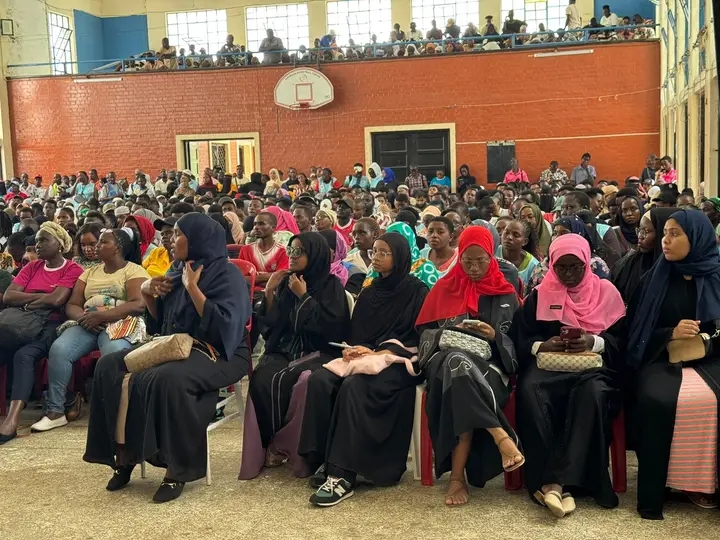
The initiative was unveiled during a Career Symposium organized by Akili Dada in partnership with the Kenya Blue Economy Skills Training (KBEST) programme at Tononoka Social Hall.
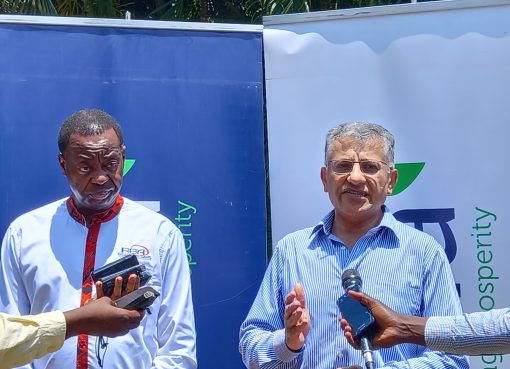
County Executive Committee Member (CECM) for Education Dr. Kame Mbwarali said the county had already enrolled 750 students under the “Tujiajiri Skills Mitaani” cohort and plans to absorb thousands more, including Form Four leavers awaiting university placement.
“When Skills Mitaani rolls out, we will issue diploma certificates, some for six months and others for one year, to no fewer than 10,000 students. I don’t want anyone left out,” said Dr. Mbwarali.
He said the county government, under Governor Abdulswamad Shariff Nassir, has signed memoranda of understanding with several private and community colleges in Mvita, Kisauni and Nyali sub-counties to expand access to vocational training beyond the established Mtongwe and Kisauni Vocational Training Centres.
Dr. Mbwarali linked the programme to the county’s broader investment in education, citing free pre-primary education and a subsidized secondary school feeding programme that has reduced annual parental contributions from Sh22,000 to as low as Sh5,000 after bursary support.
Mombasa County Director of Vocational Training Nancy Gathigia said the Kenya Blue Economy Skills Training programme, supported by the Government of Canada, is being implemented in 14 counties, including Mombasa, Kwale and Kilifi.
She said the programme seeks to align vocational training with labour market needs by ensuring industries participate in curriculum development under the Competency-Based Education and Training (CBET) framework.
“For many years in Kenya, we have focused on the supply side and not the demand side. The new CBET curriculum brings industry on board even in preparing our curriculum,” she said.
Gathigia said Mtongwe Vocational Training Centre has introduced a specialized short course in outboard engine repair, the first of its kind in Mombasa, alongside courses in refrigeration, air conditioning and baking technology tailored to the maritime and hospitality sectors.
She added that the county is providing capitation grants of Sh15,000 per student at Mtongwe and Maunguja vocational training centres to reduce the financial burden on parents and improve access to technical education.
The director also highlighted the county’s efforts to promote gender inclusion in vocational training, noting that Mtongwe Vocational Training Centre now has women instructors teaching plumbing, while childcare centres have been established at Kisauni and Mtongwe to support young mothers pursuing technical courses.
Kisauni Vocational Training Centre construction instructor and spokesperson Zablon Randu Nzai said the institution is offering two KBEST-sponsored courses—Accommodation and Housekeeping, and Pastry and Baking—to 30 trainees at a subsidized fee of Sh5,000.
He said the fees can be paid in three instalments of Sh2,500, Sh1,500 and Sh1,000, compared to the normal course fee of Sh36,000 once the sponsored slots are filled.
“When opportunities like this come, we should not sleep on them. We should seize them,” said Nzai, urging interested youth to apply before the subsidized intake closes.
ICT instructor Ambrose Mwachibua said the expanding blue economy presents growing employment opportunities in the hospitality and marine sectors and encouraged young people to take advantage of the county’s vocational training programmes.
By Ramadhan Nassib