Kenya and Senegal have stepped up efforts to strengthen biosafety regulation through enhanced collaboration and knowledge sharing aimed at promoting the safe use of modern biotechnology across Africa.
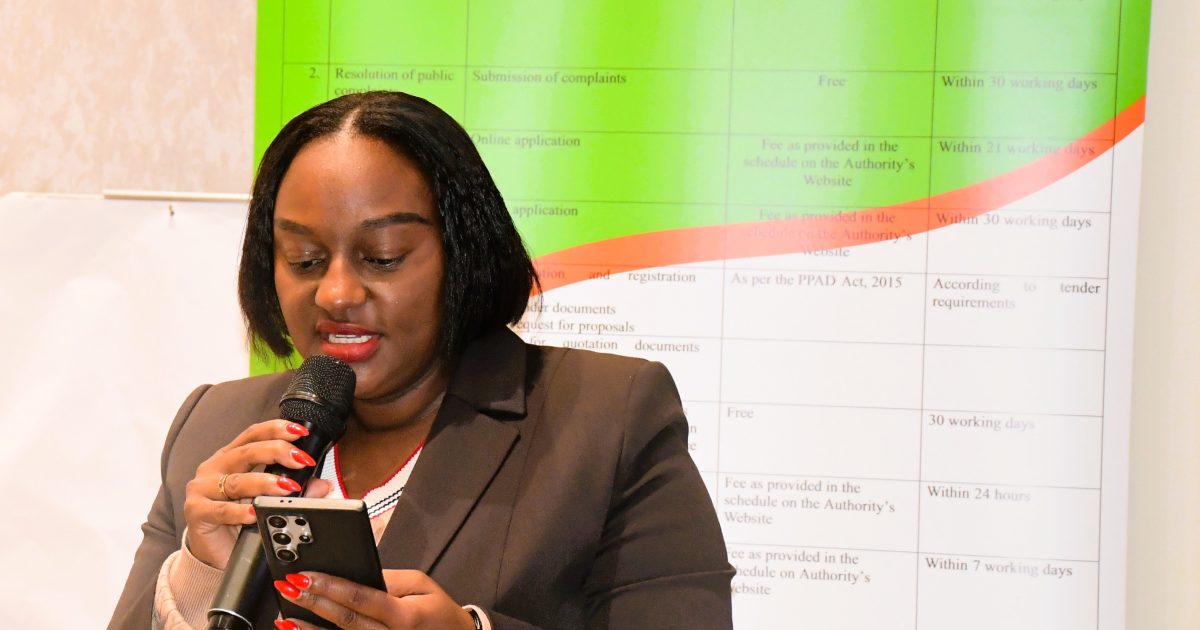
Speaking today during a benchmarking meeting with a delegation from Senegal, the Ag. Chief Executive Officer of the National Biosafety Authority (NBA), Dr. Ann Karimi, said the visit provides an opportunity for both countries to exchange experiences on developing effective biosafety regulatory systems while supporting innovation, food security, and environmental protection.
The CEO noted that African countries are increasingly embracing modern biotechnology to address challenges such as climate change, crop diseases, pests, and food insecurity, while emphasizing the need for robust regulatory frameworks to ensure the technology is applied safely and responsibly.
“Kenya and Senegal share common development goals, including improving agricultural productivity, conserving biodiversity, promoting scientific innovation, and strengthening public confidence in science-based decision-making,” she said.
The CEO highlighted Kenya’s progress in establishing a comprehensive biosafety regulatory framework under the Biosafety Act of 2009, which provides oversight on the transfer, handling, and use of genetically modified organisms (GMOs).
He said the country’s biosafety system comprises legislation, regulations, institutional structures, scientific risk assessment mechanisms, compliance monitoring, public awareness programmes and stakeholder engagement initiatives.
Dr. Karimi said Kenya is ready to share its achievements, lessons, and challenges in implementing biosafety governance, noting that an effective regulatory system depends on strong legislation, technical expertise, institutional coordination, transparency, public participation, credible communication, and sustained political and financial support.
She also expressed optimism that the benchmarking visit would strengthen biosafety systems beyond the two countries by fostering regional cooperation.
The CEO identified potential areas of collaboration between Kenya and Senegal as technical exchanges, capacity building, information sharing, joint training, regulatory cooperation, public awareness initiatives, and participation in regional and international biosafety processes, including implementation of the Cartagena Protocol on Biosafety.
Dr. Karimi noted that two institutions will use the engagement to identify areas of mutual interest and establish long-term partnerships that will contribute to strengthening biosafety governance across the continent.
The Senegalese delegation, led by the Director General of the National Biosafety Authority, Prof. Aliou Ndiaye, lauded Kenya’s progress in biotechnology regulation
He said Kenya had made significant strides in developing a robust legal and institutional framework to support safe application of modern biotechnologies in agriculture, health, and environmental management.
Prof. Ndiaye said African countries must embrace advances in biotechnology to unlock opportunities in key sectors while ensuring safety through effective regulatory systems.
“The rapid evolution of modern and emerging biotechnologies and their applications has become a global reality. African states must integrate this reality in order to benefit from the ongoing biotechnological transformation in agriculture, health, and the environment,” he said.
He noted that continuous capacity building within African institutions was critical in enabling countries to effectively manage biotechnology innovations and develop sound biosafety practices.
Prof. Ndiaye commended Kenya’s NBA for its achievements since its establishment in 2009, including the creation of an operational legal and institutional framework, development of risk assessment and monitoring mechanisms, and regulation of emerging technologies such as genome editing.
He also cited Kenya’s experience in agricultural biotechnology, including Bt cotton and genetically modified organism (GMO) testing, as key milestones demonstrating the country’s growing capacity in biosafety management.
The delegation further acknowledged Kenya’s efforts in promoting public participation in biosafety decision-making processes, describing the achievements as a significant contribution to Africa’s biotechnology advancement.
Prof. Ndiaye said the exchange between the two institutions would strengthen Senegal’s technical capacity by providing insights into Kenya’s biosafety practices and regulatory approaches.
“We are sure that, at the end of this meeting, the staff of Senegal’s National Biosafety Authority will see their institutional and technical capacities strengthened through the good biosafety practices developed by Kenya’s National Biosafety Authority,” he said.
Prof. Ndiaye expressed optimism that the benchmarking visit would further lay the foundation for stronger collaboration and partnerships between Kenya and Senegal in biosafety and biotechnology development, describing the engagement as an example of African scientific diplomacy and cooperation.
By Wangari Ndirangu