Kericho County has emerged as Kenya’s leading coffee producer at the Nairobi Coffee Exchange (NCE), according to the latest report from the exchange, signaling a major shift in the country’s coffee production landscape.
The NCE report shows that 36.36 million kilograms of clean coffee valued at USD 247.6 million, equivalent to about Sh31.94 billion, had been traded by the close of the reporting period in the 2025/2026 coffee season. This surpassed the 31.33 million kilograms worth USD 216.4 million recorded in the entire 2024/2025 season.
The growth was driven mainly by higher production volumes, even as average prices eased slightly from USD 6.91 to USD 6.81 per kilogram.
Kericho recorded the strongest performance, nearly doubling its auction volumes from 3.03 million kilograms to 6.00 million kilograms, overtaking Kirinyaga to become the country’s top coffee-producing county by both volume and value.
The report attributes Kericho’s rise to improved farmer participation, stronger cooperative structures, better market access and enhanced extension services.
This demonstrates the growing potential of coffee production in the Rift Valley region and the impact of targeted investments in the sector.
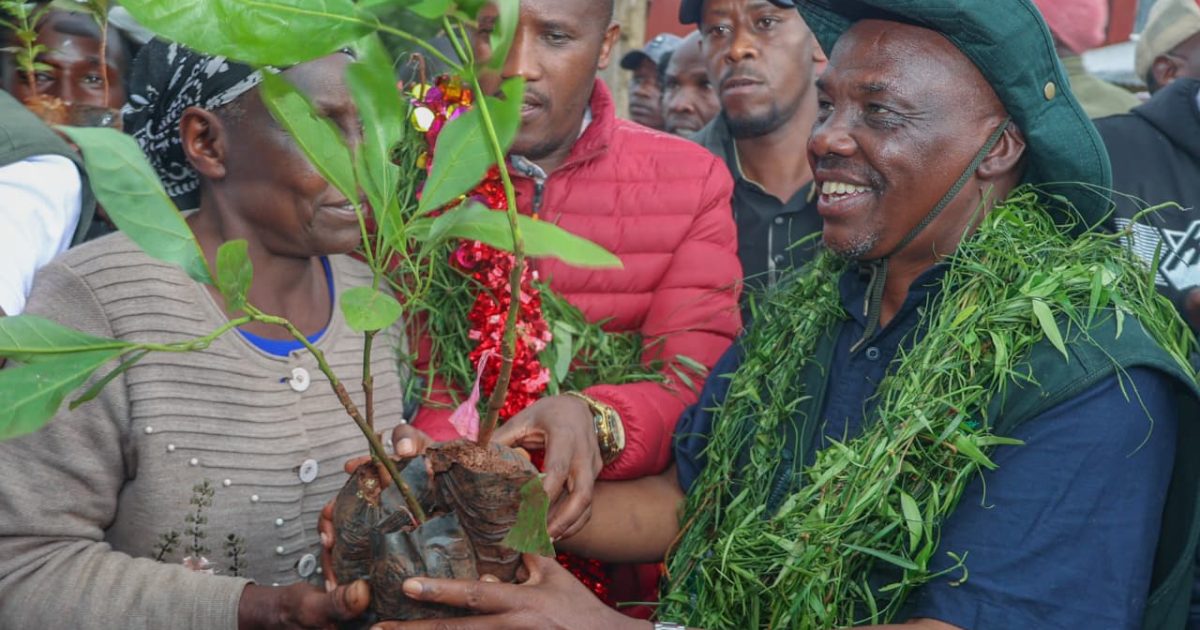
This comes amid ongoing government intervention to accelerate coffee adoption across the country designed to scale and modernize the legacy of the cash crop by integrating climate-smart agronomy, distributing certified high-yielding seedlings across the country and optimizing domestic value addition through central milling partnerships.
The Principal Secretary State Department for Agriculture Dr. Kiprono Rono has already engaged Ward Coffee Champions trainees, promoting climate-smart and precision farming. He confirmed that plans for Coffee Training Centers across the country had been validated to strengthen extension services, accelerate technology adoption, and support youth-led agricultural initiatives.
“The ongoing sector transformation, driven by research, mechanization, training, and value addition, will increase yields, improve farmers’ incomes, and enhance Kenya’s global competitiveness in premium coffee markets,” he said.
The PS said the Government is scaling up national coffee production from 50,000 to 150,000 metric tonnes within three years through reforms and strategic investments.
He noted that Sh500 million has been allocated to propagate 10 million high-yielding, disease-resistant seedlings annually.
The plan also includes expanding research centres including Coffee Research Institute (CRI) Ruiru, CRI KORU, and Kaimosi Technical Institute among others, strengthening cooperatives and implementing market reforms to secure fairer returns for farmers.
Although it lost the top spot in volume, Kirinyaga retained its reputation for premium coffee, posting the highest average price among major producing counties at about USD 7.25 per kilogram, well above the national average of USD 6.81.
The report further indicates that Nyeri recorded a 15 per cent decline in auction volumes, while Murang’a and Kiambu posted growth of 28 per cent and 29 per cent respectively.
Western Kenya emerged as the fastest-growing coffee production region, with Nandi increasing its auction volumes by 92 per cent and Bungoma by 97 per cent. Kisii more than quadrupled its deliveries, while Nyamira recorded nearly six-fold growth.
Together, Kericho, Nandi, Bungoma, Kisii, Nyamira and Trans Nzoia contributed 12.44 million kilograms of coffee, accounting for 34 per cent of Kenya’s total NCE volume, up from 19 per cent in the previous season.
By contrast, the traditional Central Kenya coffee-growing bloc comprising Murang’a, Nyeri, Kirinyaga and Kiambu saw its share of national auction volumes decline from 62 per cent to 51 per cent.
The report also notes that Narok County made its debut at the Exchange, pointing to the emergence of new coffee-growing areas.
However, Machakos recorded a 58 per cent decline in auction volumes, while Busia, Vihiga, Kajiado, Taita Taveta and Siaya registered no auction sales during the period under review.
Henry Kinyua, Advisor, Crops and Value Chain at the President’s, Economic Transformation Secretariat (PETS) called for targeted interventions to sustain growth in emerging coffee-producing counties through strengthened extension services, improved cooperative governance and increased farmer training.
He urged policymakers to examine the declining volumes in traditional coffee-growing regions to determine whether the trend is linked to production challenges, changing marketing channels or delayed deliveries.
The expert emphasized that maintaining Kenya’s reputation for premium coffee will require continued investment in quality improvement measures, including modernization of coffee processing facilities and strengthening quality assurance systems.
As coffee production expands into new regions, the sector is undergoing a major transformation that could redefine Kenya’s coffee landscape and create new opportunities for thousands of smallholder farmers across the country.
By Dr. Muchelule Yusuf and Ronald Cheruiyot