The government has unveiled a raft of proposed bills, policies and regulations aimed at streamlining Kenya’s mining sector by strengthening governance, improving occupational safety and health standards, modernising explosives management and promoting mineral beneficiation and value addition.
The proposed legal and policy framework comprises the Draft Minerals, Mining and Beneficiation Policy, the Mine Health, Safety and Environment Regulations, 2026, the Draft Explosives Bill, 2026, and the Explosives (Licences and Fees) Regulations, 2026.
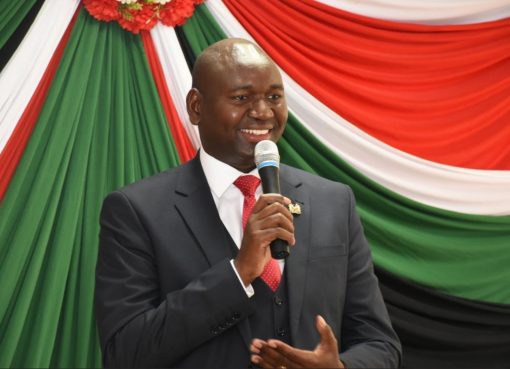
Speaking during a public participation forum in Kajiado, State Department for Mining Director of Licensing, Compliance and Enforcement Gregory Kituku said the reforms are intended to modernize the mining sector, enhance governance and create a safer and more sustainable working environment for all categories of miners.
Kituku said the Mine Health, Safety and Environment Regulations, 2026, will replace outdated regulations under the repealed Mining Act Cap 306, introducing comprehensive safety standards applicable to artisanal, small-scale and large-scale mining operations.
He noted that the regulations introduce a rehabilitation license for exhausted mining sites and provide clear timelines within which mined-out areas must be restored to minimize accidents associated with abandoned pits and degraded landscapes.
According to Kituku, rehabilitation of mining sites will not only improve public safety but also protect the environment by ensuring mined areas are restored for productive use after extraction activities cease.
On the Draft Explosives Bill, 2026, Kituku said the proposed law seeks to replace the Explosives Act Cap 115 enacted in 1930, noting that the existing legislation has been overtaken by technological advancements, changing security concerns and developments within the mining industry.
He said the accompanying Explosives (Licences and Fees) Regulations, 2026, will modernize licensing procedures, review license fees and establish clearer guidelines on the transportation, storage and handling of explosives.
The regulations will also address emerging challenges, including compensation for damage to property resulting from blasting activities undertaken during mining operations.
Kituku further disclosed that the State Department for Mining has developed an electronic explosives management system to improve monitoring, accountability and traceability in the handling of explosives while curbing illegal possession and misuse.
He explained that digitizing explosives management will strengthen regulatory oversight and enhance public safety by enabling authorities to monitor the movement and use of explosives more effectively.
On policy reforms, Kituku said the Draft Minerals, Mining and Beneficiation Policy seeks to review the 2016 policy framework by incorporating mineral beneficiation and value addition in line with the Africa Mining Vision 2063.
“We want to align the policy with the Africa Mining Vision 2063, which encourages African countries to beneficiate their minerals before export in order to add value, create employment opportunities and support the growth of downstream industries,” said Kituku.
He expressed optimism that increased local processing of minerals would significantly enhance the sector’s contribution to Kenya’s Gross Domestic Product (GDP), raising it from the current one per cent to 10 per cent by 2030 while creating more jobs and increasing export earnings.
Kenya National Secretary for the International Commission on Occupational Health Winnie Makokha urged the government to align the proposed legal framework with international labour standards, observing that Kenya is a member of the International Labour Organization (ILO), whose conventions provide guidance on occupational safety and health.
She emphasised that all workers in the mining sector deserve safe and healthy workplaces, adding that stronger safety standards would reduce injuries, occupational diseases and fatalities associated with mining activities.
Makokha also underscored the need for continuous awareness programmes and capacity building to ensure miners understand and comply with occupational health and safety requirements.
Kenya Chamber of Mines Chief Executive Officer Brian Simiyu called on the government to harmonize mining laws to ease regulatory compliance, reduce operational costs and improve Kenya’s competitiveness as an investment destination.
He observed that approximately 80 per cent of Kenya’s mining sector comprises artisanal and small-scale miners, making formalization essential for improving productivity, attracting investment and expanding government revenue.
Simiyu welcomed the proposed mineral beneficiation policy, saying it has the potential to spur industrialisation and create employment if implemented through a deliberate and phased approach supported by adequate infrastructure, affordable energy and investor incentives.
He further urged the government to adhere to the implementation matrix accompanying the proposed reforms to ensure they achieve their intended objectives and deliver tangible benefits to communities, investors and the national economy.
Members of the public have until July 25, 2026 to submit written memoranda on the proposed bills, policies and regulations to the State Department for Mining offices in Nairobi or electronically through ps@mining.go.ke, as part of the ongoing public participation process.
By Diana Meneto