The ‘Start A Library Trust’ has established 322 school libraries to enable more than one million learners in 24 counties access to books towards cultivating a reading culture in public primary schools.
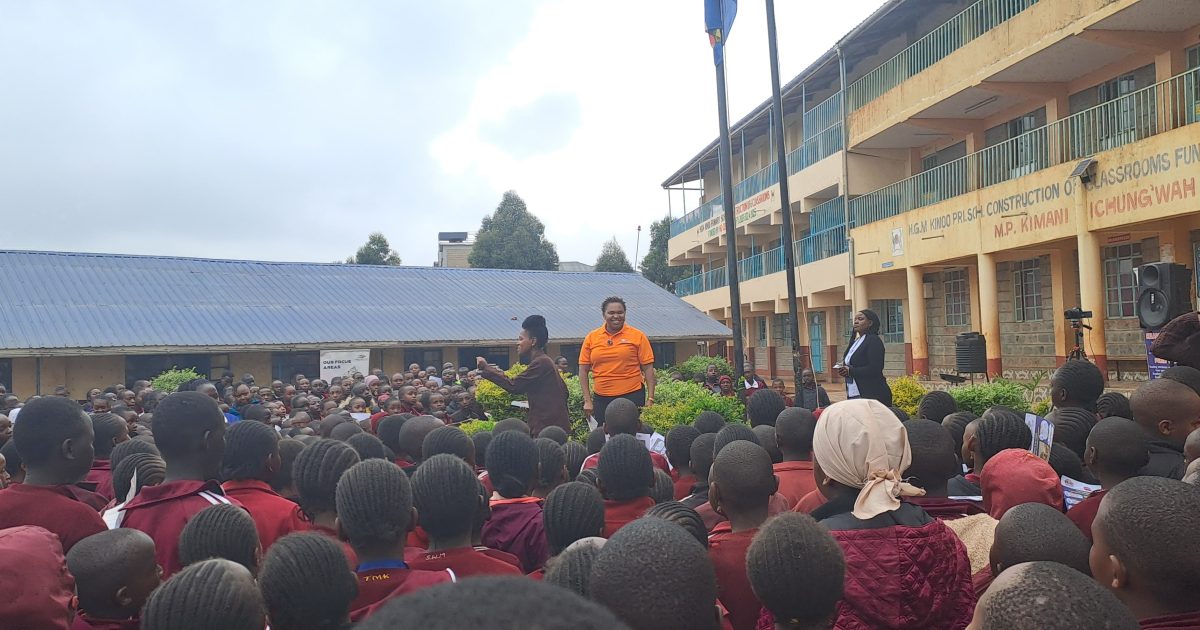
Speaking during the National Reading Day celebrations, the Executive Director of ‘Start A Library Trust’, Evelyn Mwandia, insisted that the organization is committed to improving foundational literacy among children in rural communities and informal settlements by making books accessible and enjoyable.
“Start A Library Trust is a social impact organisation dedicated to improving foundational literacy for children in public primary schools in rural communities and informal settlements,” she elaborated.
Additionally, Mwandia explained that the organisation establishes school libraries stocked with age-appropriate, locally authored, and culturally relevant storybooks to encourage children to read for pleasure rather than solely for examinations.
“We establish school libraries with age-appropriate, locally authored, culturally relevant storybooks so that children can read for pleasure and not for exams,” she reiterated.
Besides providing books, Mwandia pointed out that the organisation trains teachers to serve as teacher-librarians and mentors pupils to become student librarians, enabling schools to sustain reading programmes and nurture a lasting reading culture.
Further, the Director said rather than constructing new library buildings, the organisation refurbishes existing classrooms and equips them with books and learning materials.
“We do not build libraries. We refurbish existing classrooms and equip them with books so that children can read,” she reaffirmed.
To ensure learning continues beyond the classroom, the Trust also promotes home libraries, allowing children to access books during weekends and school holidays and reducing learning loss.
On the other hand, Mwandia disclosed that the organisation runs several complementary programmes, including creative writing initiatives that empower learners to become authors.
“We have children who have written books, and they are currently selling 21 titles on Amazon. Our vision is that, in the near future, the books we place in our libraries will be written by children for other children,” she proclaimed.
The Trust also operates book clubs where learners participate in debates, spelling bees and other interactive reading activities aimed at making reading enjoyable.
According to Mwandia, the organisation intentionally encourages girls to take leadership positions within the clubs after assessments showed they were less likely than boys to lead such activities.
“We empower girls to take leadership because we realised they were not taking up leadership roles during these activities,” she noted.
Mwandia also added that the programmes are designed around play-based learning to make reading engaging.
“Reading is not always seen as exciting like football or basketball. We therefore ensure children engage with books in a fun way so they become hooked to reading, grow in confidence, communicate better and develop important life competencies,” she remarked.
One of the organisation’s flagship initiatives is the annual National Read Aloud programme, which has grown into the country’s National Reading Day.
Mwandia stressed that the initiative has significantly contributed to promoting a reading culture in schools and led to the official recognition of National Reading Day, observed annually on July 12.
“This year marks the 12th edition of the programme, and today over 2,000 schools across the country participated in a 30-minute reading session,” she reported.
This year’s reading focused on The Boy and the Lion, a story highlighting human-wildlife coexistence and environmental conservation.
She mentioned that the theme was informed by the fact that many public primary schools are located near wildlife ecosystems, making environmental awareness essential among children.
“Our goal is to raise one million Kenyan children who will become environmental stewards capable of protecting wildlife and conserving the environment,” the Director affirmed.
Likewise, Mwandia observed that tourism remains a major contributor to Kenya’s economy, making conservation education an important investment for future generations.
On funding, she revealed that the organisation works closely with the Ministry of Education, schools, corporate partners and international development organisations.
“The Ministry of Education is our main collaborator because the schools and teachers belong to the government. We capacity-build teachers so they can effectively manage the libraries and reading programmes,” she explained.
Mwandia added that private sector partners provide financial support and employee volunteers, while institutional donors help finance library establishment, teacher training and sustainability programmes.
“Our partners enable us to establish more libraries, empower more teachers and ensure that the libraries remain sustainable for future generations,” she remarked.
Meanwhile, the organisation continues to advocate for increased access to quality reading materials as a key strategy for improving literacy, nurturing creativity, and empowering children to become lifelong readers and future leaders.
By Anita Kariuki