By P, KNA
Ignorance of the law among members of the Turkana community, remains a key driver of conflict, marginalization and injustice.
This was revealed in the just-concluded inaugural edition of the Legal Empowerment Summit.
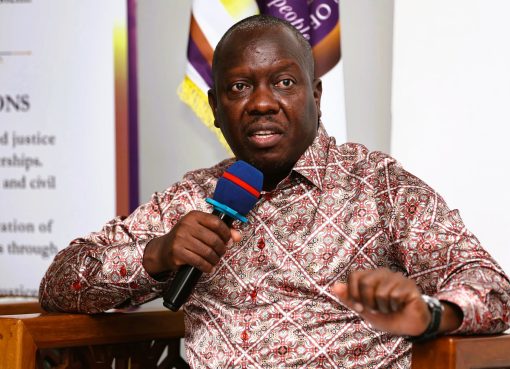
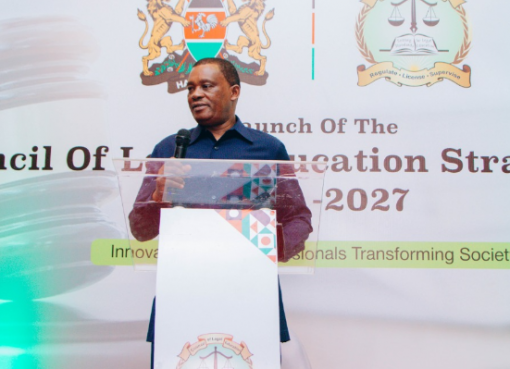
The Summit, jointly organized by the Turkana County government, Article 43, Kituo Cha Sheria and other partners, brought together legal scholars, practitioners and community leaders to address widespread lack of awareness of law and its implications on the Community.
The Organizers noted that legal illiteracy has often resulted in wrongful arrests, unfair trials and entrenched harmful practices under the guise of culture.
The County Deputy Governor, Dr. John Erus, highlighted the Shirika Plan, a framework guiding refugee-host relations, as an example of a legal instrument that has been grossly misinterpreted due to limited sensitization.
“It is the view of the County government that the general public and all actors in refugee affairs ought to be sensitized on the content and implications of the Shirika Plan, to avoid further misinterpretation and unnecessary conflict,” Dr. Erus said.
The Deputy Governor called on the Department of Refugee Services, to take lead and include all refugee hosting counties in the sensitization process, as refugees were a critical part of daily interaction with locals in Turkana and Garissa counties.
Keynote Speaker, Prof. P.L.O Lumumba, a renowned Pan-Africanist and Senior Lawyer, urged communities to view legal knowledge, as a tool for empowerment.
“When we speak of legal knowledge, we do not limit ourselves to formal systems of modern law. This extends to traditional approaches such as dispute resolution mechanisms and alternative justice systems,” Lumumba said.
He praised Turkana’s Akiriket system, a Council of Elders that traditionally adjudicates disputes, as a resource worth strengthening, drawing from global examples.
“Rwanda’s post-genocide gacaca court system and Burundi’s homegrown justice models produced better results in reconciliation and justice than the formal legal order. Turkana must rethink overreliance on formal courts,” he said.
Speaking on behalf of professionals, Turkana Professionals Association Chair, Jackson Nakusa, stressed the need for grassroots outreach.
“This initiative must move down to the Sub-county, Ward and village levels. Some practices we call tradition are repugnant to the law. Many have been jailed because they could not understand the judge or the legal jargon. Legal empowerment must reach the Sub-county, ward, village and sub village levels,” Nakusa said.
The challenge of access to justice also featured prominently, with the Speaker of the local County Assembly, Charles Lokioto, lamenting that Turkana, Kenya’s second-largest devolved unit by land at size 77,000 Square kilometres, relies on only two fully functional courts in Lodwar and Kakuma.
The Resident Judge P.J. Otieno, acknowledged the deficit, but disclosed that expansion efforts were underway.
“The judiciary, working with MPs, has secured infrastructure in Lokichar and Lokitaung that has already been gazetted as courts.
Once furnished, services will begin. In the meantime, we are conducting monthly mobile courts and outreach programs to bring justice closer to the people,” he said.
The Organizers said the Summit seeks to extend beyond Turkana to the wider Ateker Community, spanning Kenya, Uganda, Ethiopia and South Sudan, in recognition of shared cultural and legal challenges across borders.
“From the attendance to the quality of discussions, we can only describe the inaugural summit as a success. In line with the goals of Article 43, subsequent editions will target other Ateker populations across borders,” said one of the organizers, Emanman Ewoi.
The executive Director of Article 43 and the director of legal services at the county Ekai Nabenyo, also confirmed the cross-border plans moving forward.
Other speakers including constitutional lawyer, Dr. Ekuru Aukot, emphasized the urgency of bridging gaps in legal awareness to protect vulnerable populations.
The discussions also touched on gender rights, land ownership in light of oil exploration, perennial border conflicts and the impact of executive orders on cross-border communities.