The judiciary wants communities in Marsabit County to embrace the Alternative Justice System (AJES) to enable them to access justice without necessarily going through the court process over disputes that are civil in nature.
AJES, a constitutional framework designed to ease access to justice, comes as a stroke of luck to the communities whose access to justice has remained a major challenge for decades owing to the remoteness of the region with very low mobility due to poor transport infrastructure.
The Judiciary, which has previously made efforts to perform mobile court services in order to reach residents in outlying areas such as North Horr and Loiyangalani, is now urging residents to embrace the framework of resolving disputes out of court.
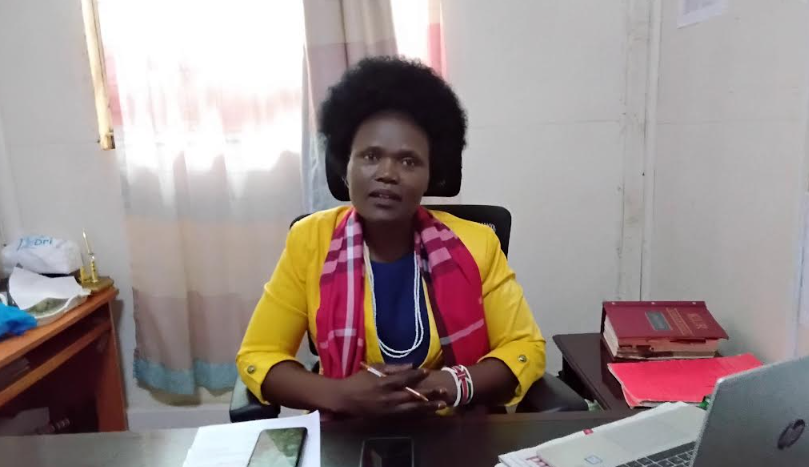
Speaking after a two-day community sensitization forum held in Loyangalani Sub-county, Marsabit Law Courts Principal Magistrate and Head of Station Christine Wekesa said the Judiciary, in partnership with stakeholders, was carrying out an awareness campaign to sensitize locals on AJES.
Ms. Wekesa said various factors that include long distances to courts, harsh terrain, limited financial resources, language barriers, and low levels of legal awareness have often denied many local residents the opportunity to seek justice through the formal legal channels.
To bridge the gap, the judiciary, the magistrate added, her station has joined hands with World Vision-Kenya and the Marsabit Court Users Committee (CUC) in efforts to promote the Alternative Justice System, a people-centered justice structure, to make it handy for aggrieved parties to get justice cost-effectively and with speed.
She called on members of the public to embrace the AJES framework, which complements the formal court system as an avenue for resolving disputes peacefully and efficiently.
The Alternative Justice System is intended to complement the formal court system, not to replace it. They provide a quicker, less costly, and more accessible way of resolving disputes, particularly for communities living far from conventional courts,” Ms. Wekesa said.
She urged residents to work closely with community elders, the judiciary, and other justice sector institutions to ensure disputes are resolved amicably without compromising constitutional values and human rights.
The Principal Magistrate explained that the initiative was inspired by the launch of AJES by Chief Justice Martha Koome two and a half years ago and which is anchored under Article 159 (2)(C) of the Constitution.
The framework encourages courts to promote alternative forms of dispute resolution provided that they do not contravene the Constitution or violate the Bill of Rights.
Ms. Wekesa said AJES provides an opportunity for communities to settle disputes through mediation, dialogue, reconciliation, and other traditional mechanisms, while remaining firmly guided by the Constitution.
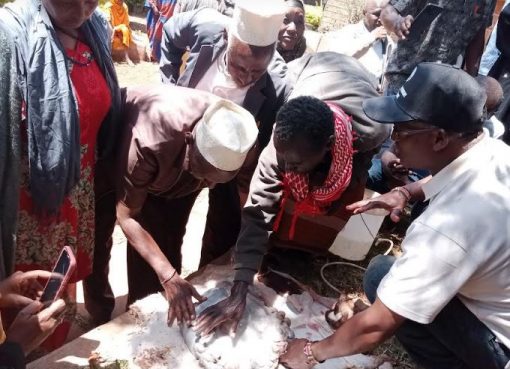
Wekesa noted that Marsabit County has a rich cultural heritage where elders have traditionally played a central role in conflict resolution, which is well engrained in the AJES framework while ensuring traditional justice systems operate within the law and respect the rights of every individual.
“Our elders have always been custodians of peace in our communities. Through AJES, we are strengthening these traditional structures while ensuring that justice is delivered in accordance with the Constitution,” she said.
She observed that the support exhibited by stakeholders in the sensitization effort demonstrates the importance the partners, who include the Office of the Director of Public Prosecutions, the national administration, the probation department, and that of children services, attach to AJES in expanding space of access to justice.
The deliberations focused on challenges facing communities in the region that include child protection and child labor, illegal fishing, gender-based violence, and the difficulties encountered in handling children’s cases in remote areas.
The meeting was also graced by Marsabit Presiding High Court Judge Justice Francis Rayola Olel, Loiyangalani Deputy County Commissioner Stanley Kimanga, and ODPP County Coordinator Mr. Joseph Mburugua.
The Forum also bore fruits when it was resolved that a Court Users Committee be established in the remote sub-county of Loiyangalani, which the magistrate said was expected to strengthen relations between the judiciary and the local community by promoting civil education and provide a platform through which residents can raise concerns affecting the administration of justice.
The public forums enlightened residents on the objectives of AJES and how its principles could be applied in resolving family disputes, land disagreements, inheritance matters, and other civil disputes, through dialogue before they escalate into lengthy court battles.
Ms. Wekesa cautioned that while AJES remains an important tool, capital cases such as murder, sexual offences like defilement and rape, and gender-based violence, as well as offenses involving children, must always be handled through the formal justice system.
“No traditional mechanism should compromise the rights guaranteed under the Constitution; justice must always protect the vulnerable and uphold the rule of law,” she said.
She said child protection featured prominently during the discussions with judicial officers, urging parents and local leaders to report cases of abuse, neglect, child marriage, and child labor to the authorities instead of attempting informal settlements that deny children access to basic rights and justice.
In a bid to improve on access to child protection services, the World Vision-Kenya has funded the construction of a Sub-county children’s office at Loiyangalani
The Magistrate commended World Vision, government agencies, community elders, and members of the Court Users Committee for working together to strengthen access to justice in one of Kenya’s most remote regions.
She affirmed the judiciary’s commitment to ensuring that justice reaches every Kenyan regardless of where they live.
“Justice should never be determined by distance, poverty, or lack of information. Every Kenyan deserves equal protection under the law,” she said, adding that justice was being taken closer to the people through the alternative justice system.
The residents expressed optimism that the initiative would enhance peaceful dispute resolution, strengthen family and community cohesion, and enrich public confidence in the judicial justice system.
The Loyangalani sensitization exercise emerged not just as a legal awareness undertaking but as a powerful reminder that justice is a constitutional right that collaboration between key actors who include the Judiciary, government agencies, development partners and community leaders, an inclusive, responsive justice system could be realized.
By Sebastian Miriti and Anthony Melly