Residents of Shimoni have called for transparency and preferential access to employment opportunities as the Sh2.6 billion Shimoni Fish Port prepares to begin operations.
The residents say the project has raised hopes of improved livelihoods and economic opportunities but want the government to ensure that the local community benefits directly from the investment.
They are particularly concerned about employment and the future of small-scale fishing and tourism, as well as commitments allegedly made to the community before construction began.
Fadhili Ali Abdalla, a resident who participated in discussions on the project, said residents were informed that 75 per cent of lower-level jobs would be reserved for locals, while 25 per cent would go to people with specialized qualifications.
“We agreed that 75 per cent of the jobs would go to residents here, while 25 per cent would be for those with higher qualifications,” Abdalla said.
He said locals secured only a limited number of casual jobs during construction and urged authorities to prioritize residents when the facility becomes operational.
Another resident, Mohamed Shebwana Ali, said the community was yet to understand how it would directly benefit from the facility.
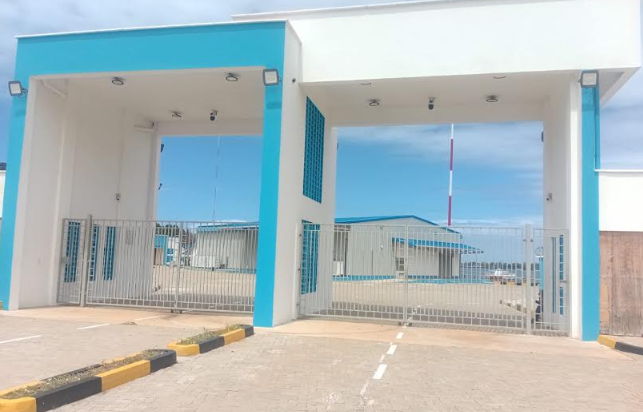
“We have not benefited from anything. We do not even know what is going on. The port has been built well, but we still do not know whether it is for fish or what exactly it is meant for,” he said.
Ali appealed to President William Ruto to ensure residents are considered for available opportunities, particularly jobs that do not require specialized qualifications.
Ibrahim Omar Mohamed said unemployment remained a major challenge among young people in the area.
“We are also young people. Even if we did not go to school far, we can do the work,” he said.
Mohamed, who is engaged in tourism, said the community was also concerned about the potential impact of increased fishing activity on marine tourism.
He said oil pollution from fishing vessels could affect dolphins and other marine attractions that support tourism in Shimoni and neighboring Wasini.
“If fishing vessels come here and there are oil leaks, the dolphins may move away. That would affect those of us who depend on tourism,” he said.
Abed Omar Mohamed, a senior captain with about 25 years’ experience in the area, said local knowledge should be considered when employment opportunities arise.
“We understand this area very well. We understand the waters from Shimoni to Pemba, Zanzibar, and further towards Dar es Salaam. We know the fishing grounds and the reefs,” he said.
The fish port is expected to support activities across the fisheries value chain, including fish handling, processing, storage, and value addition.
Residents, however, want clarity on how they will participate in the emerging opportunities and how the facility will affect small-scale fishing, which remains an important source of livelihood in Shimoni, Wasini, Mkwiro, and surrounding areas.
Mohamed said fishermen who might be affected by restrictions around the facility should be considered for compensation or alternative livelihood support.
“If fishing is restricted because of the port, then local fishermen should be considered for compensation,” he said.
The residents also want greater community participation in discussions on government projects affecting the area.
Abdalla proposed that village elders, youth, and women representatives be given an opportunity to present their concerns directly to senior government officials during visits to Shimoni.
“We are not fighting our leaders. We want to help them. But when the President comes, give us an opportunity so that we can speak for ourselves,” he said.
Despite the concerns, residents welcomed the investment and expressed hope that the fish port would create jobs, strengthen the fisheries value chain, and improve livelihoods.
They said the success of the Sh2.6 billion facility should ultimately be measured by the extent to which it creates tangible opportunities for the local community.
By Chari Suche