Kenya is stepping up research into improved cattle breeds, quality feeds, and climate-resilient pastures as it seeks to increase beef production, improve farmers’ incomes, and bridge the country’s persistent meat deficit.
At the Kenya Agricultural and Livestock Research Organization (KALRO) Beef Research Institute in Lanet, Nakuru County, scientists are combining advances in animal breeding, nutrition, and pasture development to help farmers produce heavier animals and better-quality beef at a lower cost.
Catherine Ndungu, a research scientist in animal breeding and genetics at the institute, says the improved Boran is one of the breeds with strong potential to drive beef production, particularly in Kenya’s arid and semi-arid areas.
“The improved Boran is well adapted to our local environment and can convert available resources into meat,” she says.
The breed is heat tolerant, can travel long distances in search of pasture and water, and can withstand harsh conditions that can limit the performance of some exotic breeds.
Bulls can reach up to 900 kilogrammes, while females can attain between 450 and 500 kilogrammes. The breed also records a dressing percentage of about 55 to 60 per cent, meaning a significant proportion of its live weight can be converted into carcass meat.
Ndungu says such characteristics are increasingly important as climate change continues to place pressure on livestock production.
KALRO is conducting research to improve traits including body weight, feed conversion efficiency, adaptability, and disease tolerance before making improved animals available to farmers.
The research, Ndungu explains, is also exploring crossbreeding to combine desirable traits from different cattle breeds, saying one programme involves crossing the Improved Boran with the Orma Boran, which is known for greater tolerance to diseases such as trypanosomiasis.
“The objective is to develop animals that combine the Improved Boran’s superior body weight with the Orma Boran’s disease tolerance even as KALRO works with Sahiwal, a dual-purpose breed valued for both meat and milk production.
For farmers seeking breeding bulls, Ndungu advises them to look beyond size and consider the animal’s overall structure and reproductive potential.
Farmers should assess height, body capacity, leg structure, back, and the development of the scrotum. A good beef animal should have a strong body, broad hindquarters, and sound legs capable of carrying its weight as it matures.
“Farmers need the right breed for their environment and production goals. If you choose the right animal and manage it properly, beef farming can be profitable,” Ndungu says, adding that their cattle range between Sh150,000 for a dairy cow and Sh250,000 for a bull.
But good genetics alone cannot deliver quality beef without proper nutrition, and Lorna Chesire, an animal technologist at the KALRO Beef Research Institute, says researchers are developing locally formulated feed rations to improve weight gain, muscle development, and meat quality in cattle raised under feedlot systems.
The institute focuses on finishing steers aged between 24 and 30 months before they are taken to market. “We analyze the feeds before formulation and again after formulation to ensure the animals receive the right levels of energy and protein,” Chesire says.
KALRO has developed grass- and silage-based rations incorporating ingredients such as maize germ, Rhodes grass, wheat bran, canola and sunflower concentrates, together with mineral supplements.
Researchers are also examining locally available protein sources, including acacia and prosopis pods and leaves, as cheaper alternatives that could help farmers reduce feeding costs.
The feeding programme is designed to help farmers achieve faster and more efficient weight gain while producing animals that meet market requirements.
Behind every well-fed animal, however, is the pasture that provides the foundation of livestock nutrition and KALRO research scientist and plant breeder Mercy Jerop says the organization is developing and evaluating pasture varieties suited to different agro-ecological zones to help farmers cope with climate change and ensure a reliable supply of quality livestock feed.
Among the Napier varieties promoted by KALRO are Bana grass and Omega-1, while Super Napier is currently under research following farmers’ reports of its high protein content.
The institute has also developed two locally adapted Brachiaria varieties, BS1 and KS1, which mature within three to four months and perform well in medium and dry areas.
“Brachiaria can be established using seed or splits and can be used for grazing, silage, and feed blocks,” Jerop says, adding that the grass contains about 12 to 13 percent crude protein, making it an important component of livestock diets.
Boma Rhodes, Jerop says, is another pasture suited to medium- and high-altitude areas and is mainly used for hay and seed production.
For farmers seeking higher-protein fodder, KALRO is promoting forage sweet potato varieties containing about 18 to 20 percent protein. The crop can be used in cut-and-carry feeding systems or mixed with other grasses.
Jerop says farmers should select pasture varieties according to their agro-ecological zones rather than adopting varieties simply because they perform well elsewhere.
“We first ask farmers where they come from so that we can recommend pasture varieties suited to their area,” she says.
Farmers visiting KALRO can access pure seed and receive guidance on the most suitable pasture for their location. Those in drier areas can be directed towards appropriate rangeland grasses, while farmers in higher-rainfall areas can be advised on suitable Brachiaria varieties.
As climate change threatens pasture availability and production costs continue to rise, scientists say farmers will increasingly need animals that can withstand harsh conditions and efficiently convert locally available feed into quality meat.
“You cannot have animals without food. For you to get quality meat and milk, animals must have quality feed,” Jerop says.
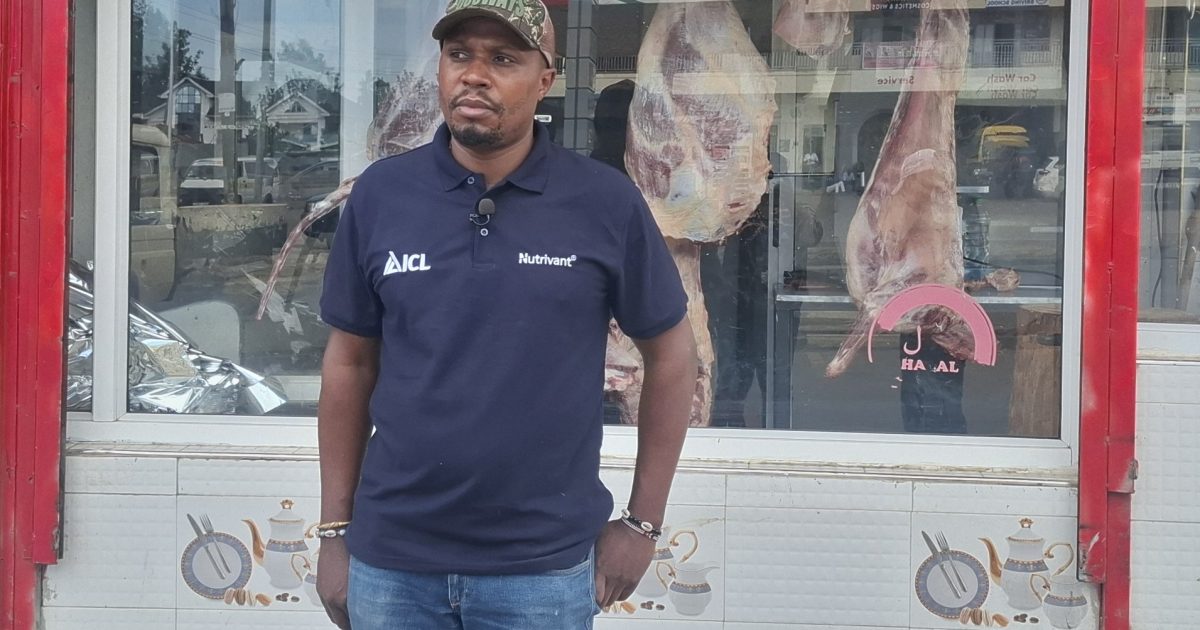
John Njoroge, a meat trader and butcher at Jamu Meat Center in Lanet, Nakuru County, says demand for quality beef remains strong, with his business supplying households, schools, hospitals, and other institutions.
Njoroge, who has been in the beef business for two years, says KALRO Beef Research Institute has been his main supplier, providing cattle whose meat has earned a positive response from customers.
“We buy cattle in bulk and can sell between 100 and 200 kilogrammes of beef a day when demand is high, with schools among our biggest customers,” he added.
Njoroge said consumers are willing to pay a premium for quality beef, with his butcher selling meat at about Sh780 per kilogramme compared with some competitors charging between Sh600 and Sh700.
Despite the higher price, he says his business continues to attract customers because of the quality and tenderness of the meat.
“We are slightly higher in price, but according to our sales, we are outperforming competitors because of the quality of the meat,” he says, adding that reliable supplies of well-finished cattle would help traders meet the growing demand for quality beef.
For Kenya, the message from KALRO is clear: closing the meat deficit will not depend on cattle numbers alone but on producing the right animals, feeding them properly, and ensuring they have quality pasture throughout the production cycle.
By Wangari Ndirangu