Kenya increased its education budget to Sh784.5 billion for the 2026/27 financial year, up from Sh702 billion in 2025/26, as the Government steps up investment in teachers, equity, education data and skills development.
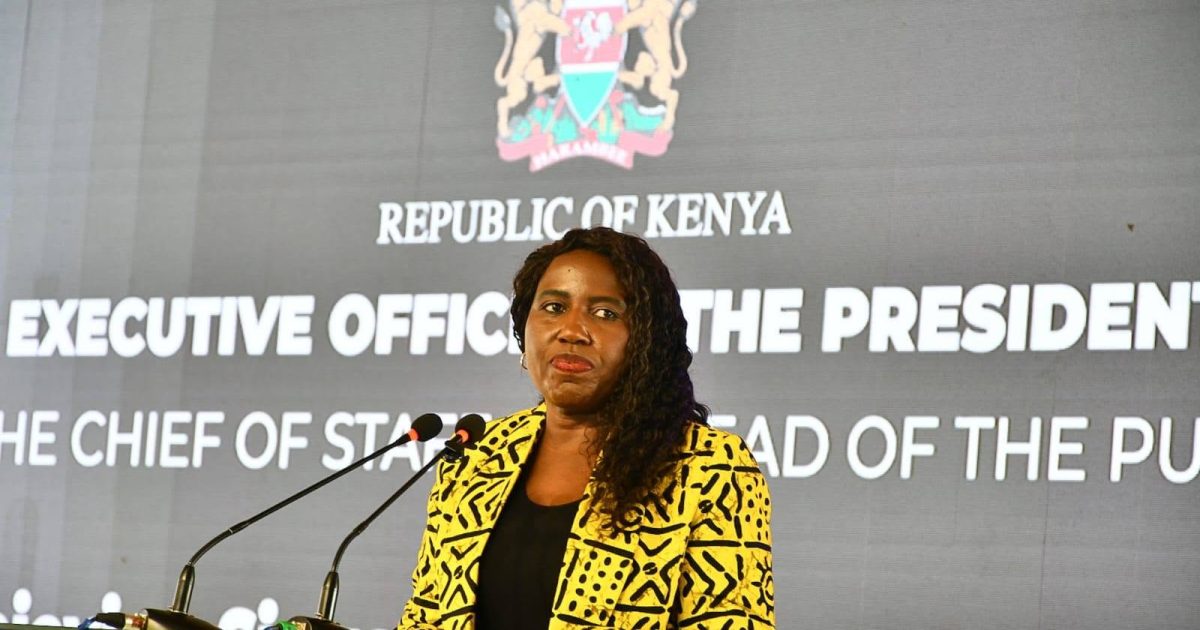
Principal Secretary for Higher Education and Research Beatrice Inyangala said the increased allocation demonstrated the Government’s commitment to strengthening the education sector and improving learning outcomes.
Speaking during the Second East African Community (EAC) Regional Conference on Education in Nairobi on Wednesday, Inyangala said the Sh784.5 billion allocation accounted for about 27 per cent of the national budget and 4.9 per cent of Gross Domestic Product (GDP).
She said Kenya had made progress in implementing education reforms through targeted programmes aimed at improving learning outcomes, promoting equity, strengthening teachers and expanding access to education.
Inyangala cited the Kenya Primary Education Equity in Learning Programme (KPEEL) and the National Assessment System for Monitoring Learner Achievement (NASMLA) among initiatives supporting efforts to identify disparities and improve learning outcomes.
She said Kenya had also continued implementing competency-based education across the country, supported by teacher recruitment, continuous professional development and information and communication technology (ICT) training.
Inyangala said the Government had recruited thousands of teachers in recent years to strengthen the teaching workforce, while efforts were being made to retool teachers to effectively deliver competency-based education.
“We are prioritising retooling of these teachers so that they can deliver competency-based education using innovative pedagogy,” she said.
The PS said the Government was also strengthening accountability in the education sector through improved data management and the operationalisation of the Kenya Education Management Information System (KEMIS).
She said KEMIS was designed to provide an integrated platform for managing education data, including learner information, and would support evidence-based planning, resource allocation and monitoring of education outcomes.
“This provides a necessary foundation for evidence-based planning and accountability and strengthens the reliability of tracking equity and learning outcomes,” she said.
Inyangala said Kenya was also strengthening skills development through Recognition of Prior Learning (RPL), which enables individuals to have skills acquired through informal, non-formal and experiential learning assessed and formally recognised.
She said RPL could help workers in the informal sector obtain recognised qualifications and improve their access to employment, further training and other economic opportunities.
The PS said Kenya’s experience had demonstrated that targeted financing, particularly funding linked to verified school improvement plans, could contribute to improved learning outcomes in underserved areas.
She, however, called for predictable and sustainable education financing, warning that funding constraints could undermine progress made through school improvement and other education programmes.
Inyangala also highlighted gender-responsive interventions, including affirmative measures and the 100 per cent transition policy, saying such interventions had contributed to progress towards gender parity at secondary and tertiary levels.
Despite increased teacher recruitment, she said, staffing gaps and regional disparities in teacher distribution remained a challenge at primary and junior secondary levels.
“This points to the need for recruitment and deployment planning that keeps pace with enrolment growth over the medium term,” she said.
Inyangala further said efforts to return children who had dropped out of school were more effective when combined with complementary social support, including cash transfers, community engagement and re-entry programmes.
She said the integration of refugee and host-community learners into national education programmes had also supported more comprehensive inclusion.
The PS cautioned that increases in nominal education allocations did not necessarily translate into proportional increases in real investment, stressing the need to monitor expenditure against both the national budget and GDP.
She said evidence-based financing and stronger expenditure monitoring would be critical to ensuring that increased investment translated into improved outcomes for learners.
The National Treasury’s 2026/27 Budget Statement allocated Sh784.5 billion to the Education Sector, including Sh424.3 billion for the Teachers Service Commission, Sh136.6 billion for Basic Education, Sh163.9 billion for Higher Education, Sh1.3 billion for Science, Innovation and Research and Sh58.5 billion for Technical and Vocational Education and Training.
The Second EAC Regional Conference on Education brings together policymakers, educators, researchers, development partners and other stakeholders to discuss ways of transforming education systems across the region.
The four-day conference, being held in Nairobi from Aug. 25 to 28, is being conducted under the theme, “Transforming Education in East Africa: From Commitments to Impact, Fostering Resilient and Future-Ready Systems for Sustainable Development.”
By Sharon Njeru and Emmanuel Mwendwa