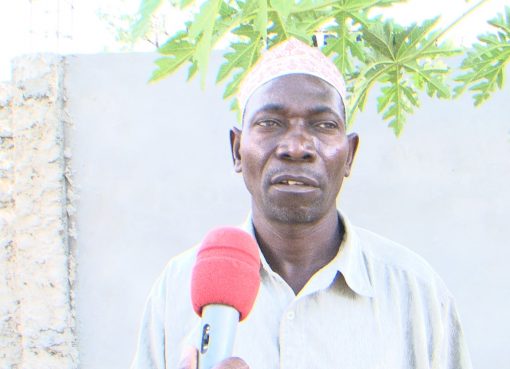
UDA Secretary General and Mombasa Gubernatorial aspirant, Hassan Omar Sarai has praised Ruto’s Administration and warned residents against being swayed by political incitements, urging them to judge the government on its programmes, rather than on rhetoric from its critics.
Omar urged residents to remain steadfast in government and resist propaganda ahead of Kenya’s next political contest, arguing that such rhetoric had in the past deepened divisions among communities that have co-existed peacefully for decades.
He pushed back on critics who have sought to brand the president a “first outsider” to Kenyan politics, dismissing the label as an attempt to delegitimize his leadership.
Omar listed several government initiatives he credited to the Ruto administration, including the affordable housing programme, reduced fertiliser prices for farmers, the NYOTA youth empowerment scheme, the Social Health Authority (SHA), and road and infrastructure projects along the coast.
He said the housing programme was intended to widen access to home ownership while creating construction-sector jobs and that cheaper fertiliser was meant to boost farmers’ production and incomes.
On roads, he said sections of the Coast region that had previously been impassable had been rehabilitated, linking the work to the national Vision 2030 blueprint and what he described as an emerging longer-term “Vision 2060” plan.
Sarai also revisited the colonial-era distinction between “high potential” and “low potential” regions set out in the 1965 Sessional Paper No. 10 on African Socialism, a framework that historically channeled more resources to agriculturally productive areas at the expense of arid and semi-arid ones.
“There is no high-potential area from the 1965 Sessional Paper, and there is no low-potential area. Everyone is high-potential; everyone is equal,” he said, arguing northern counties such as Turkana, Wajir, and Garissa deserved the same investment in water, roads, and schools as the rest of the country.
“This is a constitutional principle: those who have more should contribute more, and those who have less should contribute less,” he added, framing equitable resource-sharing as a legal obligation rather than a favour.
Sarai described SHA as an important step toward expanding access to care and easing the cost of treatment for families. The rollout of SHA, which replaced the National Health Insurance Fund, despite the propaganda, stands as evidence of good government intent.
Reflecting on his own career, Sarai said his appointment to national office had come through merit rather than political connections.
“I became a commissioner of the National Human Rights Commission out of sheer competence. I topped the interview,” he said, urging young people to pursue opportunities transparently rather than through shortcuts.
Sarai also urged residents to use their identification documents to vote and to weigh candidates’ records and development plans rather than personalities.
By Joan Kinuthia and Whitney Alice