Education stakeholders in Kajiado County want the government to improve electricity and internet connectivity to facilitate the rollout of the second phase of the Kenya Digital Economy Acceleration Project (KDEAP).
The stakeholders said reliable power and internet connectivity were essential for the successful implementation of the digital learning initiative, which is being rolled out by the Ministry of Information, Communications and the Digital Economy in partnership with the World Bank.
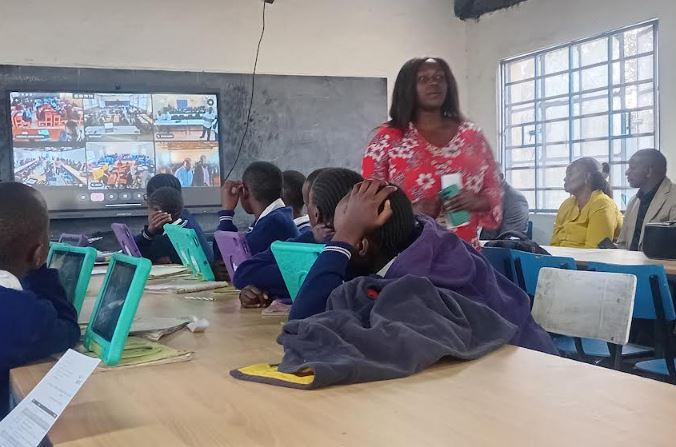
They made the call during the launch of the National Classroom Experience under the Digital Literacy Programme Phase II at Kajiado Township Junior School on Thursday.
The event, organised by the Information and Communication Technology Authority (ICTA), brought together education officials, teachers and union representatives to showcase the integration of digital technology into junior school teaching and learning.
Speaking on behalf of ICTA, Kajiado County ICT Officer Naomi Wangui commended the government for investing in digital infrastructure and urged learners to embrace technology to enhance their skills and creativity.
Wangui said the project focuses on digital infrastructure, access to government services and digital skills development to expand opportunities for learners and the wider public.
She noted that the classroom experience initiative seeks to transform teaching and learning through technology, promote innovation and provide learners with opportunities to interact with teachers and students beyond their immediate school environment.
Through the use of Interactive Smart Boards (ISBs) and internet connectivity, Grade Seven and Eight teachers can engage learners in other counties and facilitate remote learning, particularly where schools lack specialised teachers for certain subjects.
Wangui encouraged learners to take advantage of the available digital resources, remain innovative and ask questions whenever they encountered difficulties.
She also urged parents to support their children in using the resources provided by the government through schools, saying sustained use of the technology would enable more learners across different grades to benefit.
The Teachers Service Commission (TSC) Sub-County Director, Rosemary Lentoijoni, praised teachers in Kajiado, particularly those at Kajiado Township Junior School, for their role in demonstrating how technology can be integrated into classroom instruction.
She said six junior school teachers from the institution had been selected to showcase the integration of ICT into teaching and learning and had undergone training ahead of the launch.
Lentoijoni thanked the government and the various agencies involved in the initiative for working together to support digital learning in schools.
However, Kenya National Union of Teachers (KNUT) Kajiado Branch Executive Secretary Elly Korinko urged ICTA to address persistent network connectivity challenges in the county, warning that unreliable internet access and inadequate electricity could undermine the project’s implementation.
“Most of our areas in Kajiado, and not only in Kajiado but across the entire country, do not have network connectivity. This programme can only work where there is a network,” he said.
Korinko called for expanded electricity and internet coverage, particularly in remote areas, to ensure teachers and learners are not left behind in the transition to digital learning.
He commended the government for its efforts to improve digital literacy, noting that 10,000 teachers had already received training in information technology, with more expected to be trained in the coming year.
He added that nearly half of junior schools had access to learning devices, expressing hope that the government would extend the provision to all schools.
Korinko assured the government of the union’s support for the initiative but stressed the need to provide teachers with a conducive working environment to improve their performance and learner outcomes.
The classroom experience was showcased in seven junior schools: Sitotwek, Sikao, Kampi ya Moto, Nanyuki DEB, Wamba, Kajiado Township and Bomet Township.
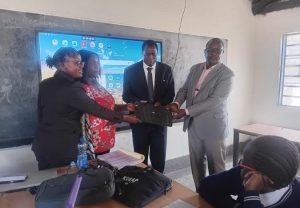
As part of the initiative, Kajiado Township Junior School received a laptop and an Interactive Smart Board to support classroom instruction and demonstrate the use of digital tools in teaching and learning.
By Joyline Arodi