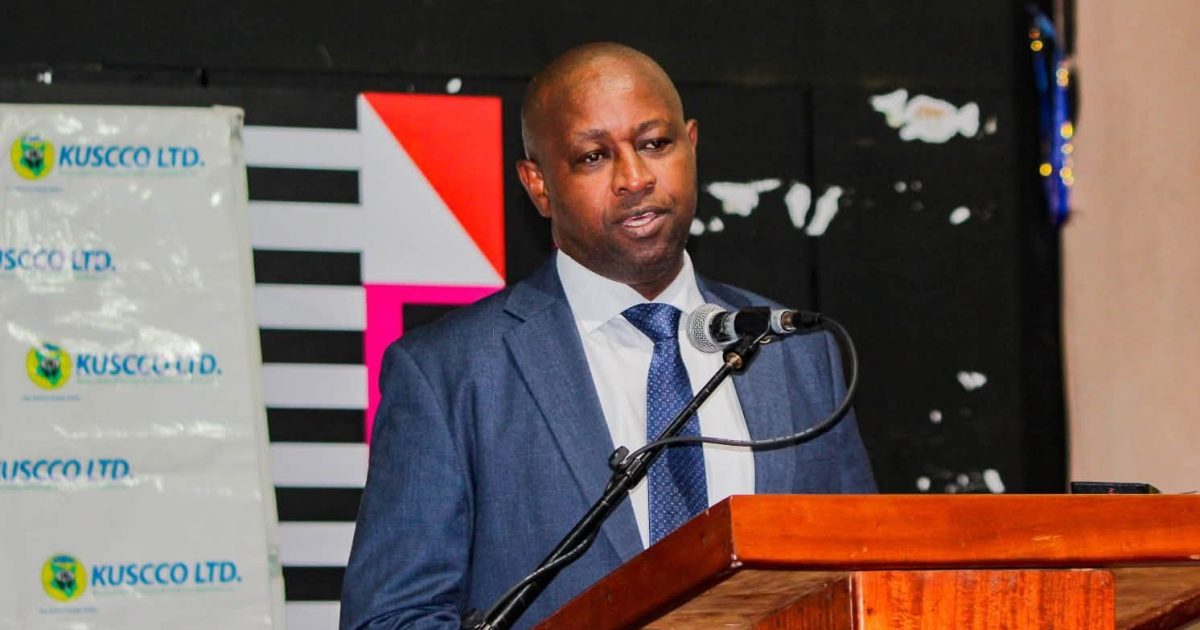
Shareholders of the financially distressed Kenya Union of Savings and Credit Co-operative Organisations (KUSCCO) have unanimously approved the liquidation of the union, saying the move is necessary to safeguard their remaining assets and prevent further losses.
The decision was reached during a special general meeting convened by Commissioner for Co-operatives David Obonyo in Nairobi on Friday to brief shareholders on the financial position of the union and chart the way forward.
The special general meeting was also attended by Cooperative Principal Secretary Patrick Kilemi, who thanked the KUSCCO board and the leaders in attendance for the courage to confront the past and the wisdom to forge a future pathway for the movement.
The long day meeting was attended by representatives of about 250 affiliated Savings and Credit Co-operative Organisations (SACCOs) and characterised by bitter exchanges, with members accusing the government of failing to act decisively to recover resources allegedly lost through mismanagement.
However, Commissioner Obonyo defended the government’s actions, saying it had taken measures against the previous KUSCCO leadership, including dissolving the board and having some former officials arraigned in court.
“The institution is insolvent and cannot even meet its financial obligations. Therefore, it requires drastic measures to save shareholders’ hard-earned assets,” Obonyo said.
He said efforts to recover the lost funds had proved difficult, making liquidation necessary to prevent shareholders from losing the remaining assets.
An audit by Grant Thornton, which was appointed by the government to examine KUSCCO’s financial affairs, found the union insolvent and facing serious financial challenges.
The audit report indicated that KUSCCO requires about Sh14 billion to restore its operations, against liabilities of Sh17 billion and an asset base of only Sh5.4 billion.
“There is no asset register and a lack of support for the loan book,” the audit report stated.
KUSCCO Board Chairman David Mategwa said the current directors had made efforts to revive the union but had been hampered by numerous legal challenges filed by SACCOs seeking repayment of their deposits.
“Some SACCOs that have filed court cases demanding refunds of their savings also want the union’s assets attached and auctioned. There is a need for sobriety in executing new measures to ensure every shareholder benefits,” Mategwa said.
The union’s legal team, led by Miller and Company Advocates managing partner Cecil Miller, said KUSCCO was facing nearly 300 court cases filed by SACCOs seeking repayment of more than Sh16 billion invested in the union over the years.
Miller said as of August 28, 2026, KUSCCO was expected to respond to 291 cases, with petitioners demanding payment of their deposits and accrued interest.
“The numerous and continuing court cases have made it impossible for the current KUSCCO board, in conjunction with the legal team, to recover all the debts from SACCOs and individuals,” he said.
The union’s executive progress report showed that between 2024 and 2026, the board had recovered only Sh77 million from debtors.
Hazina SACCO Chairman Evans Kibagendi proposed that the KUSCCO matter be referred to arbitration, arguing that the process could help establish and record the debts owed to the union.
Miller, however, had opposed arbitration, saying it could complicate the situation and expose the union to further litigation, warning that continued litigation could put KUSCCO at risk of being taken over by Co-operative Bank, its main lender, further complicating efforts by shareholders to recover their assets.
“The only option remaining is for the Commissioner of Co-operatives to exercise his powers as stipulated in the Co-operative Societies Act to save shareholders from total loss of their hard-earned resources,” Miller said.
George Weru, a financial services leader at PricewaterhouseCoopers, described KUSCCO as a distressed institution characterised by serious mismanagement of shareholders’ resources.
“The current situation is dire and requires tough action. The only option remaining to save the union and shareholders from complete loss of their resources is for the government to fast-track an orderly restructuring and winding-up process to guarantee fair distribution of remaining assets and payment of debts,” Weru said.
Senior audit manager at Mwangi and Kamwara Associates LLP Andrew Mulogoli said the extent of resource mismanagement had made it difficult for KUSCCO to operate efficiently.
“The union’s key business segments have over the years continued to register negative growth. For example, the books of account show negative retained earnings of Sh16.8 billion, while there was no evidence to support recorded expenses of Sh13 billion,” Mulogoli said.
The union’s board was previously dissolved by former Co-operatives and Micro, Small and Medium Enterprises (MSMEs) Development Cabinet Secretary Simon Chelugui as part of efforts to address the crisis.
During the meeting, shareholders also agreed to the formation and registration of the Kenya Federation of Savings and Credit Co-operatives (KEFESCCO), but the Commissioner
rejected a proposal to transform KUSCCO into a new institution, arguing that the union had lost the confidence of cooperators and would struggle to regain their trust.
The Commissioner said the proposed winding-up process would provide an opportunity to deal with the union’s outstanding obligations and determine how the remaining assets could be distributed among legitimate claimants.
By Wangari Ndirangu