The youth have been strongly urged to embrace Technical and Vocational Education and Training (TVET) to secure self-reliance and drive socio-economic growth.
The call was made by the Principal Secretaries (PSs) Dr. Esther Muoria, State Department for TVET, and her counterpart for the State Department for Youth Affairs and the Creative Economy, Fikirini Jacobs.
The duo, through the whole-of-government coordination and effective implementation of government policies, called on the youth to embrace TVET institutions and their programmes that are heavily practical to acquire skills that will make them ‘relevant and self-employable’.
They said the government has stepped up a national mobilisation campaign, aimed at enrolling millions of youths in TVET institutions.
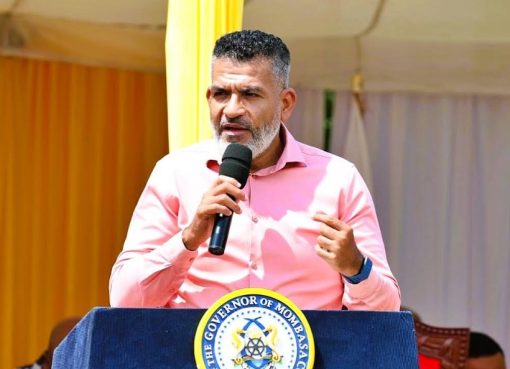
The PSs were speaking in Mombasa during a National Government Administrative Officers (NGAO) TVET Marketing and Sensitisation Engagement, held at The Kenya Coast National Polytechnic.
The NGAO team led by county commissioners were drawn from the coastal counties of Mombasa, Kwale, Kilifi, Lamu, Taita Taveta and Tana River and were tasked to increase the student enrolment in TVET institutions in their areas of jurisdiction.
The administrative officers were also urged to proactively identify young people who possess practical skills acquired through experience but lack formal certification and facilitate their registration for assessment and certification under the Recognition of Prior Learning (RPL) framework.
Dr Muoria said responsibility now rests with the NGAO leadership across the counties to translate this engagement into deliberate grassroots mobilisation, connecting young people to appropriate training, assessment and certification opportunities.
“Ultimately, the goal is to ensure that as industries grow and employment opportunities emerge, young people across the country possess the competencies and qualifications to take their rightful place in the workforce, locally and globally,” she said.
“These pathways open opportunities for those who may have missed conventional education progression or are unable to undertake lengthy training programmes,” said Dr Muoria.
Recognition of Prior Learning is a structured assessment process that identifies and certifies skills, knowledge, and competencies acquired by an individual through work experience, life activities, or informal training.
The Kenya National Qualifications Authority (KNQA) is tasked with coordinating and harmonising the education, training, assessment and quality assurance of all qualifications awarded, including those recognised through RPL.

KNQA supports the recognition of non-formal and informal learning, making it fundamental to the RPL process.
KNQA notes RPL fast-tracks career development, bridges skill gaps, and boosts team confidence without requiring staff to repeat formal classroom training.
The forum was organised jointly by the two state departments and sought to raise public awareness of the value of technical and vocational skills as a pathway to decent work, entrepreneurship and economic transformation.
“We would be going round the country and holding similar forums to deepen stakeholder engagement and demonstrate to the youth the value of technical and vocational skills in national development,” said Muoria, adding that TVET forms part of the broader national development agenda.
She particularly highlighted the flexibility introduced through modular Competency-Based Education and Training (CBET), which enables young people to acquire specific occupational competencies through shorter training programmes.
The TVET PS said engagements have already commenced with the Dangote East Africa Petroleum Refinery in Lamu towards developing customised, industry-driven training programmes, aligned with the project’s specific occupational and workforce requirements.
“This approach seeks to position Kenyan youth to compete for emerging opportunities in technical fields,” she said.
The Sh2.6 trillion Dangote East Africa oil refinery in Lamu County undertaken by Nigerian billionaire Aliko Dangote is seen as a ‘transformative path for economic development and prosperity’.
The Dangote East Africa Refinery, which was launched by President William Ruto on September 30, 2026, is scheduled to be completed and commissioned in early 2030.
Muoria said the national government is expanding access to industry-relevant training that equips the youth to build sustainable livelihoods.
She stated that the government is repositioning TVET as a central pillar of economic development, industrial growth and youth employment.
They encouraged secondary school leavers, who have not transitioned to institutions of higher learning to explore opportunities within the TVET institutions.
Muoria said TVET has the potential to resolve the unemployment crisis and that the government was providing the requisite infrastructure to make technical and vocational education accessible to many young people in urban and rural areas.
The PS said the government is investing heavily in technical and vocational education to equip young people with skills for decent jobs and entrepreneurship.
“In a bid to expand access, we have 260 accredited TVET institutions equipped with modern machinery spread across the 47 counties, providing hands-on skills training required for the realities of the modern workforce,” she said.
She went further: ‘The government is shifting its focus and investing more in technical and vocational education to meet national development endeavours and labour market needs.’
The PS said, besides expanding technical education access to training, TVET institutions would ensure that learners graduate with competences that meet industry standards and support livelihoods.
Muoria exhorted the younger generation to embrace TVETs in a bid to acquire the skills needed to create jobs for themselves and employ others.
On his part, Fikirini stated that TVET offers a strong pathway for the youth to pursue tertiary education, acquire practical skills and transition into employment and entrepreneurship.
He urged the young people to explore the abundant hands-on training opportunities found within technical and vocational programmes.
The PS stressed that the country’s development ambitions must be supported by a youthful workforce equipped with relevant technical and vocational competencies and practical knowledge.
“We are cognisant of the fact that technical and vocational training offering industry-relevant skills can propel job creation in the country,” he said.
Fikirini has urged the youth to embrace skills acquisition in ‘view of the grim reality of the unavailability of white-collar jobs in the country’.
The PS says the youth should not shy away from blue-collar jobs such as carpentry and joinery, refrigeration and air conditioning, welding, masonry, mechanics, scaffolding, electrical and plumbing, among other trades in their quest for a decent and better life.
“The youth should not see these kinds of jobs as a waste of time but embrace them to earn an income from the skills they learn from TVET institutions,” he said.
TVET institutions in the country offer practical and skills-focused courses across multiple levels, including artisan, craft, diploma (levels 3 to 6), professional and trade test certificates regulated by the TVET Authority (TVETA).
By Hussein Abdullahi