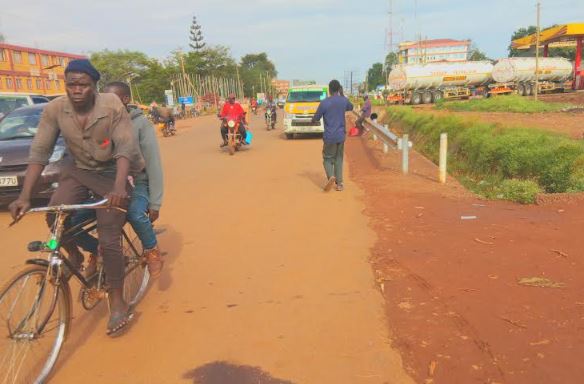
As the morning sun shines over Busia town, the streets slowly come alive. Matatus hoot scrambling for passengers, and motorbike engines reverberate loudly as pedestrians are in a rush hour to their destinations.
Among this busy movement is a group of men on bicycles, some slipping through narrow paths left by transit trucks and other vehicles, while others patiently wait for passengers at their different stages.
For these men, the bicycle is more than just a means of transport. It is a source of a meaningful income, a way of supporting their families and for many residents an affordable way of moving around.
In today’s world, a transport system is an essential need for everyday life. It does not only save time but also energy, as walking long distances can be so tiresome. It is a lifeline that connects people to work, markets, school, hospitals and other opportunities.
In Busia, a town situated along the Kenya-Uganda border, the transport sector has changed significantly over the years. Yet, one thing has remained constant, a tradition that has refused to be buried; the humble bicycle.
Despite the growing popularity of motorbike boda bodas, bicycle riders continue to pedal their way through the streets of Busia, determined to earn a living.
For John Odongo, a bicycle boda boda rider who has spent the past 10 years in the business, every day presents a new opportunity to earn a dime.
His day begins at 6 a.m. and often ends at 7 p.m. During these hours, he pedals through the streets, looking for passengers and customers who need his services.
Despite competition from motorbike riders and even matatus, Odongo remains determined to continue with his work. For him, the business provides an opportunity to earn through his effort.
“On a good day, I earn around Sh700 from 6am to 7pm, and I don’t see a problem with other transport means. There is no competition as long as I earn my money,” he says.
His words reflect determination shared by many people who depend on small-scale businesses to support themselves and their families. While earnings may vary from one day to another, the ability to earn money through honest work keeps him going.
To the young people in Busia, who are still searching for employment opportunities, Odongo has a simple message.
He encourages them to have faith and be proactive and utilise the opportunities around them. ” Wake up from that slumber and join us. You can earn good money here,” he states.
However, behind the determination and optimism lies a demanding occupation that requires patience, endurance and resilience.
Unlike motorbikes, which rely on fuel to operate, bicycles depend entirely on human effort. Riders pedal for hours under the scorching sun, and by the end of the day, many return home completely exhausted.
The work requires them to remain active throughout the day, even when the business is slow or the weather is unfavourable.
For Odongo, the strain does not end with fatigue. Maintaining the bicycle can also become expensive when repairs are needed.
“Another problem is when the bicycle needs repair, it is expensive for us,” he says.
Such expenses can reduce the money they take home after a day’s work. Since their income depends on the number of customers they serve, unexpected repair costs therefore become an additional burden.
Poor road conditions add to their list of challenges, particularly for riders operating in the interior parts of Busia. Rough and uneven roads make it difficult to transport passengers and goods while also increasing the risk of bicycle damage.
Isaac Ojula, another bicycle boda boda rider, says improving the roads in the interior parts would make their work smooth and easier and improve access for residents.
He calls on the county government to prioritise road maintenance and ensure that the roads in remote areas are more passable and accessible.
“The poor state of roads is a big problem for us bicycle bodabodas, especially when we are operating in the interior parts of Busia,” he says.
His concerns highlight the importance of road infrastructure to people whose livelihoods depend on moving around the town and its surroundings. Better roads could make the journeys easier for bicycle riders, passengers and traders who rely on affordable transport.
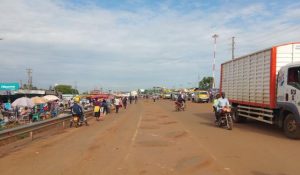
Despite these challenges, some residents continue to appreciate bicycle boda bodas, not only because of the affordability but also because of the memories and experiences associated with them.
One elderly woman, Jane Achieng, a resident of Busia town who has witnessed changes in the town’s transport sector, recalls a time when bicycles were the only familiar feature on the streets.
Even today she still prefers bicycle transport because it remains affordable, especially when fuel prices rise and the cost of motorised transport becomes a concern. She also just enjoys their slow riding.
“When I was young, Busia was just bicycles everywhere, taking goods to Uganda, to the farms, and even as today motorbikes are many, I still prefer bicycle bodaboda as it is affordable,” Jane says.
Her experiences show that bicycle boda boda are not only a source of income for riders but also an important part of the memories and everyday lives of some residents.
As Busia continues to grow and its transport system evolves, bicycle boda boda faces the challenge of remaining relevant in a market increasingly dominated by motorbikes. Nevertheless, their affordability and ability to serve particular transport needs continue to give them a place in the community.
From the early morning hours until evening, bicycle riders keep on to navigate the streets and surrounding areas of Busia, proving that even in a world driven by faster machines, a simple bicycle can still provide a livelihood and connect people to their daily needs.
The bicycle (indika in Luhya) is a means of transport that has been in use even before Kenya’s Independence and was given to local administrators by the colonial regime to move around as they discharged their mandate.
It is not surprising to find a place known as Mundika (stemming from ‘indika-bicycle’), which is reported to have had the first bicycle owned by Omwami Odunga, one of the colonial chiefs.
The area lies along the Kisumu–Busia road and has several institutions, including Mundika market and Mundika Boys High School, among others.
By Christian Wanyama