Floods, especially in the Northeastern region and parts of Tana River counties, are known to cause havoc: loss of lives, destruction of properties, sweeping of farms along River Tana, and sometimes livestock is not spared.
For every rain season, the government, non-governmental organisations and development partners are caught up in a continuous cycle to put up measures to protect the people from the adverse effects of floods.
Relief food, assorted household items, standby rescue boats, and frequent meetings all cost millions of shillings in every rainy season.
With the current fears of El Niño rains in the October–November–December period, stakeholders are gearing up, releasing early warning messages for floods, training communities in the flood-prone areas on disaster management, and urging communities to move to higher ground to avoid being caught up by floods.
However, in Gurufa, a silent village in Sabena ward, Garissa county, a group of at least 36 people got tired of the endless cycle of floods and decided to take advantage of the floods to get something for their livelihoods.
During intense rainy seasons, Gurufa frequently becomes heavily waterlogged and marooned due to the flat terrain paired with easily erodable sandy soil that creates temporary, muddy swamps that can trap vehicles and submerge local pathways, forcing the whole village to move temporarily to other areas until the waters subside.
But in the 2023 October-November-December rain season, a section of community members mobilised themselves into a group, contributed some agreed amount and started a farm, Taleh Farm.
According to Abdiqani Dubat, one of the founder members, the team had already cleared the bushes for at least 20 acres during that year’s drought season and left it ready for planting.
Additionally, the team had further set up an underground water reservoir that would collect flush flood waters to be used for irrigation after the floods dried up.
“We started this farm in 2023. It was initially a rangeland full of shrubs, but we brought in tractors to clear the bushes to have this farm. We came in during the floods period; there was a lot of water everywhere, and all the people around here have moved to other areas, almost 6 kilometres away,” Dubat said.
“We planted rice, watermelons, onions, and tomatoes, and we got a lot of profit, at least a half a million from the first harvest that returned all the money we had invested in the farm,” he added.
After their first harvest, the group quickly planted Peperone, simsim, groundnuts and pepper, Sukuma, spinach, maize and sunflower, which also gave them profits after harvesting.
During the 2024 drought season, the members further decided to venture into Napier grass, which also did well for them and the local communities, who came to buy pasture for their livestock.
However, this was not without challenges. The underground water reservoir had been depleted, and the group needed an alternative source of water for irrigation.
Less than a kilometre from the farm is a community borehole powered by solar. Still, the area being dominated by pastoralists, people and livestock take priority to use the water, and by the time all the animals are leaving, it is already evening and the sun is setting, with the power to pump the water to the farm.
The group then decided to look for donor funds for support, and the Islamic relief organisation offered them a diesel generator and an elevated water tank. With the diesel generator, they could pump the water to their farm at night and keep their farm going.
“The biggest challenge here we have is water because the nearby borehole is not ours but for the community. It uses solar, so during the day, the communities come to fetch water and to bring their livestock for watering, and by the evening when they leave, the sun is almost setting and there is no more power to pump the water to our farms,” Dubat said.
“Now, we have a diesel generator to pump water at night, but the cost of fuel is so high, making it unsustainable in the long run. This soil is kind of sandy, and it takes a lot of water; that means more fuel to pump water from the borehole to the farm,” he added.

Apart from water, wild animals also became a challenge, especially monkeys and wild boars, which started invading the farm, eating and destroying their crops.
This year, the National Drought Management Authority (NDMA) visited the farm and set up an electric fence around the farm to keep the wild animals away.
Fatuma Abdi Dubow, who acts as the advisor and treasurer of the group, tells KNA at the farm that the initial 36 members were able to contribute more than Sh400,000, that was used to start the farm.
Fatuma said at first the members struggled a lot in farming; especially being predominantly livestock keepers, they did not know much about farming, forcing them to hire more workers in their farm.
Over the years, Fatuma says that the members have learnt a lot about farming, hence reducing their workforce from 10 in 2023 to two currently, and at the same time, cutting operations costs, especially the salaries of their workers.
“We are pastoralists, and at first we did not know much about farming. We started with 10 workers at this farm, paying each Sh10,000 every month. As we started learning, we also started to reduce the workers because of the expenses over the years, and currently we only have 2 employees,” she said.
According to the treasurer, the team has also faced challenges with the market for their produce. When they planted the sunflower, they harvested over a tonne, but that is still lying in their stores in the farm and in Garissa town.
She said that they had been unsuccessful in finding a locally available crushing machine and called on both the county and national governments to intervene on the matter.
“We harvested more than a tonne of sunflower; we have some bags here and others in Garissa town, but there is no crushing machine in Garissa. We have been told to take them to Nairobi. We want both the national and the county government to come in and help us in terms of equipment, infrastructure and also the market,” she said.
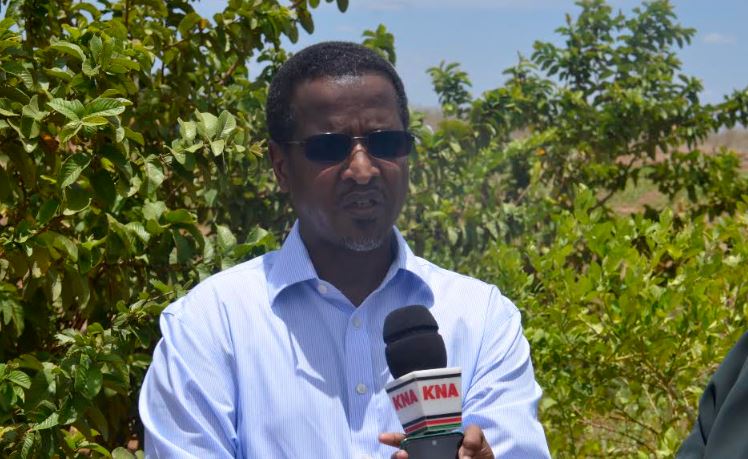
NDM Chief Executive officer Col (Rtd.) Hared Adan commended the group for their efforts, noting that their success was a testimony that the arid and semi-arid counties, with proper infrastructure, water and support, have the opportunity to become food producers in the country.
“The importance of this farm is that we envision it to be a model farm where the local communities can visit and learn; local institutions and schools are brought here so that they can be able to embrace smart agriculture, and they are able to learn it from here, especially on kitchen gardens,” Adan said.
“The message from here is that, if we have water, we can be food self-reliant. The success story from this farm is a clear indicator that if communities are supported, then they are able to produce food that can support not only the local communities but also those around them and other parts of the country,” he added.
By Erick Kyalo