The County Government of Turkana has trained 100 health care workers in Kakuma and Lodwar on Ebola Virus Disease (EVD) preparedness, as it maintains heightened surveillance along its borders.
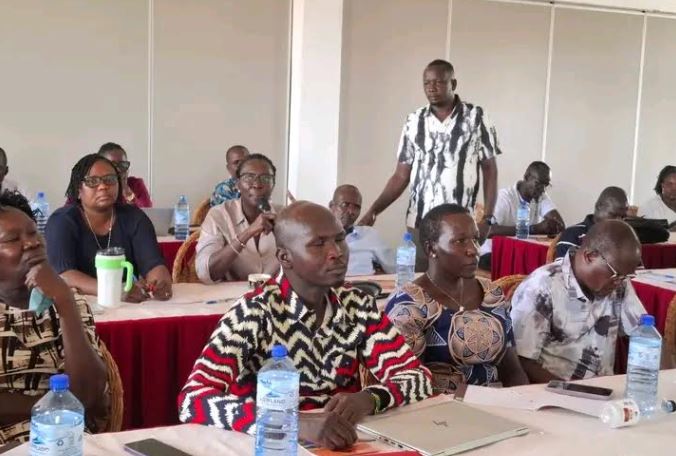
The four-day sensitisation, held with Amref Health Africa’s Imarisha Jamii project and the International Rescue Committee’s Core Group partners project, brought together County and Sub-County Medical Officers of Health, public health officers, community health focal persons, health records officers, public health nurses, health promotion officers, and community strategy focal persons.
Led by multi-sectoral Trainers of Trainers, the sessions focused on Risk Communication and Community Engagement (RCCE) during health emergencies. Participants also covered cross-border sensitisation, RCCE population mapping, water, sanitation and hygiene (WASH) assessment, surge recruitment and vetting, leadership and coordination, surveillance, case management, and mental health and psychosocial support.
Officials say Turkana is a high-risk county. It borders Uganda, Ethiopia, and South Sudan; hosts refugees from more than 30 nationalities; and has more than 60 per cent of its residents living as pastoralists, making the population highly mobile. Recent years have brought outbreaks of cholera, measles, anthrax, and Kala-Azar.
Health workers face particular risk. According to the World Health Organization’s Regional Office for Africa (AFRO) situation report for September 2026, 47 of the 222 confirmed deaths in the Bundibugyo Virus Disease outbreak in the Democratic Republic of Congo were health workers.
Although Uganda has declared an end to its outbreak, Turkana continues to screen travelers. By the end of July 2026, it had screened 5,257 people at entry points, including Nadapal, Kainuk, Lokirama, Loya, Natukobenyo, and Lokichoggio, with more than 40 health workers deployed.
The Department of Health and Sanitation is also setting up a Public Health Emergency Operations Center (PHEOC) with support from FHI 360 and KNPHI. It will coordinate alerts, information, and decision-making during health emergencies, including EVD.
The county has so far published 11 situation reports, compared with 19 from the WHO.
By Peter Gitonga