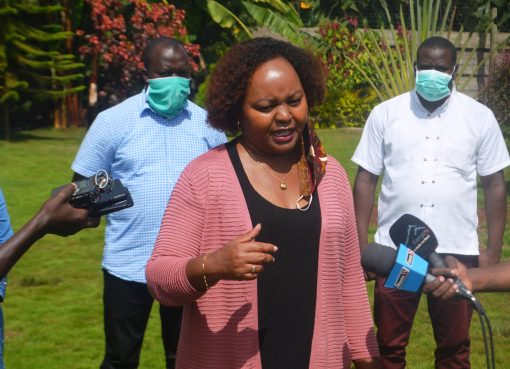
Principal Secretary for the State Department for Gender Affairs and Affirmative Action Anne Wang’ombe has urged girls in Marsabit County to reject child marriage, female genital mutilation (FGM), teenage pregnancy and gender-based violence, calling on parents and community leaders to prioritise girls’ education and protection.
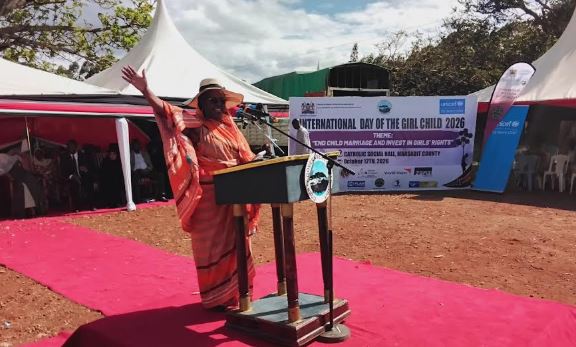
Speaking during this year’s International Day of the Girl Child celebrations at the Catholic Social Grounds in Saku Town, Wang’ombe reaffirmed the government’s commitment to protecting girls’ rights, dignity and access to education.
The celebrations were held under the theme “End Child Marriage and Invest in Girls’ Rights”.
Wang’ombe compared girls to acacia trees that thrive in Marsabit’s harsh climate, describing them as resilient and capable of overcoming challenges. She encouraged them to remain in school, speak out against abuse and pursue their ambitions.
She challenged cultural attitudes that measure girls’ worth through dowry and domestic responsibilities, noting that education empowers them to make informed decisions, defend their rights and contribute meaningfully to community development.
The PS called on parents, county leaders and development partners to invest in programmes supporting girls’ education, allocate adequate resources and ensure access to sanitary towels.
She also encouraged girls to support one another and work towards a future in which every girl could realise her potential.
During the celebrations, Wang’ombe distributed dignity kits to both girls and boys to promote personal hygiene and support their well-being.
Marsabit Governor’s spouse, Alamitu Guyo Jattani, hailed the decision to hold the national celebrations in the county and called for stronger community efforts to eliminate FGM and child marriage.
Jattani acknowledged the contribution of development partners in supporting awareness campaigns and programmes aimed at promoting girls’ rights.
However, she expressed concern over the continued practice of FGM and early marriage in parts of the county, including North Horr, Laisamis and Moyale.
She urged communities to abandon harmful cultural practices while preserving traditions that promote positive values and community cohesion.
Marsabit Deputy Governor Solomon Riwe commended Gabra and Borana elders for supporting efforts to eliminate harmful practices, saying community leadership was crucial in changing attitudes and protecting children.
Riwe called for stronger collaboration among government agencies, communities and development partners to address challenges facing children, including inadequate school facilities, limited access to water and shortages of sanitary products.
Speaking on behalf of Inspector General of Police Douglas Kanja, National Police Service Director of Gender and Child Protection, Dolly Oduor, urged girls experiencing abuse to report incidents to trusted adults or at police gender-based violence desks.
Oduor reaffirmed the police service’s commitment to addressing defilement, FGM, child marriage, human trafficking and other forms of gender-based violence.
She emphasised the importance of reporting abuse promptly to enable authorities to intervene and protect victims.
UNICEF Adolescent and Youth Specialist Susan Kariuki called for greater involvement of girls in decisions and budget-making processes affecting their lives.
Kariuki highlighted access to sanitary towels as a key priority, noting the importance of ensuring girls have the necessary resources to maintain their dignity and remain in school.
Marsabit County Commissioner Stanley Kamande urged chiefs and assistant chiefs to strengthen grassroots efforts to prevent FGM and protect girls from all forms of abuse.
He called on local administrators to work closely with communities to identify vulnerable children, raise awareness about the dangers of harmful practices and ensure those responsible for abuse are reported to the relevant authorities.
The celebrations brought together government officials, development partners, security agencies and community leaders, highlighting the importance of collective action in safeguarding girls’ rights.
Participants emphasised the need to keep girls in school, strengthen community awareness and improve access to essential services to prevent practices that threaten their health, education and future opportunities.
The event also featured a procession and cultural displays celebrating the heritage of the Marsabit community, reinforcing the message that positive cultural traditions can coexist with efforts to protect children and promote gender equality.
By Anthony Melly