The government is expanding access to digital learning in public junior schools nationwide, with 10,382 institutions already equipped with interactive smart boards and teacher laptops in a major push to modernise classroom instruction, bridge the digital divide and prepare learners for an increasingly technology-driven economy.
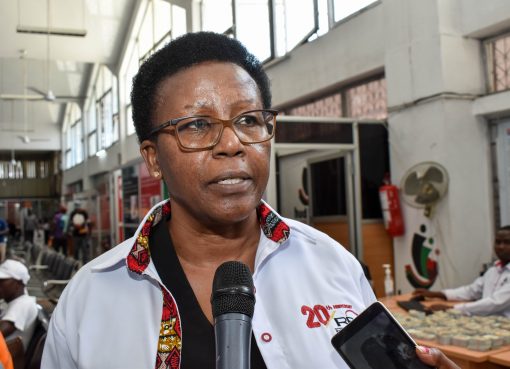
Information Communication Technology Authority (ICTA) Board Chairperson Lily Ngok presided over the launch of the digital learning equipment at Kericho Township Primary and Junior School, urging teachers to put the devices to immediate use to improve classroom instruction and give learners access to a wider range of educational resources.
“Today is not just about handing over gadgets. We are handing over opportunity,” Ngok said, stressing that every Kenyan child deserves access to modern learning facilities regardless of where they live.
The rollout is being implemented through the ICT Authority in partnership with the Ministry of Education and other government agencies, with support from the World Bank under the Kenya Digital Economy Acceleration Project (KDEAP).
The initiative supports the government’s digital transformation agenda and the implementation of Competency-Based Education (CBE).
The first phase has covered 10,382 public junior schools, representing close to half of the country’s registered public junior schools, with each institution receiving an interactive smart board and a laptop for teachers.
The government is targeting approximately 21,000 schools by April 2027, with procurement for the second phase underway, according to the Ministry of Information, Communications and the Digital Economy.
In Kericho County, 239 public junior schools are earmarked to benefit from the distribution, with the rollout covering all six sub-counties. Figures presented at the launch showed that Belgut has 37 targeted schools, Bureti 42, Ainamoi 39, Kipkelion 39, Londiani 39 and Soin-Sigowet 43.
The supplier has committed four trucks to support delivery across the county, with the aim of ensuring that all 239 schools receive the equipment.
Officials said the exercise would cover schools across the sub-counties, including Soin-Sigowet, as the distribution progresses.
The county allocation forms part of the wider national effort to equip public junior schools with tools that teachers can use to deliver curriculum content through interactive lessons, visual demonstrations and digital learning materials.
The programme is part of KDEAP, a wider digital transformation project running from 2023 to 2028, with a financing envelope of US$390 million through World Bank financing.

The project supports the expansion of broadband infrastructure, digitisation of government services and development of digital skills.
In education, it seeks to extend connectivity to learning institutions and improve access to technology and learning resources.
Ngok said more than 64,000 teachers had been trained through a national programme covering all 47 counties to help them integrate smart boards, laptops and digital content into lessons aligned with the competency-based curriculum.
She announced that digital learning content for Grades 7 and 8 had been developed and quality-assured, while work on Grade 9 materials was ongoing.
The resources are hosted on an education cloud and are accessible to teachers, learners and parents, according to the Ministry. Grade 7 content has also been adapted for learners with visual and hearing impairments.
The chairperson urged teachers not to lock the devices away in stores or offices, warning that the success of the investment would depend on their regular use, proper maintenance and integration into classroom teaching.
“We cannot talk about a digital Kenya if our classrooms remain analogue,” she said.
To safeguard the equipment, Ngok said each device had been asset-tagged for tracking. Schools would maintain asset registers, appoint ICT champions and submit monthly reports on device usage.
The ICT Authority would provide technical support and consider power-backup solutions where necessary, while the equipment comes with warranties.
She also called on parents, school boards of management, communities and private-sector players to support schools in addressing electricity, internet connectivity and equipment maintenance.
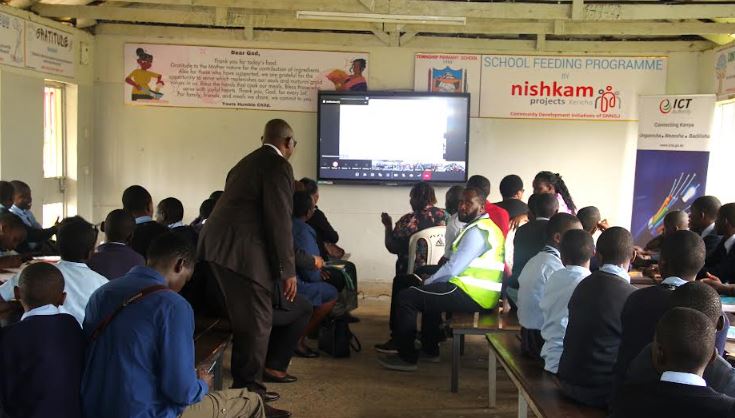
The Kericho launch followed the National Digital Class Experience held on October 14, when President William Ruto led a live classroom demonstration at Kiminini Junior Secondary School in Trans Nzoia County, connecting learners in 13 counties.
The participating counties were Trans Nzoia, Baringo, Kakamega, Elgeyo Marakwet, Kericho, Uasin Gishu, Marsabit, Turkana, Nyeri, Kisumu, Kiambu, Mombasa and West Pokot.
The demonstration showed how learners and teachers in different parts of the country can interact in real time, exchange knowledge and share learning experiences across geographical boundaries.
The programme builds on earlier government investments in digital literacy and fibre-optic infrastructure, including the National Optic Fibre Backbone Infrastructure. T
The wider KDEAP initiative targets improved broadband access and digital skills, with plans to expand the national fibre network to 100,000 kilometres by 2028, alongside efforts to connect schools, health facilities and government offices.
However, the impact of the classroom equipment will depend on reliable electricity, internet connectivity where required, relevant learning materials and continued teacher support.
Schools will also need to ensure that devices are maintained and used consistently, particularly in remote areas where access to educational resources remains limited.
For Kericho and other participating counties, the next test will be whether the equipment becomes part of everyday classroom teaching and helps learners develop practical technology skills, solve problems and work collaboratively.
Ngok reaffirmed the ICT Authority’s commitment to supporting schools as the rollout continues, urging teachers and education stakeholders to embrace the initiative.
“Let us all commit to teaching digital, learning digital and leading digital,” she said.
By Gilbert Mutai